Can You Paintball with 2 People? A Practical Guide
Learn how to safely and enjoyably play paintball with two players, including gear lists, game formats, budgeting tips, and planning advice for home setups or field play.


Yes, you can play paintball with two players. A two-person game works best with a private or small-field setup, two markers, two protective masks, air tanks or CO2, and a basic safety briefing. Plan a short scenario like capture-the-flag or elimination to keep the game engaging while avoiding long waiting times. According to PaintQuickGuide, start with a tight objective and quick rounds to maximize action and learning.
Can two players realistically play paintball? Planning basics
Playing paintball with two people is entirely feasible and can be incredibly fun when you plan properly. According to PaintQuickGuide, a two-person game works best when you treat the session like a mini-event: pick a safe space, agree on clear rules, and keep rounds short to maximize action. Before you head out, confirm that your venue allows two-player play and that you have permission to set up field boundaries. If you’re playing at a public field, ask staff about private-session options and any gear restrictions. With two players, you can design tight, fast-paced rounds that emphasize teamwork and strategy over sheer numbers. Keep the scope reasonable: a few focused objectives, short matches, and a quick debrief after each game help beginners learn quickly and stay engaged.
Safety first: PPE and field safety
Safety is the backbone of any paintball session, and two players are no exception. Both players should wear approved masks with intact lenses and a sturdy throat protector if available. Long sleeves, pants, gloves, and closed-toe shoes reduce scrapes and bruises when moving through brush or equipment. Before you play, check that all markers are chronographed to field limits, cylinders are secure, and air hoses are in good condition. Establish a simple safety protocol: never remove masks during play, keep markers pointed away from faces when not in use, and call ‘freeze’ if anyone is injured or equipment fails. For backyard or small-field setups, physically mark boundaries and use ground rules to minimize accidental hits on non-players.
Gear and setup for a two-player game
Two players require a compact but complete loadout. Each person should have a marker, mask, air source, hopper, and a supply of paintballs. Pack a barrel plug and a barrel sock for safe transport. Wear protective clothing and gloves; dress for weather and terrain. If you’re using rented gear, verify that markers are clean and ready to shoot, your air source is functional, and the field’s safety rules apply. For a two-person game, consider a larger play area with a couple of defined zones to encourage tactical movement, rather than a full field that’s designed for larger teams. Use a simple timer or a phone app to keep rounds short (3-5 minutes) and avoid standoffs.
Game formats suitable for two players
Two-player paintball is ideal for fast, action-packed formats that rely on speed, cover, and teamwork. Try a pure elimination format where one hit ends a round, or a capture-the-flag scenario with a simple base and a safe retrieval path. You can also design small objectives like securing a beacon or rescuing a teammate. Rotate roles so each player experiences offense and defense. For variety, run mini-tournaments with best-of-three rounds, adjusting the time per round to maintain pace. If you’re new to paintball, start with a 1-on-1 spare-round format to focus on aiming, positioning, and communication.
Venue options and field considerations
Weigh your options between a public field, a private backyard setup, or a rental facility. Public fields often have better air and marker quality, plus staff guidance, but private spaces offer greater flexibility for two players and private rules. If you go to a field, book a private session or a one-hour window to avoid crowds. For backyard play, ensure you have permission from neighbors and that the space is safe: remove sharp obstacles, keep a clear escape route, and create non-slip zones. Check for ground hazards like ditches, roots, or glass; mark hazards with bright tape. Also verify the field’s rules about booking times, noise, and safety procedures.
Scheduling, timing, and pacing two-player games
Plan a 60- to 90-minute session to include setup, quick safety checks, several short matches, and a debrief. Start with a warm-up of 5-10 minutes to adjust gear and get comfortable with your markers. Then run 3- to 5-minute rounds with short breaks for reloading and hydration. Keep score informally, noting wins, losses, and notable tactics. For outdoor play, factor in weather and lighting, and adjust pacing accordingly. In a two-player setup, minimize downtime by setting up a simple arena layout before you start and keeping paintballs organized in clearly labeled containers.
Budgeting and gear sharing for two players
Two-person paintball can be affordable, especially when you share gear and book private time. If you own gear, you’ll save on rental costs, but you must maintain your markers. If you’re buying, consider starter kits that include marker, mask, air source, and a few bags of paint; look for bundles that match your local field’s rules. For ongoing play, you can extend sessions by partnering with a friend or neighbor to split field fees, air, and paint costs. Always re-check field policies about paint type and allowed markers to avoid extra charges. PaintQuickGuide analysis shows that a well-planned two-person session can deliver good value when you align gear and venue choices with your goals.
Tips & warnings
- Pro_tip: Always inspect gear before you play and test markers in a safe area.
- Warning: Never remove masks during play; keep markers pointed down when transporting.
- Note: Have a first-aid kit and emergency plan in place.
- Pro_tip: Plan short rounds with frequent re-starts to maximize action and reduce fatigue.
- Warning: Be mindful of spectators and bystanders; keep play within designated boundaries.
- Note: Check weather and ground conditions; wet or muddy terrain increases risk of slip-and-fall injuries.
Authority Sources
- Centers for Disease Control and Prevention (CDC): https://www.cdc.gov/
- Occupational Safety and Health Administration (OSHA): https://www.osha.gov/
- National Safety Council (NSC): https://www.nsc.org/
Tools & Materials
- Paintball markers (2)(Two markers compatible with your field's air system (CO2 or HPA))
- Paintball masks (2)(Full-face protection with lenses in good condition)
- Air sources (2)(CO2 or compressed air; ensure regulator compatibility)
- Paintballs(Appropriate caliber for markers; follow field rules)
- Barrel plugs/socks (2)(Safety for transport and storage)
- Protective clothing (two sets)(Long sleeves, pants, sturdy shoes; weather-appropriate)
- Gloves/padding (optional)(Extra protection for hands and joints)
- Towels/cloths (optional)(For cleaning gear and wiping paint)
Steps
Estimated time: 60-120 minutes
- 1
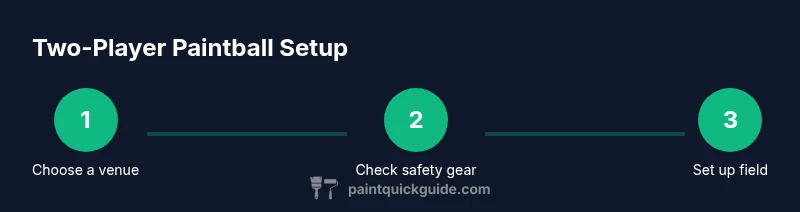
Choose a venue
Identify a field, private backyard, or rental facility that allows private two-player sessions. Confirm availability, policies, and safety rules, then reserve a time window. Ensure the space has clear boundaries and a safe escape route in case of equipment issues.
Tip: Call ahead to confirm private-session options and any gear restrictions. - 2
Check and prep safety gear
Inspect masks for cracks or scratches, test lens clarity, and verify that markers and air sources are functioning. Pack spare lenses, o-rings, and a basic first-aid kit. Ensure all players know to keep masks on whenever they are on or near the play area.
Tip: Do a quick safety check together before the first round. - 3
Set up markers and air sources
Attach air sources securely, chronograph markers to field limits, and confirm hopper loads are correct. Keep markers uncocked during setup and practice safe handling with barrel plugs in place.
Tip: Test fire at a safe distance to confirm consistent velocity. - 4
Layout the playing area
Establish two to three zones (cover, open space, and a neutral area) using natural features or simple barriers. Mark boundaries with visible tape or cones and assign roles or responsibilities for each zone.
Tip: Keep the layout compact to maximize action in a two-player game. - 5
Brief on rules and roles
Agree on hit signaling, respawn rules (if any), and end-of-round conditions. Assign one player as a facilitator in case of disputes and ensure both know the objective of each round.
Tip: Use simple, clear call-outs and keep rounds short. - 6
Run a practice round
Do a quick practice round to verify gear, boundary awareness, and communication. Use a low-stakes scenario to build comfort and timing before competitive rounds.
Tip: Keep the practice round under 2 minutes. - 7
Play rounds with timers
Schedule short rounds (3-5 minutes) with brief reloading breaks. Rotate between different objectives to maintain engagement and test different strategies.
Tip: Have a visible timer or app reminder for consistency. - 8
Cleanup and gear storage
After play, unload markers, secure air sources, and wipe down gear. Pack away equipment safely, check for damage, and list any parts that require maintenance before next session.
Tip: Store tanks upright and away from heat.
Your Questions Answered
Is two-player intensity enough for a good game?
Yes, two-player sessions can be highly engaging when rounds are short and objectives clear. Focus on speed, positioning, and communication to keep the action comparable to larger games.
Two-player games can be very engaging if you keep rounds short and emphasize teamwork and strategy.
What gear do I need for a two-player game?
Two markers, two masks, two air sources, paintballs, and basic safety gear are essential. Add barrel plugs and protective clothing for safer transport and play.
You'll need two markers, two masks, two air sources, paintballs, and basic safety gear.
Can I play in my backyard?
Yes, provided you have permission, proper safety boundaries, and field-rule compliance from local authorities or homeowners associations. Ensure a safe play space and clear boundaries.
Backyard play is possible if you have permission and a safe, clearly marked area.
How long should a typical two-player session take?
A typical session runs 60 to 120 minutes, depending on rounds, breaks, and the time you allocate for setup and cleanup. Adjust to avoid fatigue and maintain safety.
Most two-player sessions last about an hour to two hours, depending on rounds and breaks.
What safety rules are essential?
Keep masks on while in the play area, never point markers at people not wearing masks, use barrel plugs when not actively playing, and follow field safety guidelines at all times.
Always wear your mask, don't point at people, and keep markers safe when not playing.
Watch Video
Quick Summary
- Plan a compact, safe two-player session with clear rules.
- Choose appropriate gear and a defined play area to maximize action.
- Use short rounds and a simple timer to maintain pace and learning.
- Prioritize PPE and safety procedures at all times.
- The PaintQuickGuide team recommends prioritizing safety and fun in every two-player session.