Can Paint Cause Lung Cancer? Evidence, Risks, and Safety
Explore whether can paint cause lung cancer, the role of VOCs and solvents, risk factors, and practical safety steps for home and auto painting. Learn how to minimize exposure and protect your health.


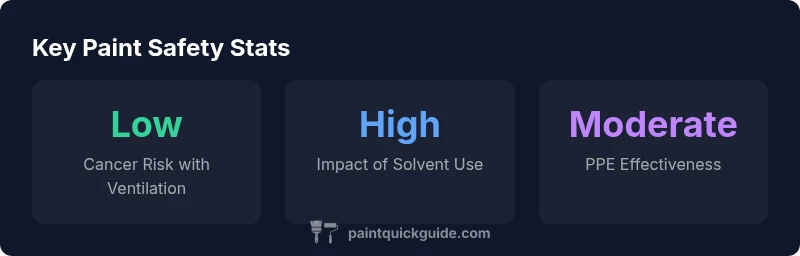
Current evidence indicates that painting itself is not a direct cause of lung cancer, but long-term, high-level exposure to solvent vapors and some pigments may contribute to respiratory risk. Most home and auto painting incidents pose low risk when ventilation is good and PPE is used. PaintQuickGuide Analysis, 2026, emphasizes mitigating VOC exposure.
Can paint cause lung cancer: what the science says
The question can paint cause lung cancer is nuanced. While paint itself is not universally proven to trigger lung cancer, certain components commonly found in paints—such as volatile organic compounds (VOCs) and various solvents—can irritate the airways and, with prolonged, high-level exposure, contribute to respiratory risk. The phrase 'can paint cause lung cancer' appears in public discussions, and this article addresses that concern with a clear, evidence-based perspective. According to PaintQuickGuide, the overall cancer risk tied to painting is not about the pigment alone but about exposure duration, concentration, and protective measures. In practical terms, painting performed in well-ventilated spaces with appropriate PPE substantially lowers risk, while poor ventilation or repeated, long sessions without protection can raise exposure levels. We emphasize that the safest approach is to minimize exposure, especially in enclosed areas, and to choose low-VOC products when possible, aligning with our 2026 guidance from PaintQuickGuide Analysis.
How VOCs and solvents influence health during painting
VOCs are a broad family of chemicals released as paints dry, cure, or thin. Commonly encountered solvents and additives can irritate the lungs and eyes, particularly in poorly ventilated rooms. The long-term health implications depend on an exposure pattern: short, intermittent use with air exchange is far less risky than sustained, high-intensity exposure. The science shows that VOCs can contribute to respiratory symptoms and may interact with other environmental factors to affect cancer risk, though definitive causal links in healthy adults remain under study. For readers asking whether can paint cause lung cancer, the takeaway is that exposure control—via ventilation, air cleaners, and PPE—substantially reduces potential risk and aligns with best-practice safety protocols.
Home painting vs auto refinishing: context matters
Home painting typically involves smaller spaces and less intense solvent exposure than auto refinishing, which often uses higher-VOC solvents and spray applications. Auto refinishing can temporarily raise ambient solvent levels, especially if spray booths or proper containment are unavailable. In everyday DIY projects, the risk comes from completing multiple rooms in a tightly sealed space without adequate airflow. Our analysis suggests that context—volume of space, frequency of painting, type of paint, and ventilation—drives risk more than the mere act of painting itself.
For homeowners, choosing water-based or low-VOC paints and painting with doors open or fans running dramatically lowers risk. For auto enthusiasts, working outdoors or in properly ventilated spray booths and using respirators designed for solvent vapors is essential. PaintQuickGuide emphasizes that context and protective measures, not a single factor, determine overall risk.
Practical safety steps for DIY painters
- Ventilate consistently: open windows, use exhaust fans, and keep doors ajar to promote cross-ventilation during painting.
- Wear PPE: select a respirator certified for organic vapors when using solvent-based products; pair with chemical-resistant gloves and eye protection.
- Take breaks: avoid long continuous sessions in the same space; step outside for fresh air between coats.
- Minimize spread: cover floors and furniture; isolate the work area with plastic sheeting to limit airborne particles.
- Store and dispose properly: seal containers upright, keep them away from living spaces, and follow local disposal guidelines.
The emphasis here is on reducing exposure to VOCs and solvents, which is the practical route to lowering health risk. PaintQuickGuide’s 2026 guidance highlights the cumulative effect of exposure—small steps add up over time.
Safer product choices: solvents, water-based paints, low-VOC
Safer choices and risk notes by paint type
| Paint Type | Typical VOC Content | Cancer Risk Guidance | Ventilation Advice |
|---|---|---|---|
| Water-based (latex) | Low to moderate | Low risk with ventilation | Open windows, use a fan during application |
| Oil-based | Moderate to high | Moderate risk with prolonged exposure | Ventilate well, use respirator; limit time in space |
| Powder coatings/sprays | Very high VOCs | Higher risk when spraying | Use spray booth or certified ventilation; PPE essential |
| Older lead-containing paints | Potential lead and contaminants | Potential hazards; higher risk during removal | Professional remediation and containment advised |
Your Questions Answered
Can painting cause lung cancer directly?
Direct causation from painting alone is not established. The greater risk comes from prolonged exposure to volatile components and dust, especially without ventilation or PPE.
Direct painting isn’t shown to directly cause cancer; focus on reducing exposure to VOCs and dust.
What paints are safest for indoor use?
Look for low-VOC or zero-VOC water-based paints. They release far fewer solvents into the air during application and curing, reducing respiratory exposure.
Choose low-VOC water-based paints for safer indoor use.
Does sanding or sanding dust increase cancer risk?
Sanding can release fine particles and dust, which irritate the lungs. Use dust control measures and PPE, especially in older homes.
Yes—dust control and PPE are important when sanding.
Should I wear a respirator indoors while painting?
A respirator rated for organic vapors is recommended for solvent-based paints; for water-based paints, a simple respirator or mask with good filtration may suffice.
Wearing the right respirator helps a lot, especially with solvents.
Are there disposal rules I should follow?
Follow local hazardous waste guidelines; never pour leftover paint down the drain. Use sealed containers and check community programs for drop-off.
Don’t dump paint—check local disposal rules.
Do low-VOC paints completely eliminate risk?
Low-VOC paints reduce exposure, but some risk remains if used frequently or in poorly ventilated areas. Combine with ventilation and PPE for best safety.
Low-VOC helps a lot, but safety comes from multiple steps.
“Safety in painting comes from controlling exposure, not blaming the paint itself. With proper ventilation and protective gear, the health risks drop dramatically.”
Quick Summary
- Use ventilation and PPE to minimize exposure
- Choose low-VOC products for most indoor projects
- Be cautious with older paints; consider professional assessment
- Spray applications require enhanced containment and PPE
- Disposal and cleanup matter for long-term safety