Roller Brush Paint: The Complete DIY Guide
Learn to use roller brush paint for fast, even coverage on walls, ceilings, and furniture. This step-by-step guide covers prep, tools, technique, cleanup, and common mistakes for professional-looking results.


According to PaintQuickGuide, roller brush paint delivers fast, even coverage on large flat surfaces like interior walls and ceilings. Use the right roller nap, prep properly, and apply in steady passes to avoid lap marks. This quick answer points you to the step-by-step guide below for best results. Whether you're painting a bedroom, hallway, or ceiling, the right setup matters.
Why roller brush paint is a staple for DIY walls
Roller brush paint offers fast, even coverage on large flat surfaces like interior walls and ceilings, making it a favorite choice for DIY projects. The roller distributes paint more evenly than a brush across broad areas, reducing the number of passes and the likelihood of streaks. Over newer, smooth surfaces, it creates a uniform texture that’s difficult to achieve with a brush alone. According to PaintQuickGuide, roller brush paint is especially effective when you need a brisk workflow without sacrificing a professional-looking finish. Before you reach for a can, take a moment to align your tools, surface prep, and technique. If you understand the basics—roller type, nap size, loading method, and rolling pattern—you’ll dramatically improve results. This knowledge applies whether you’re repainting a bedroom, hallway, or a ceiling, and it scales well to furniture projects that benefit from broad coverage. With the right setup, you’ll save time and minimize fatigue while achieving clean, even coats.
Choosing the right roller cover nap and materials
The nap length on a roller cover determines how much paint it holds and how it interacts with surface texture. For smooth walls, a shorter nap of about 3/8 inch offers a slick, even finish; a 1/2 inch nap covers a little more texture without leaving stipples. For lightly textured walls, ceilings with popcorn texture, or drywall with slight imperfections, a 1/2 inch to 3/4 inch nap can help keep coats even while leveling high spots. Foam rollers are great for ultra-smooth surfaces or doors, while traditional fiber or cotton-nap rollers excel on most walls. Materials matter as well: synthetic nap tends to hold paint well and wash cleanly. When you’re using water-based latex, choose a sleeve with good water absorption and minimal shedding. PaintQuickGuide analysis shows practical guidance: start with a widely compatible nap size and adjust after testing a small patch. Combine a quality cover with a compatible frame to prevent wobble and uneven loading.
Prep work before painting with a roller
Prepping the surface is every bit as important as the paint you choose. Begin by removing furniture, covering floors with drop cloths, and taping trim to protect edges. Clean walls to remove dust, dirt, and grease; wipe with a sponge and let dry completely. Use a light hand to fill small holes or dents with wood filler or spackling, then sand smooth and wipe away dust. Prime worn or stained areas if needed, especially when changing from dark to light colors or if the surface is bare plaster or new drywall. Proper prep reduces the risk of peeling and provides a better key for the roller. Finally, lay out your tools in a logical order: primer, paint, tray, liner, and a clear path to the work area so you don’t backtrack. Good prep also means comfortable ventilation, so crack a window if indoors, and wear a mask when sanding or working with strong primers.
Tools and setup: frames, extension poles, and trays
Set up a reliable rolling system before you dip a roller into paint. Use a sturdy roller frame that fits your nap sleeve securely. Attach an extension pole if you’re painting high walls or ceilings to avoid ladders when possible. Place a paint tray near your work area and line it with a disposable liner for quick cleanup. Use a separate tray for each color to prevent cross-contamination. A paint grid inside the tray helps you load the roller evenly and reduces excess paint on the sleeve. Keep a damp rag handy for quick edge cleanup. With the right tools, you’ll maintain consistent coverage and reduce fatigue during long projects.
Paint loading technique and tray management
Loading the roller correctly is essential to avoid drips and lap marks. Rollers should be dampened lightly (not soaked) before loading paint. Dip the nap into the tray and roll back and forth on the grid to evenly distribute paint across the nap; avoid puddles at the edge. Remove excess by running the roller along the tray’s corner. When working with multiple colors, keep edges clean by washing the roller between color changes or using separate sleeves. Re-dip as needed, but never drown the nap. A well-loaded roller deposits a consistent, controllable amount of paint with every pass, helping you achieve faster, cleaner results.
Rolling techniques for even coverage across large surfaces
The goal of rolling is to maintain a smooth, continuous layer without visible lines. Start by applying light pressure to edges and corners to “cut in,” then move to the main field with a steady, overlapping stroke. Use a W or M pattern to distribute paint across the surface, then fill in with long, even passes. Maintain a constant speed and pressure to prevent roller marks. Always roll from wet to dry edges, and avoid rolling over dry patches. If you notice glazing or stippling, pause to re-load and re-wet the nap. Let the first coat dry according to paint manufacturer guidance before evaluating coverage and deciding on a second coat.
Special surfaces: ceilings, cabinetry, and trim
Ceilings benefit from a thinner nap and a smooth, overhead stroke while maintaining a comfortable stance. Cabinets and furniture may use a foam roller for smooth finishes, but you’ll want to use a brush for tight spots and edges. For glossy finishes or high-traffic areas, consider a satin or semi-gloss sheen to resist scuffing. Always prime bare wood or stained surfaces and select a compatible finish to avoid overlapping issues. When rolling trim, a narrow roller or a brush can help achieve crisp lines along edges, while a small, steady motion reduces sags on horizontal surfaces.
Cleaning, storage, and maintenance of roller equipment
After painting, rinse the roller sleeve with warm water if you used latex paint; use mild soap if needed to remove residue. Gently squeeze excess water and reshape the nap, then air-dry stood on ends to prevent flattening. Wash brushes, trays, and extension poles according to the paint type (water-based versus oil-based) to extend their life. Store nap sleeves in a clean, dry space away from direct sunlight to prevent cracking or shedding.
Common mistakes and how to fix them
Overloading the roller leads to drips and longer drying times. Not maintaining a wet edge results in lap marks that are difficult to blend. Skipping prep or primer can cause adhesion failures and uneven color. Using the wrong nap for the surface texture creates either stippled finishes or heavy streaks. If you see rough texture after the coat dries, lightly sand and re-roll a fresh coat after drying.
Finishing touches and preparing for a second coat
Assess the first coat for evenness and allow adequate drying time before applying a second coat. Lightly inspect corners and edges for thin spots and fill them with a tiny amount of paint or recoat. Use a fresh, clean roller for the second coat to avoid pulling dregs from the first coat. After the final coat dries, remove masking tape while the paint is still slightly tacky to minimize peeling. Clean up and store your materials properly; label cans for future touch-ups.
Tools & Materials
- Roller frame (9-12 inch)(Durable metal or high-grade plastic; fits nap sleeve securely)
- Roller covers (nap 3/8", 1/2", 3/4")(Choose nap by surface texture: smooth walls 3/8-1/2", rough textures 3/4")
- Paint tray and liner(Liner makes cleanup quick; use grid to load nap evenly)
- Extension pole(Attach to frame for tall walls/ceiling work)
- Drop cloths and painter's tape(Protect floors and edges; tape trim for clean lines)
- Sandpaper or sanding block(Smooth rough spots before painting)
- Putty knife and wood filler(Fill small dents; sand smooth after drying)
- Primer(Use for bare wood, stains, or drastic color changes)
- Paint (your color + finish)(Choose finish: matte, eggshell, satin, or semi-gloss)
- Rags or microfiber cloths(For quick touch-ups and wipe-downs)
- Masking mask/respirator(Ventilate when using solvent-based paints)
- Soap, water, and bucket(Clean brushes and rollers after use)
Steps
Estimated time: 4-6 hours
- 1
Prepare the workspace
Move furniture away, cover floors, and tape edges. Lay out your tools in order of use and ensure good ventilation.
Tip: Protect yourself with a mask and gloves; keep a clear path to avoid tripping. - 2
Prep the surfaces
Clean walls, repair damage, and sand rough patches. Prime as needed for stain blocking or color changes.
Tip: Dust removal before priming improves adhesion and finish. - 3
Set up your rolling system
Attach the extension pole to the frame, and pour paint into a tray with a liner. Place colors nearby for quick access.
Tip: Ensure the nap is securely attached to avoid wobble during rolling. - 4
Load the roller correctly
Dip into paint and roll on the grid to distribute evenly. Wring out excess to avoid drips.
Tip: A well-loaded nap deposits consistent paint with each pass. - 5
Cut in around edges
Finish edges with a brush before filling the field; this creates crisp lines that are hard to achieve later.
Tip: Maintain a steady hand and avoid overloading the brush. - 6
Roll the main field
Use a W pattern to distribute paint, then fill in with long, even passes. Maintain a wet edge.
Tip: Work in small sections to keep the coat uniform. - 7
Keep a wet edge
Reload as needed; avoid stopping on dry patches to prevent lap marks.
Tip: Develop a rhythm to finish each area before the paint dries. - 8
Second coat and touch-ups
If coverage is uneven, apply a second coat after the first dries completely. Check for thin spots and recoat as needed.
Tip: Different lighting can reveal missed spots; inspect at multiple angles. - 9
Clean up the tools
Rinse and wash rollers and trays; reshape the nap and air-dry. Store materials properly for next project.
Tip: Label remaining paint with color and date for future touch-ups. - 10
Final inspection
Review for even texture and color consistency; remove tape while the edge is still slightly wet to avoid peeling.
Tip: Take a step back to assess as a whole and adjust any missed spots.
Your Questions Answered
What is the best nap for a roller when painting walls?
For most walls, a 3/8 to 1/2 inch nap provides a smooth finish. For rough textures, choose a 3/4 inch nap to ensure even coverage.
For most walls, use a 3/8 to 1/2 inch nap. If the surface is rough, go with a 3/4 inch nap for even coverage.
Can I use a roller on ceilings?
Yes. Use a shorter nap and a light touch to reduce splatter and sag. Roll in a consistent pattern and avoid pressing too hard.
Yes, you can roll ceilings with a short nap roller and light pressure for a smooth finish.
How long does roller paint take to dry?
Drying times vary with temperature and humidity. Plan for 1-2 hours to dry to touch and 4-6 hours between coats.
Dry times depend on conditions; plan for several hours between coats.
Should I prime before painting with a roller?
Prime when painting over bare wood, stains, or changing from dark to light colors to improve adhesion and coverage.
Yes, priming helps color and adhesion, especially on bare or stained surfaces.
How do I clean roller brushes after use?
Rinse with warm water for latex paints; use soap to remove residue, then squeeze out excess water and air-dry.
Rinse the roller with warm water and mild soap, then air-dry.
Watch Video
Quick Summary
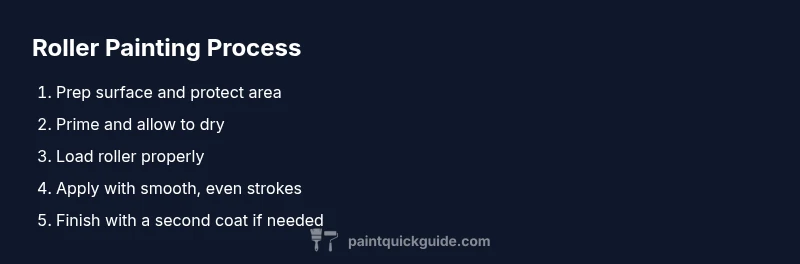
- Prepare surfaces and protect surroundings
- Choose the correct roller nap for texture
- Load and roll to maintain a wet edge
- Apply even coats and avoid overworking
- Clean tools promptly after painting