Paint for Walls: A Practical How-To Guide
Learn how to choose, prep, and apply wall paint with practical tips on finishes, primers, and budgeting for a durable, beautiful room.


Painting walls involves selecting the right interior paint, prepping the surface, and applying even coats for durability. Start with a primer if covering stains or dramatic color changes, then finish with two coats of latex or acrylic paint in a satin or eggshell sheen. Allow proper drying time between coats for best results.
What is paint for walls and why it matters
Paint for walls is a specialized coating designed to adhere to interior surfaces, provide color, protect the substrate, and resist everyday wear. For most homes, water-based latex or acrylic paints offer low odor, easy cleanup, and good durability. When you choose a finish, you trade a bit of sheen for scrub-ability and stain resistance. The right paint improves light reflectance, strengthens the room's mood, and prolongs the life of drywall or plaster behind it. According to PaintQuickGuide, selecting a high-quality interior paint with proper binder chemistry leads to longer color stability and fewer touch-ups over time. Coverage varies by color and surface porosity, but a typical gallon covers about 350-400 square feet with two coats on smooth drywall. Budgeting should account for primer, tape, and drop cloths, which can add 10-20% to the material cost. In this section, you will learn why paint choices matter for walls, how finishes affect performance, and how to estimate the amount you need based on room size and surface texture.
Beyond aesthetics, the chemistry of wall paints affects odor, drying time, and washability. Look for low-VOC options if you’re painting bedrooms, nurseries, or rooms with limited venting. The brand you select should align with your cleaning needs and how often you plan to refresh color. This overview also covers how primers influence adhesion and coverage, ensuring your walls stay vibrant longer. Finally, remember that even with premium products, preparation quality largely determines the final result.
Why people choose different finishes for walls
Finish choices aren’t just cosmetic. The sheen level determines how much light is reflected, how dirt shows, and how easy cleaning will be. Flat or matte finishes minimize glare and hide small surface imperfections, but they’re harder to clean. Eggshell and satin offer a balance of subtle shine and cleanability, making them popular for living rooms and bedrooms. Semi-gloss is more durable and easier to wipe down, which suits kitchens, bathrooms, and high-traffic hallways. When PaintQuickGuide reviews finishes, the recommendation is to align sheen with room function and maintenance willingness. Also consider lighting: in bright rooms, a satin finish can enhance color depth without overly reflecting light, while dull rooms may benefit from a little more gloss to brighten the space.
Key takeaway: start with a vision of how you want the room to feel, then pick a finish that supports that mood while meeting cleaning needs. Remember to test swatches on different walls to observe color under natural and artificial light before committing to a color family.
Choosing paint types: latex, acrylic, and alkyd
Interior paints come in several chemistries. Water-based latex and acrylic paints are the most common for walls due to low odor, easy cleanup, and fast drying. Latex is flexible, resists cracking, and generally offers better color retention over time. Acrylic paints are similar but can be slightly more durable in high-use spaces. Alkyd or oil-based paints provide excellent leveling and washability but release stronger odors and require mineral spirits for cleanup. For most homes, latex or acrylic-based paints are recommended for walls, especially in bedrooms and living areas where family members spend a lot of time. If you’re painting over problematic stains, you may need a stain-blocking primer and a compatible topcoat. Always read the label to confirm compatibility with your surface and primer choice.
Finishes explained: matte, eggshell, satin, semi-gloss
Finishes determine how much light the wall reflects and how easy it is to clean. Matte or flat finishes absorb light and hide imperfections well but resist frequent washing. Eggshell offers a subtle sheen with better scrubbing ability, making it a versatile choice for most living spaces. Satin sits between eggshell and semi-gloss, providing more durability and a touch of sheen that helps the room feel brighter. Semi-gloss is highly washable and is ideal for kitchens, bathrooms, and trim where moisture exposure is common. For walls, most homeowners lean toward eggshell or satin for the best balance of appearance and practicality. Consider the room’s traffic, moisture exposure, and maintenance routine when selecting a sheen.
Surface prep steps: cleaning, repairs, sanding
Proper prep is the difference between a good paint job and a disappointing one. Start by clearing the room and protecting floors with drop cloths. Clean walls to remove dust, grease, and smoke residues; a mild detergent solution works for most surfaces. Inspect for holes, cracks, or peeling paint; fill with appropriate filler and let dry. Lightly sand repaired areas so they are flush with the surrounding surface, then wipe away dust. Any remaining sheen or gloss should be dulled with a light sanding to help primer and paint adhere. Finally, remove or cover switch plates and tape off edges adjacent to adjacent surfaces. The goal is a clean, uniform canvas that helps color bonding and finish evenness.
Primers and primers vs paint: when and why
Primers improve adhesion, seal stains, and enhance color coverage. If you’re changing from a dark to a light color, painting over stains, or dealing with a glossy surface, a primer is almost always necessary. High-adhesion primers allow the topcoat to stick better, reducing peeling and blotching. For interior walls, a water-based primer designed for drywall is usually sufficient. When using stain-blocking primers on water or smoke stains, be sure to allow adequate drying time before applying the topcoat. If you’re unsure, test a small patch after priming to confirm smooth, uniform coverage.
Application techniques: cutting in, rolling, and layering
Begin by “cutting in” around ceilings, corners, and trim with a high-quality angled brush to establish clean edges. Use a roller with a suitable nap length for your surface texture and work in a W pattern to ensure even coverage without lap marks. Maintain a wet edge and avoid overworking areas, which can lead to skinning or patchy color. Apply a second coat to achieve solid color and uniform sheen. For large rooms, plan for two coats and consider allowing longer drying times in humid conditions. Refer to the product label for specific recoat windows.
Color selection and lighting considerations
Sample color swatches on multiple walls and observe them under different lighting—natural daylight, lamps, and overhead fixtures. Color perception changes with hours and light color; a color that looks great in the morning might appear too warm or too cool after sunset. Many brands offer small sample pots; use several to create a proper patch on the wall you’ll paint. Create a color plan that considers the room’s purpose, existing furniture, and flooring. Keep a color log for touch-ups and future refreshes.
Adhesion, stains, and special cases
Some surfaces require special preparation or products. Glossy walls, high-gloss trims, or surfaces with water stains may need extra sanding and a compatible primer to ensure adhesion. If you’re painting over wallpaper, you’ll want to assess the wallpaper’s adhesion and possibly remove it before painting. In kitchens and bathrooms, moisture tolerance matters: choose finishes with higher washability and consider ventilation strategies to reduce drying times and odor exposure.
Cost planning and budgeting for a typical room
Budgeting for wall painting depends on room size, surface texture, paint quality, and finish selection. A standard mid-range interior paint project can be broken down into components: materials (paint, primer, masking supplies), tools (brushes, rollers, trays), and labor (if hired). As a rule of thumb, plan for a per-gallon cost range that reflects the finish and brand you select; higher-quality products and specialty primers can elevate costs, while budget options may reduce them. For a typical 120- to 180-square-foot room, expect to purchase 2–3 gallons of paint and 1–2 gallons of primer for two coats, plus tapes and drop cloths. Consumer budgets vary widely, so compare multiple products and read labels for coverage estimates and drying times.
Tools & Materials
- Interior latex or acrylic wall paint (your chosen color and finish)(2-3 gallons for a 120-180 sq ft room with two coats)
- Primer (stain-blocking or high-adhesion)(Needed for color changes or glossy surfaces)
- Drop cloths and plastic sheeting(Protect floors and furniture)
- Painter's tape(Mask edges around trim and fixtures)
- Drop cloths or newspapers(Cover floors; minimize drips)
- Paint rollers (3/8–3/4 in nap)(For smooth to lightly textured walls)
- Paint brushes (angled sash brush)(Cut in edges and corners)
- Paint tray and liners(Convenient for loading rollers)
- Sandpaper (fine grit, 120–220)(Smooth repaired areas)
- Putty knife and spackle(Repair small holes and cracks)
- Ladder or stable step stool(Access high walls; safety first)
- Respirator or mask, gloves(Protect from dust and fumes)
- Stir sticks and clean rags(Mix paint and wipe spills promptly)
Steps
Estimated time: Estimated total time: 6-8 hours (excluding long drying times between coats)
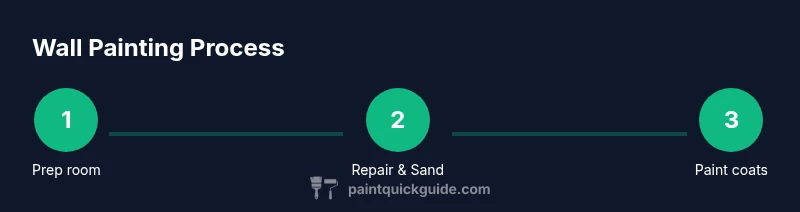
- 1
Prepare the room
Move furniture away from walls and cover with drop cloths. Remove outlet covers and light fixtures if possible. Set up a clear workflow path to avoid stepping on damp areas. This baseline step prevents accidental splatters and keeps the surface clean for prep work.
Tip: Securely anchor ladders and always have a helper when moving heavy items. - 2
Repair and sand
Inspect walls for holes, cracks, and peeling paint. Use spackle or putty to fill imperfections, then sand flush with the wall. Wipe away dust before priming.
Tip: Let repairs dry fully before sanding to avoid creating more imperfections. - 3
Clean walls
Wipe surfaces with a mild detergent solution to remove grease and dirt. Rinse with clean water and allow walls to dry completely. A clean surface improves primer adhesion and final color.
Tip: If walls have tough stains, use a stain-blocking primer to seal them. - 4
Prime surfaces
Apply primer evenly over patched areas and stained or glossy sections. Allow adequate drying time as indicated by the primer label before applying color. Priming reduces color drift and improves coverage.
Tip: If changing a dark color to a light color, primer helps achieve true color faster. - 5
Cut in and roll base coats
First, use an angled brush to cut in around ceilings, corners, and trim. Then roll large wall areas using a W pattern to avoid lap marks. Maintain a wet edge to keep color uniform.
Tip: Load brush and roller evenly to minimize drips and ensure consistent coverage. - 6
Second coat and finish
Apply a second coat after the first coat dries according to product guidelines. Check for thin spots and touch up as needed. Remove tape carefully after the final coat is still slightly damp to avoid peeling.
Tip: Inspect for color uniformity in different lighting before declaring the job done.
Your Questions Answered
What is the best finish for high-traffic areas?
For high-traffic areas, a satin or eggshell finish offers a good balance of washability and appearance. Semi-gloss is ideal for kitchens and bathrooms where frequent cleaning is needed. Test patches to confirm how the finish holds up in your space.
In busy spaces, choose satin or eggshell for a cleanable surface with a nice look; semi-gloss works well in moist areas like kitchens and baths.
Do I need a primer?
Primers improve adhesion and color coverage, especially over glossy surfaces or stains. If you’re changing from dark to light or covering stains, a primer is highly recommended. Always follow the primer’s instructions for drying times before applying color.
Yes. Primer helps paint stick and hides stains. Use it especially when you’re changing colors or dealing with glossy surfaces.
How many coats do I need?
Two coats are usually enough for most walls to achieve uniform color and finish. A single coat may suffice for minor touch-ups or fresh surfaces not heavily stained, but two coats are typical for consistent coverage.
Typically two coats are needed for even color and depth.
Can I paint over wallpaper?
Painting over wallpaper can work if the wallpaper is firmly attached and the surface is properly prepped. In many cases, removing wallpaper yields the best long-term result. If you must paint over it, use a heavy-duty primer designed for wallpaper and a flexible topcoat.
You can, but removing wallpaper is usually better. If you stay with it, use a strong primer made for wallpaper first.
How long does it take to dry between coats?
Most interior paints dry to touch within 2–4 hours and can be recoated after that window, depending on humidity and temperature. Full cure can take several days. Always follow the product label for recoat timing.
Most paints dry enough for a second coat in a few hours, but full cure takes days.
What about ceiling painting?
Ceiling work benefits from a flat or matte finish to minimize glare. Cut in along the edge where it meets walls, then use a roller with minimal splatter. Work slowly and keep the brush and roller perpendicular to the surface for best results.
Use flat paint for ceilings and take your time around edges.
Watch Video
Quick Summary
- Prepare surfaces thoroughly before painting.
- Primer improves coverage and adhesion.
- Two coats yield a more even, durable finish.
- Choose a finish based on room usage and maintenance needs.
- Ventilation and safety prevent health risks.