Is Painting Easy or Drawing? A Practical Guide
A detailed, analytic comparison of painting vs drawing for homeowners, DIYers, and auto refinishing hobbyists. Learn core differences, steps to start, tools, costs, and practical guidance to choose your path.


Is painting easy or drawing? The short answer is that both are learnable, but they demand different skills and goals. Drawing emphasizes line control, composition, and observation, while painting adds color theory, texture, and media-specific techniques. For beginners, starting with drawing builds fundamentals; when you add painting, you gain color, surface feel, and finishing effects. With deliberate practice, you’ll progress in both, and many hobbyists blend the two to maximize skills in home decorating or auto refinishing. This comparison helps you decide where to start and how to layer skills for real-world results.
Why People Ask This Question
When people new to art or home improvement ask is painting easy or drawing, they often mean: which skill should I pursue first to get visible results quickly? The question sits at the intersection of two overlapping activities. From a practical standpoint, the answer depends on your goals, your environment, and the time you can invest. Is painting easy or drawing? The truth is: both are learnable, but they reward different kinds of effort. Drawing trains the eye, develops line control, and teaches composition. Painting adds color theory, brushwork, and surface interaction. For homeowners who want decorative results without prior training, starting with drawing skills laid down on a sketchbook can clarify what you want to achieve before you buy paints. For auto refinishing hobbyists, painting introduces patience with primers, priming surfaces, and understanding drying times. According to PaintQuickGuide, most beginners benefit from a hybrid approach: begin with drawing fundamentals, then layer in color and texture as confidence grows. This balanced path reduces frustration and builds transferable skills that apply to both media.
alignmentNote':'strict
Comparison
| Feature | Drawing | Painting |
|---|---|---|
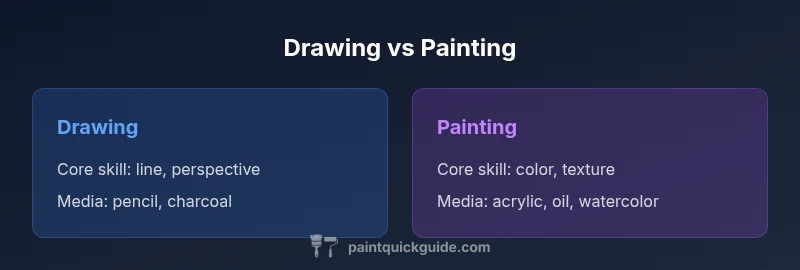
| Core skill focus | Line control, perspective, composition | Color theory, brushwork, texture |
| Main media | Pencil/charcoal/ink | Acrylic/oil/watercolor, pigments |
| Setup and clean-up | Minimal setup, easy cleanup | Requires brushes, paints, palettes, and drying space |
| Learning curve | Quicker to see progress in line work | Longer to master layering, blending, and finish |
| Cost to start | Low (basic pencils) | Moderate (paints and brushes) |
| Best for | Foundational skills and quick sketches | Color, texture, and finishing effects |
| Time to results | Immediate sketch results | Pieces develop over sessions |
Upsides
- Low barrier to entry for drawing with minimal equipment
- Rapid feedback: see immediate results on paper
- Portable practice that suits small spaces
- Great foundation for visual thinking and composition
- Flexible: can be done indoors anytime
What's Bad
- Painting often requires more setup and drying time
- Color mixing and medium handling can be challenging
- Materials can be messy and need storage
- Progress toward finished pieces can feel slower
Neither medium is inherently easy or hard; success depends on goals, practice, and available time
If you want quick visual confidence, start with drawing. If your aim is color, texture, and finished surfaces, add painting later. The best path blends both, guided by purpose and available space.
Your Questions Answered
Is drawing a prerequisite for learning painting?
Not strictly. Many artists begin with painting directly to explore color and composition, but drawing skills dramatically improve accuracy and planning. A blended approach often yields faster, more reliable progress.
Not strictly required, but drawing helps a lot with planning and accuracy; many people blend both to learn faster.
Which is easier for beginners, painting or drawing?
Drawing is typically perceived as easier to begin with because it requires fewer tools and less drying time. Painting introduces color, texture, and mixable media that can feel overwhelming at first but becomes rewarding with steady practice.
Drawing is usually easier to start, but painting becomes easier as you learn color and texture step by step.
What basic materials do I need to start drawing vs painting?
For drawing, a pencil set, paper, and an eraser are enough to begin. For painting, you’ll need brushes, paints, palettes, and a suitable surface—plus cleaning supplies and masking materials if you’re working on more ambitious projects.
Pencils and paper to start drawing; brushes and paints for painting.
How long does it take to see progress in each?
Progress in drawing is often visible quickly as you refine lines and composition. Painting progress is more incremental, as you learn color mixing, layering, and drying times, but you’ll notice meaningful improvements with regular practice.
Drawing shows progress faster; painting takes longer to mature, but it pays off with richer results.
Should I learn perspective before painting landscapes?
Learning perspective helps with realistic landscapes and architectural scenes, whether drawn or painted. You can start with simple perspective exercises in drawing and then apply them directly to painting.
Yes, basic perspective helps, and you can practice it in drawing before applying to painting.
Can painting and drawing be practiced simultaneously?
Absolutely. Many artists alternate sessions between drawing and painting to reinforce fundamentals while expanding onto color and texture. A balanced schedule yields steady, transferable progress.
Yes—practice both in a balanced way to build fundamentals fast.
Quick Summary
- Start with drawing basics to build core skills
- Layer painting after establishing line and composition
- Choose tools that fit your space and budget
- Practice regularly in short, focused sessions
- Blend drawing and painting to accelerate learning