How to Make Brown Paint: A Practical Mixing Guide for Beginners
Learn how to make brown paint from primary colors or complementary tones. This practical guide covers pigment choices, mixing ratios, and safety tips for home projects and automotive refinishing.


Mastering how to make brown paint starts with choosing your base colors and a reliable method. You’ll learn two practical paths: mixing all three primaries for a muddy brown, or blending complementary hues for richer tones. We’ll cover shade control, tinting with white, and darkening with a touch of black. By the end, you’ll mix browns confidently for walls, furniture, or auto refinishes.
What Brown Paint Is and Why It Matters
If you’ve ever avoided browns because they seemed muddy, this section will change your mind. Brown is a warm, versatile base color that can anchor a design or surface without competing with brighter accents. According to PaintQuickGuide, brown offers depth and richness that makes greens more vibrant and reds feel grounded. In the context of home décor or auto refinishes, knowing how to make brown paint gives you flexibility, consistency, and a broader palette without buying dozens of pre-mixed tones. Whether you’re repainting a kitchen wall, refinishing a wooden table, or touching up a car panel, understanding brown helps you predict how a finish will read in different lighting. The goal is to create browns that align with your undertone needs—warm and inviting, or cool and restrained—by choosing pigments and ratios that reproduce the mood you want. In this guide you’ll find two reliable approaches, quick tests, and practical tips so your brown paints stay consistent project after project. Remember to test swatches under the lighting conditions you’ll work in, and keep a small log of your mixes for future accuracy. The phrase how to make brown paint appears here to emphasize the core skill you’re developing, and it’s a capability that translates across walls, furniture, and automotive work.
As you start, keep in mind that brown can be extremely forgiving when you work with small batches and swatches. You’ll adjust warmth with red and yellow or coolness with blue, and you’ll use white to tint or black to deepen. The following sections lay out concrete methods, pigment options, and a step-by-step approach that supports beginner painters while still offering nuance for seasoned DIYers.
Primary Methods to Make Brown Paint (Two Practical Paths)
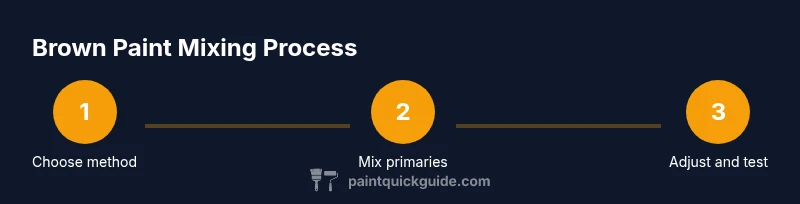
Making brown paint boils down to a choice: either use all three primaries to form a base brown, or blend complementary colors to achieve a deeper, more nuanced tone. This section outlines how to use each method and when to pick one over the other. The explicit phrase how to make brown paint is repeated here to reinforce the concept and help your recall during a real mix. For home painting, many people start with the primaries because they feel the most predictable; for more complex undertones that mimic natural wood or aged finishes, blending complementary colors can yield richer browns that shift with lighting. Regardless of the path you choose, work in small batches, compare swatches side-by-side, and adjust gradually so you don’t overshoot your target.
Method A: Primaries first. Start with equal parts red, yellow, and blue, then adjust in tiny increments to move toward your desired warmth or coolness. If the result reads too gray or dull, add a touch more of a primary color to recalibrate. This approach gives you a neutral starting point that you can push toward orange-brown or taupe by tipping the balance.
Method B: Complementary blends. Create a base by mixing orange (red+yellow) with blue to achieve a rich, earthy brown. Alter the ratio to tilt toward warmer or cooler tones, depending on your project. You can also start with a ready-made earth tone and tint it with small amounts of red, yellow, or blue to customize. The advantage of this method is depth and complexity that isn’t as easily reached with primaries alone. If you’re working with car paints, ensure the base is compatible with your finish and follow the manufacturer’s guidelines for mixing and application.
Choosing Pigments and Color Ranges for Browns
When building a palette for browns, select pigments with predictable behavior and good lightfastness. Common choices include burnt umber, raw umber, burnt sienna, raw sienna, and earth yellows. Warm browns typically benefit from red and yellow combinations, while cool browns lean on blue-leaning earth tones. Test your mixes on scrap paper or a small swatch card under the lighting conditions you’ll use in the final project. If you’re painting walls, acrylic or latex bases are convenient and easy to clean. For automotive work, verify pigment compatibility with base coats and clear coats to avoid issues with adhesion or finish quality. When how to make brown paint, you’ll often optimize undertone by balancing warmth with a touch of blue or a touch of white to adjust the hue. A practical approach is to assemble a few swatch pairs: one warm brown, one neutral brown, and one cool brown, and compare them against your target color to see which direction feels closest.
Practical starter blends include: warm browns via more red and yellow, cool browns via more blue, and neutral browns by adding balanced amounts of all three primaries. Keep in mind that pigments react differently depending on the binder and base you’re using, so you may need to re-tune after testing on your final substrate.
Step-by-Step Mixing Approach: How to Make Brown Paint in Practice
This section presents a pragmatic, step-by-step method you can follow for consistent results. Whether you’re mixing on a painting palette at home or preparing a dedicated base for a car panel, these steps help you stay organized and precise. The core concept behind how to make brown paint is simple: combine colors to reach a stable, earthy tone and then refine it with lightness and depth adjustments. As you proceed, remember to document ratios and test on swatches to ensure repeatability.
-
Gather pigments and tools. Collect your red, yellow, blue, white, black (if needed), a clean palette, mixing surface, brushes, water or solvent, and protective gear.
-
Decide brown direction. Determine whether you want a warm brown, cool brown, or a neutral brown by visually rating the undertone and how it will interact with surrounding colors.
-
Create a base from primaries. Begin with small quantities of red, yellow, and blue. Mix thoroughly to a uniform, earthy tone and compare to your target. If it’s too bright, introduce a bit more blue or brown earth tones to mute.
-
Introduce undertone tweaks. Add a small amount of orange (red+yellow) for warmth or a pinch of blue to cool the base, testing after each addition.
-
Tint or shade. To lighten, blend in white gradually; to darken, add a touch of black or a darker earth pigment in tiny increments. Re-check the swatch after each addition.
-
Test on a dedicated swatch. Apply a thin layer on scrap material or paper and allow to dry. Compare with your target and adjust accordingly.
-
Record ratios for future use. Note the exact amounts that produced your desired brown so you can reproduce or tweak later.
Troubleshooting and Shade Adjustments for Browns
Even with careful planning, browns can drift in shade due to pigment variability or binder differences. If your mix looks too orange, add a touch of blue or a cooler brown pigment to restore balance. If it reads too gray, drop the blue and reintroduce warmer earth tones. For darker browns, small amounts of burnt umber or a diluted coat of black can deepen the color without dulling it. Lighting conditions dramatically affect perceived color, so always test under the same light as your project and, if possible, on the final substrate. When working with automotive finishes, consider the final topcoat’s glow and ensure your brown compliments the entire color system. Maintaining a color log helps you reproduce successful blends and avoids repeating guesswork in future projects.
Storage, Longevity, and Practical Tips for Brown Paints
Once you’ve achieved the perfect brown, store it properly to preserve color accuracy and consistency. Use airtight containers, label with the mix date and pigments used, and store away from heat or direct sunlight. If you’re mixing for multiple projects, portion the mixture into smaller jars to minimize exposure to air. Whether you are painting walls, furniture, or car panels, consistent storage is key to ensuring the color stays true over time. For safety and quality, wear protective gloves when handling pigments, clean brushes thoroughly, and avoid cross-contamination between different color families. If you’re unsure about the best carrier or binder for your brown, consult the product datasheet or seek guidance from paint manufacturers. In short, how to make brown paint effectively involves careful selection, monitoring, and storage practices that protect color integrity process after process.
Tools & Materials
- Red paint (primary)(Any red pigment suitable for your medium (acrylic, oil, latex))
- Yellow paint (primary)(Choose a warm yellow for warmer browns)
- Blue paint (primary)(A cool blue helps adjust undertone)
- White paint(For tinting browns to lighter shades)
- Black paint (optional)(Tiny amounts to deepen color)
- Burnt umber or raw umber(Alternative base brown pigments)
- Palette or mixing tray(Surface for color creation)
- Mixing sticks or palette knives(For thorough blending)
- Water or solvent (depending on medium)(For adjusting viscosity and consistency)
- Clear sealable containers(Store mixed colors securely)
- Protective gear (gloves, goggles)(Safety when handling pigments)
- Swatch cards or scrap paper(Test and compare colors)
- Color log notebook(Record ratios and outcomes)
- Automotive compatible reducer or binder (for car finishes)(If painting vehicles, verify compatibility)
Steps
Estimated time: 10-15 minutes
- 1
Gather pigments and tools
Collect red, yellow, blue, white, and optional black. Set out a clean palette, mixing surface, brushes, water/solvent, and protective gear. Having everything at hand minimizes mistakes and keeps the workflow smooth.
Tip: Lay out swatches early to compare against your target shade. - 2
Decide brown direction
Choose whether you want a warm, cool, or neutral brown. Warm browns use more red/yellow; cool browns lean on blue and earthy tones. Your choice affects subsequent pigment additions.
Tip: If unsure, start with a warm base and adjust with blue to taste. - 3
Create a base with primaries
In small amounts, mix red, yellow, and blue to form a base brown. Blend thoroughly and compare with your target. Adjust proportions slowly to avoid overshooting.
Tip: Record the starting ratios for future recreations. - 4
Tune undertone with a secondary hue
Add a small amount of orange (red+yellow) to push warmth, or a touch of blue to cool. Check swatches after each addition.
Tip: Make incremental tweaks and test often. - 5
Tint or shade as needed
Lighten with white for lighter browns; deepen with a pinch of black or an additional earth tone to keep depth without dulling.
Tip: Avoid heavy hands; color reacts as it dries. - 6
Test on swatch and compare
Apply a thin layer to a scrap surface and let it dry. Compare to your target under the project’s lighting. If the match is off, adjust again in small steps.
Tip: Dry color can read differently from wet color. - 7
Document ratios for future use
Record the exact mix ratios that produced your best brown. This helps you reproduce or tweak the shade in future projects.
Tip: Label containers with color swatch and ratio notes.
Your Questions Answered
Can I make brown paint with only two colors?
Yes. You can produce browns by mixing complementary colors or two primaries in a controlled ratio. The result will vary, so start with small amounts and adjust to the target undertone. Testing on swatches helps ensure consistency.
Yes. You can make brown by mixing two colors, but testing on swatches helps ensure the undertone matches your goal.
What pigments are best for warm browns?
Burnt umber, burnt sienna, and earth yellows are commonly used for warm browns. Combine them with small amounts of red to emphasize warmth. Adjust with white or a dash of blue to fine-tune.
Burnt umber and burnt sienna are great for warm browns; add a bit of yellow for brightness and red for warmth.
Is brown paint the same for automotive finishes as wall paint?
Not always. Automotive finishes require base coats and clear coats that are chemically compatible with the system. Wall paints have different binders and formulations. Always follow the product guidelines for mixing and application.
Automotive browns need compatible bases and clear coats; walls use different paint systems. Follow manufacturer guidance.
How long does mixed brown paint stay usable?
Mixed paints last as long as typical paint kept in sealed containers away from heat and sun. Stir before use and discard if there’s separation, bad odor, or unusual consistency. Protection from air exposure helps prevent drying out.
Store the mix sealed and out of heat; check for separation before use.
Can I replicate commercial browns at home?
You can approach commercial browns by adjusting ratios to achieve the same undertone and depth. Use swatches and compare under your work lighting to approximate the final result closely.
You can approximate commercial browns by tuning ratios and testing under your lighting.
Should I use white to tint browns?
White is useful for achieving lighter browns or tinting toward taupe. Add gradually and test on swatches since white can shift the hue toward pinkish or yellowish tones depending on the base.
White helps lighten browns; add slowly and test for hue shifts.
Watch Video
Quick Summary
- Master brown by mastering undertones.
- Test swatches and log ratios for consistency.
- Choose warm or cool pathways based on your project.
- Tint and shade gradually to control depth.
- Store colors properly to preserve color integrity.