How to Know When Paint Is Mixed Enough: A Practical Guide
Learn practical checks to know when paint is mixed enough for home or auto projects. This step-by-step guide covers color uniformity, viscosity, swatch testing, and safe remixing with expert tips from PaintQuickGuide.


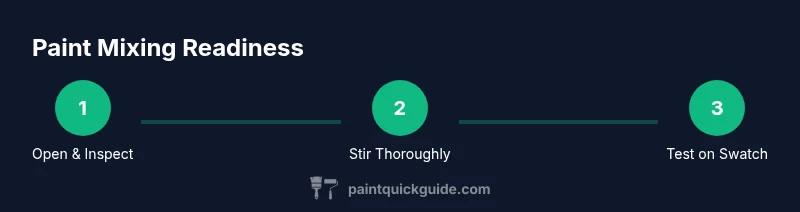
You know paint is mixed enough when color is uniform across the swatch, the viscosity matches the product's recommendation, and the finish on a test surface looks smooth without streaks. Stir thoroughly for at least a minute, test on a scrap surface, and compare to the container color. According to PaintQuickGuide, consistent mixing prevents shade mismatches in the final coat.
Why mixing matters for color accuracy and finish durability
Color accuracy hinges on how well the pigments are integrated and the binder is evenly dispersed. If you skip thorough mixing, you can see shade drift between edges and centers, and the final coat may appear patchy or uneven. For homeowners and DIY enthusiasts, understanding how to know when paint is mixed enough saves time and money by avoiding a recoat. According to PaintQuickGuide, consistent mixing minimizes color drift and ensures the sheen stays uniform across walls. The goal is to produce a homogeneous batch that behaves the same in every brush stroke, which reduces lap marks, streaks, and gloss inconsistencies. Remember that pigments can settle or separate during storage, so a proper remix is part of the routine, not an afterthought. By following a repeatable process, you’ll establish a reliable baseline for projects ranging from a single accent wall to cabinet refinishing or even auto refinishing panels. This is the foundation of predictable results and reduced paint waste. If you’re aiming for a flawless finish, start with properly mixed paint that responds uniformly to brushing and rolling.
How to know when paint is mixed enough is not mystical; it’s a repeatable set of checks that you can perform every time.
The PaintQuickGuide team emphasizes that consistent mixing pays off in fewer touch-ups and more even color distribution across surfaces.
Tools & Materials
- Paint can(s) in the intended color(Keep lids on when not testing; reference container shade)
- Stir sticks or a drill with a mixing attachment(Plastic stir sticks or a low-speed drill mixer)
- Test surface material (cardboard, white poster board, drywall scrap)(White or neutral to reveal true color)
- Clean rags or paper towels(For blotting and cleanup)
- Water or paint thinner (depending on paint type)(Only use as directed for latex vs. oil-based paints)
- Masking tape (optional)(Keeps test area clean and separate from main work area)
- Safety gear (gloves, goggles)(Recommended to protect skin and eyes during mixing)
Steps
Estimated time: 15-25 minutes
- 1
Open and inspect cans
Fully remove lids and inspect the surface for skin, separation, or foul odors. If the paint shows separation, stir more. Confirm the color on the inside of the lid matches the can label. This foundational step prevents chasing color errors later.
Tip: Use a flat tool to gently break any skin from the lid edge to ensure a thorough initial mix. - 2
Stir thoroughly for at least 60 seconds
Begin with a slow, circular motion and then sweep across the entire can to lift settled pigment. Stop only when you see no streaks or separation. A thorough mix helps achieve a consistent batch across the entire surface.
Tip: If using a drill, keep it on a low speed and pull the mixer slowly through the paint to avoid splatter. - 3
Pour a small amount onto a test surface
Transfer a modest amount to a neutral test surface to observe color and flow away from the can’s edge. This step isolates the test from the main project and provides a clear view of the mix.
Tip: Wipe the rim of the can before returning paint to avoid introducing debris into the batch. - 4
Let it rest 5–10 minutes
Allow pigments to re-disperse and settle naturally after stirring. This rest period helps you see how the mix behaves when it starts to cure slightly and gives you a realistic read on color stability.
Tip: Use this interval to inspect lighting changes and how they affect perceived color. - 5
Re-check color and viscosity
Return paint to the test surface and compare to the container shade under the room’s lighting. Check the viscosity by letting a bead of paint drip; it should flow evenly without clumping or stringiness.
Tip: If the color looks off, remix until the swatch matches the container shade more closely. - 6
Remix if necessary and re-test
If you notice any drift after resting, remix thoroughly for another 60 seconds and re-test on the swatch. Consistency is easier to achieve in small test batches before large-area coats.
Tip: Avoid reintroducing air by using slow, steady mixing motions. - 7
Apply a small patch to a real surface
Paint a small patch on a hidden or inconspicuous area of the project to confirm both color and finish under actual conditions. If it looks right, proceed with the bulk of the work using the same batch.
Tip: Check the patch in the room’s typical lighting and at the expected viewing distance. - 8
Document batch and time for future projects
Record the batch color, stir time, rest duration, and any additives used. This data helps you replicate results in future projects and makes color budgeting easier.
Tip: Keep a simple log sheet or label the can with key mix details.
Your Questions Answered
What should I do if color looks slightly off after mixing?
Re-check the swatch, re-mix the batch, and compare again to the container shade. If it still differs, try a fresh batch or adjust lighting conditions for a final decision.
If color looks off, re-check the swatch and re-mix, then compare again. If unresolved, test under different lighting.
Can you mix paint that has separated?
Yes, but ensure thorough mixing until uniform. If separation recurs after repeated mixing, consider using a fresh batch to avoid color drift.
You can mix it, but if separation keeps returning, use a new batch.
Does temperature affect mixing?
Yes. Warmer rooms can help pigments dissolve more evenly, while cold rooms may slow dispersion. Keep the space within the paint’s recommended range.
Temperature helps paint flow and mix; keep the room within the product’s range.
Is there a quick test I can do without tools?
Yes. Use a swatch and a simple drip test on a scrap surface to gauge color uniformity and flow. If both pass, you’re likely ready to proceed.
Swatch test plus a drip check tells you if you’re ready.
What if my test surface differs from the wall in color after drying?
Check lighting, surface prep, and underlying primer. If still off, remix and retest on both the wall and a test surface to confirm consistency.
If colors differ on the wall, remix and retest on the wall and a test surface.
How often should I remix during a project?
Remix whenever you open a new can or refill the cup. Re-mixing between coats helps sustain color uniformity across the project.
Remix each time you open or refill to keep color even.
Watch Video
Quick Summary
- Mix paints thoroughly before testing.
- Use swatches to confirm color and viscosity.
- Rest periods help reveal true dispersion.
- Test under real lighting conditions.
- Document batch details for consistency.