How Much Does Paintball Hurt? A Practical Guide
Explore how much paintball hurts, the factors that influence pain, and practical steps to reduce discomfort with padding, protective gear, distance management, and technique—designed for players seeking a smarter, safer game.


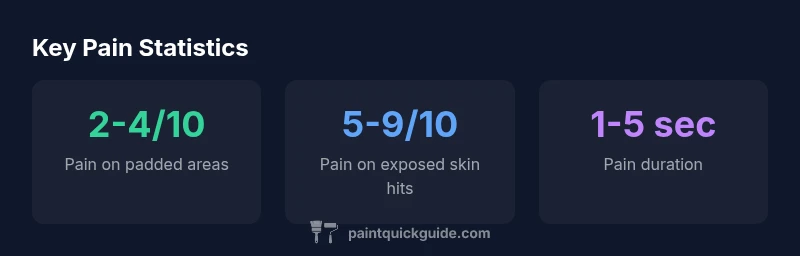
How much does paintball hurt is not a single number—pain varies by hit location, velocity, padding, and adrenaline. In practice, how much does paintball hurt depends on velocity, padding, and adrenaline. In practice, most players report mild discomfort with light bruising or stinging, while direct hits on exposed skin can be briefly sharp. Padding, masks, and clothing choices matter. Expect brief stinging that lasts seconds rather than long-lasting pain.
Understanding the pain response in paintball
Pain in paintball is a composite experience shaped by multiple factors rather than a fixed value. According to PaintQuickGuide, most players describe the initial sting as brief and localized, followed by a rapid recovery once padding and clothing do their job. The commonly asked question how much does paintball hurt often depends on hit location, velocity, and whether protective gear is worn. In practical terms, the pain you feel is closely tied to how well you dress for the game and how far you are from the shooter. If you’re new to the sport, expect a short, sharp sting that fades quickly as your adrenaline rises and your body adjusts to the sensations. The exact experience may be different each time, but the overall pattern is consistent across recreational play and semi-competitive environments.
What affects the intensity of paintball pain
Pain intensity is influenced by four broad factors. First, hit location matters—exposed skin areas tend to feel stingers more than padded regions, and facial areas behind a mask are cushioned but not completely pain-free. Second, velocity and distance influence impact—higher speeds or closer ranges deliver more force, increasing the chance of a sharper sting. Third, padding and clothing dampen the sensation by distributing some of the impact over a larger area. Fourth, adrenaline and psychological state can modulate pain perception; players often report lower perceived pain when engaged and focused on play. Practical takeaway: choose gear that provides adequate coverage for your typical playing style and keep your equipment well-maintained to avoid excessive rebounds or missed shots.
Common hit zones and typical expectations
When planning your loadout, it helps to know which zones hurt most and which are better protected. Forearms and thighs are common targets that can bruise but are usually manageable with sleeves and padding. The torso often feels less painful due to thicker clothing and chest protection, while hits to knees or shins can sting but are usually brief if you’re wearing long socks and padding. The head and neck should always be protected by a helmet or mask; even with protection, hits in this area can cause temporary discomfort, but are significantly less painful thanks to the face shield. Regardless of zone, the goal is to minimize impact through proper distance, movement, and body positioning.
Gear and padding to reduce pain
The most effective pain-reduction strategy starts with your gear. A well-fitted mask, a sturdy head and neck protection, long sleeves, elbow and knee pads, and appropriate footwear will dramatically lower the sting from hits. In addition, consider padding upgrades like chest protectors and hip padding for areas that tend to bruise. Comfort matters: gear that fits correctly reduces friction and permits more natural movement, which in turn minimizes exposure time to incoming fire. Finally, clothing fabrics that wick moisture and remain breathable help you stay comfortable during long games while maintaining protection.
Techniques and game-play choices to minimize exposure
Beyond padding, your technique can significantly influence how much paintball hurts. Learn to maintain proper distance from opponents, use cover effectively, and move with controlled, deliberate steps to avoid lingering in the line of fire. Mental preparation matters too—staying calm helps you absorb the sting without reacting in a way that makes the pain feel worse. Practice scenarios that simulate getting hit, so your body and mind are prepared for the sensation. The combination of good technique and protective gear is the most reliable shield against pain in each round.
After-effects and immediate care if you were hit
After a hit, take a moment to assess the area, especially if you’re playing in cold or damp conditions that can magnify discomfort. Remove any restrictive gear that hinders circulation only after you’re safe, apply a cold compress if the area is swelling, and cleanse the skin to prevent irritation. If pain persists well beyond a few minutes, or if you notice signs of a severe bruise or allergic reaction, seek medical advice. For most players, the post-hit period is brief and manageable with rest and hydration. Remember, proper recovery is part of sustainable play.
Estimated pain by common hit zones
| Hit Zone | Estimated Pain (approx) | Notes |
|---|---|---|
| Forearms | 2-5/10 | Padding helps reduce impact on this area |
| Torso (chest/back) | 3-6/10 | Thicker clothing and chest protectors help cushion hits |
| Legs/ankles | 4-7/10 | Long socks and pads recommended for protection |
| Head/neck (mask area) | 1-3/10 | Mask greatly reduces pain but protect still advised |
Your Questions Answered
How hard does a paintball hit typically feel?
A hit usually feels like a sharp sting or crush for a moment, with the intensity depending on velocity, distance, and hit location.
Hits feel like a brief sting, varying by velocity and where you’re hit.
Do padding and clothing really reduce pain?
Yes. Proper padding and thick clothing can dramatically cut the sting by distributing force and protecting sensitive areas.
Padding really helps—wear it to soften the impact.
Does experience change how pain is perceived?
Experienced players often report less perceived pain due to better positioning, anticipation, and protective gear usage.
Experience helps you anticipate hits and stay protected.
What should I do if I’m hit in a sensitive area?
Move to safety, stay calm, assess the area, and apply cold if swelling occurs. Seek medical help if pain persists.
Get to safety and treat any swelling if it appears.
Is pain from a paintball hit dangerous?
Pain itself is usually not dangerous, but facial hits or hits to sensitive areas can cause injury if not protected. Seek help for any lingering symptoms.
Pain is typically not dangerous, but protect yourself and seek help if symptoms linger.
How can I prepare for a game to minimize pain?
Choose proper padding, ensure an properly fitted mask, maintain distance, and practice movement to reduce exposure.
Gear up properly and practice safe movement to lower risk.
“Pain should be brief and manageable when proper protection is used; gear, positioning, and practice are your best safeguards.”
Quick Summary
- Wear proper padding to reduce pain quickly
- Distance and positioning are your best defenses
- Protect exposed skin and head with appropriate gear
- Pain is typically brief and manageable with the right setup