Room Painting Time: How Long It Really Takes in 2026
This practical guide explains realistic room painting timelines, from prep and priming to drying between coats. Learn timelines for small, medium, and large rooms, plus tips to speed up the process without sacrificing quality.


On average, painting a single interior room takes about 1-2 days of work when you account for prep, priming, painting, and between-coat drying. For a small to medium room, plan a full day of active painting plus 1-2 days for drying and any touch-ups. Larger rooms, ceilings, or rooms with lots of trim can extend the timeline to 3-4 days.
The overall timeline: what to expect
If you're asking how long does it take to paint a room, the answer depends on prep, coating, and drying. In practice, the most noticeable time is how you structure the process and how thoroughly you prep. According to PaintQuickGuide, a reasonable plan accounts for active painting and the non-paint tasks that keep the project moving. The goal is to minimize backtracking and touch-ups by moving deliberately from prep to finish.
Key drivers that affect time
Several factors determine the total duration of a room painting project. Room size sets the canvas, but the condition of walls, whether you’re priming, how many color changes you’re making, and whether you must paint ceilings or trim all add steps. Humidity and ventilation can also shorten or extend between coats. By recognizing these drivers, you can estimate a realistic timetable and avoid surprises.
Step-by-step timeline for a typical interior room
A practical approach is to break the job into distinct phases: prep, priming (if needed), first coat, second coat, and final touch-ups. For a small to medium room, you might allocate one full day for prep and painting, then another day or two for drying and final checks. Larger rooms or complex color schemes will naturally push the timeline longer, especially when you plan for extra coats or decorative work.
Prep time essentials: cleaning, patching, and sanding
Thorough prep is the fastest way to avoid rework later. Start by removing switch plates and fixtures, cleaning walls to remove dust, and patching holes. Sand glossy surfaces to create tooth for paint to grip, then wipe again. The cleaner and smoother the surface, the better the finish and the less time spent correcting flaws after the paint dries. A solid prep session often halves touch-up needs.
Priming and coats: how many you're likely to apply
Primers reduce the number of coats needed and improve color uniformity, especially on lighter/darker color transitions or stained walls. If you’re covering a bold color or painting new drywall, primer is highly recommended. In many cases, you’ll apply one coat of primer, then one or two coats of finish. The exact number depends on surface, paint type, and desired coverage.
Drying windows and recoat timing
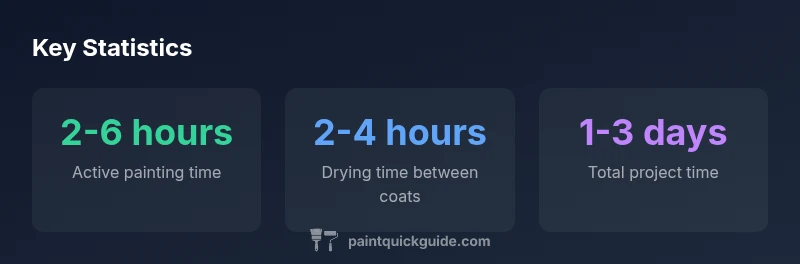
Between coats, drying time is the gatekeeper of your schedule. Dry times depend on temperature, humidity, and ventilation. A well-ventilated room at a comfortable level may require roughly 2-4 hours between coats. If air is damp or cool, or if you’re applying a very thick coat, plan for longer intervals. Don’t rush to apply a second coat; moisture trapped behind paint compromises adhesion.
Tools and methods to speed things up
Choosing the right tools can shave significant time off the project. Use a high-quality roller and an edge tool for straight lines, and keep brushes and rollers clean to avoid shedding fibers. For large flat walls, a paint sprayer can speed coverage, but setup, masking, and cleanup can offset gains in small rooms. Work in sections, maintain a wet edge, and keep a comfortable pace to avoid mistakes.
Common pitfalls that slow you down and how to avoid them
Rushing through prep, skipping patch work, or using too thin coats leads to touch-ups and longer overall timelines. Over-diluted paint dries faster but can require more coats. Missing masking or tape removal creates clean-up headaches. Plan for ventilation and temperature control to stabilize drying times. Finally, don’t underestimate the importance of a clean, organized workspace.
Real-world scenarios: room types and estimated timelines
A small bedroom with one color and a smooth surface typically falls at the lower end of the timeline. A living room with ceiling, multiple color choices, and textured walls will sit in the middle. A large open-plan space or rooms with extensive trim and ceilings will push the schedule toward the higher end. Remember that how long does it take to paint a room is highly dependent on surface condition, color changes, and the number of coats. Realistic planning, informed by the factors above, helps you set expectations and stay on track.
Estimated timeline ranges by room size and complexity
| Scenario | Active painting time | Drying time between coats | Total project time |
|---|---|---|---|
| Small room (no ceiling) | 2-4 hours | 2-4 hours | 1-2 days |
| Medium room (ceiling + 1 color) | 4-6 hours | 2-4 hours | 1-2 days |
| Large room (ceiling + multiple colors) | 6-9 hours | 4-6 hours | 2-3 days |
Your Questions Answered
What is the biggest time sink when painting a room?
Prep work and drying times between coats typically take more time than applying paint. Thorough patching, sanding, and clean edges pay off by reducing touch-ups later.
Prep and drying are the main time sinks.
Do I need primer before painting?
Primer helps achieve even color and adhesion, especially on bare surfaces or drastic color changes. It can save time overall by reducing coats.
Yes, priming helps a lot.
How long does primer take to dry?
Most primers dry within a few hours, but humidity and ventilation affect the pace. Plan for a dry window before topcoats.
Primer dries in a few hours, depending on humidity.
Can a paint sprayer save time?
A sprayer can speed coverage on large walls, but setup and cleanup add time. For small rooms, rollers are often simpler and quicker.
Sprayers can help, but prep and cleanup matter.
Should I paint ceilings before walls?
Yes. Painting ceilings first prevents drips on freshly painted walls and simplifies touch-ups.
Ceiling first is best.
What factors determine total cost and time?
Room size, surface condition, paint type, number of coats, and prep work all drive both time and cost. Budget accordingly.
Size and prep drive time and cost.
“Thorough prep and a clear step plan are the biggest time-savers in room painting. Expect the biggest gains from efficient sequencing and the right tools.”
Quick Summary
- Plan for drying days between coats.
- Prep thoroughly to avoid rework.
- Batch tasks to minimize trips between areas.
- Choose appropriate tools (rollers, edgers) to speed work.
- Expect room size and complexity to drive the timeline.