Gauche Paint: A Practical How-To Guide for Artists and Hobbyists
A comprehensive how-to on gauche paint (gauche paint), covering technique, palettes, layering, surfaces, cleanup, and storage for home and studio painters.


Learn how gauche paint plans bold, opaque artwork with a forgiving, re-wetable surface. This guide covers selecting quality gouache, preparing paper, mixing colors, applying layers, and caring for brushes and storage. Follow a clear, step-by-step workflow and avoid common mistakes to achieve consistent results with gauche paint.
Understanding gauche paint
According to PaintQuickGuide, gauche paint, commonly spelled gouache in English, is a water-based pigment suspension that dries to a vivid, opaque finish. Unlike transparent watercolors, it can be reactivated with water after drying, making corrections and adjustments possible. Gouache and gauche paint share the same core chemistry: pigment particles suspended in a gum arabic binder with added chalk or chalk-like fillers to boost opacity. This blend gives bold, flat color that can be layered for definition. For beginners, gauche paint is forgiving: you can lift color with a clean brush while it’s still damp or reapply portions after drying to tweak shapes. When stored properly, gauche paint remains usable for a long time, and many studios choose high-quality artists’ brands for better pigment saturation. In short, gauche paint offers versatility for both flat graphic work and painterly studies, especially in portraits, posters, and design sketches.
Gouache paint in modern art and craft
Gauche paint has moved from classroom experiments to beloved tools for illustrators, designers, and hobbyists alike. Its re-wet ability makes corrections easy, while its opacity supports sharp shapes and bold color blocks. In home studios, gauche paint is popular for cards, posters, and quick concept sketches because it dries quickly and cleans up with water. Artists often combine gouache with markers or ink to create mixed-media pieces. The paints come in tubes or pans, and many beginners appreciate the accessible price point and forgiving handling. As you grow more confident, you can push gouache toward dense, velvety layers or even scratch into dry paint to reveal underlayers. Whether you’re painting a still life, a portrait, or a design study, gauche paint offers a practical bridge between watercolors and acrylics while staying light on supplies and cleanup.
Tools and materials you’ll need
To start with gauche paint, assemble a core kit that balances quality and cost. Choose a small set of gouache colors with a true white, plus a neutral gray for value studies. Use soft synthetic brushes for smooth washes and finer brushes for details. A sturdy watercolor paper or mixed-media paper that can take multiple layers is essential. Keep a plastic palette with wells for mixing, plus a spray bottle to keep colors moist during sessions. Have clean water in two containers (one for rinsing brushes, one for clean water) and plenty of paper towels for blotting. Optional items like masking fluid, masking tape, and a fixative can help with edges and display, but they’re not required for beginners. Finally, label your colors so you can reproduce mixes consistently over time.
Color mixing and palette creation
Start with a limited palette to avoid muddy mixes. A common starter set includes a warm and cool red, a warm and cool blue, a yellow, a green, a cool or warm gray, and a true white. Mix colors on the palette rather than on the page to control saturation. Gouache blends can dry slightly chalky, so adjust with a tiny amount of water or re-wet if necessary to restore brightness. When you mix, test swatches on a scrap sheet to judge pigment strength and opacity before applying to your painting. Keep a record of successful mixes so you can reproduce colors in future projects. Remember that gauche paint generally dries lighter than it looks when wet, so plan your values accordingly.
Layering, glazing, and achieving depth
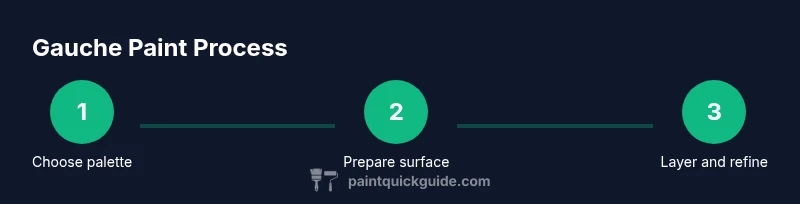
Gauche paint shines when you build layers from light to dark. Start with thin washes to establish composition and values, then allow each layer to dry before applying the next to prevent back-pudding and lifting. Use slightly more water for transparent passages and less water for opaque shapes. Glazing is powerful with gouache: you can apply a transparent layer over a dry underlying color to alter hue and value without covering the underlayer. For crisp edges, use masking tape or carefully lifted areas with a clean, damp brush. Practice edge control by painting large shapes first and refining contours gradually. With practice, your gauche paint will reveal a crisp, bold finish that remains flexible enough for adjustments.
Surfaces, ground, and preparation
Choose a paper that can handle multiple layers without warping; cold-press 140 lb (300 g/m²) is a popular starting point. Heavier papers reduce buckling and allow you to lift pigments more easily. If you’re working digitally or on canvas, prepare a ground by applying a light watercolor ground or gesso. Tape the edges of your paper to a board to minimize curling. Let the ground dry completely before you start painting. While gauche paint works on many surfaces, a smoother surface will yield sharper edges, whereas rougher paper yields more texture. Finally, keep your workspace free of dust and contaminants that could clog brushes or alter color clarity.
Clean-up, storage, and longevity
Rinse brushes thoroughly with lukewarm water after each session to avoid stiff bristles. Avoid leaving brushes soaking or scraping pigment from brush to brush; lay brushes flat to dry. Reseal paint tubes or pans to prevent evaporation and pigment separation. Store gouache in a cool, dry place away from direct sunlight; consider airtight containers to slow pigment degradation. If you notice chalkiness or color separation, remix with a drop of water and a gentle shake of the container. Over time, a well-kept palette of gauche paint should remain usable for years, especially if you invest in higher-quality brands. Regularly review your color inventory and replace any colors that have become too dull or clogged.
Common mistakes and how to avoid them
Avoid over-thinning gouache, which can compromise opacity and coverage. Don’t mix colors on a saturated palette that creates unintended muddy tones; clean your mixing area frequently to keep colors vibrant. Painting with a dry brush or heavy pressure can cause harsh edges; use soft brush strokes and build color gradually. For beginners, rushing dry-time can lead to lifting or cracking when layers dry; allow more drying time between applications in humid environments. Finally, neglecting brush care quickly reduces stroke control and pigment quality; clean brushes after every session and store them correctly.
A simple practice project to try
A quick project to practice gauche paint is a bold still-life study using five to six colors. Start with light geometric shapes to map out composition, then layer color to model form. Build up opacity gradually to keep edges crisp and values readable. Finish with a light highlight to emphasize the light source. This practice will help you understand layering, drying times, and brush control while delivering a satisfying visual result.
AUTHORITATIVE SOURCES
For further authoritative reading on gouache, consider these sources:
- Britannica: https://www.britannica.com/art/gouache-paint
- The Met: https://www.metmuseum.org/art/collection/search#!/search?q=gouache
- Getty: https://www.getty.edu/art/collection/
Tools & Materials
- Gauche paint (gouache) set(Choose artist-grade or student-grade based on budget; include true white.)
- Watercolor or mixed-media paper(Cold-press 140 lb (300 g/m²) is a solid starting point.)
- Soft synthetic brushes (round and flat)(A range from size 2 to size 8 covers most tasks.)
- Palette with wells(Plastic or ceramic; keep a separate well for whites.)
- Water containers (2–3)(One for rinsing, one for clean water; wider mouths preferred.)
- Paper towels or cloths(Blot excess paint and wipe brushes between colors.)
- Masking tape or masking fluid (optional)(Helpful for sharp edges and clean borders.)
- Pencil and eraser (optional)(Light sketching before paint is optional.)
- Fixative or sealant (optional)(For display pieces; not required for practice.)
Steps
Estimated time: Estimated total time: 90-120 minutes
- 1
Prepare workspace and materials
Clear a flat, well-lit area. Lay out paints, brushes, paper, and water containers within easy reach. Having everything organized reduces interruptions and helps maintain focus.
Tip: Arrange colors from light to dark to speed mixing. - 2
Choose your palette and mixes
Decide on a limited color set and pre-mix a few key tones on the palette. Label swatches for quick reference during painting.
Tip: Test each mix on a scrap swatch before applying. - 3
Test color values on scrap
Apply small washes to gauge opacity, hue, and drying behavior. Adjust by adding water or pigment as needed.
Tip: Keep notes of successful mixes for future projects. - 4
Lay a light sketch and initial wash
Outline the composition lightly with pencil if desired, then apply a pale wash to establish value structure.
Tip: Use plenty of water for a soft, translucent base. - 5
Build mid-tones with controlled layers
Add mid-tone colors in thin layers, allowing each layer to dry to avoid muddying edges.
Tip: Work from large areas to small details. - 6
Add depth with glazing and highlights
Apply transparent glazes over dried areas to shift hue and value subtly; reserve bright highlights for the end.
Tip: Apply glazing gradually; avoid heavy, opaque layers on top. - 7
Refine edges and forms
Sharpen edges with careful brushwork; lift stray pigment with a clean damp brush as needed.
Tip: Keep a clean brush handy for lifting mistakes. - 8
Clean up and store materials
Rinse brushes, dry them flat, reseal paints, and store in a cool, dry place away from direct sun.
Tip: Label colors and keep pigments separated by category.
Your Questions Answered
What is gauche paint?
Gauche paint, or gouache, is a water-based pigment that dries opaque with a matte finish. It can be re-wetted after drying, allowing for corrections and adjustments.
Gauche paint, also known as gouache, is a water-based pigment that dries opaque and matte, and it can be re-wetted for edits.
Gauche vs watercolor?
Gauche is opaque when dry, unlike watercolor which remains transparent. Gouache often requires white or light underlayers to maximize opacity and contrast.
Gauche dries opaque, unlike watercolor which stays transparent. It often needs light underlayers for true opacity.
Can you layer gauche over acrylics?
Yes, you can apply gouache over dried acrylics, but ensure the acrylic layer is fully dry and sealed to prevent reactivation and blending.
Gauche over dry acrylics is possible if the surface is properly prepared and dry.
What paper is best for gauche work?
Cold-press watercolor paper around 140 lb (300 g/m²) works well for beginners, balancing absorbency and stiffness for multiple layers.
Cold-press watercolor paper around 140 pounds is a solid starting point for gauche.
How long does gouache last after opening?
Properly sealed tubes or pans kept in a cool, dry place can last for many years; pigment separation may occur and can usually be corrected with a quick remix.
If sealed and stored properly, gouache can last for years; you may need to remix pigments if they separate.
Is gauche paint good for beginners?
Yes. Gauche is forgiving, dries quickly, and allows corrections, making it an excellent starting point for learning color, layering, and edge control.
Gauche is great for beginners—it's forgiving, dries fast, and helps you learn layering and edges.
Watch Video
Quick Summary
- Choose a limited palette for cohesive results
- Gauche paint dries opaque and re-wets easily
- Layer from light to dark to build depth
- Use proper surfaces to prevent warping
- Store paints in a cool, dry place for longevity