Do You Put Paint Thinner in a Paint Sprayer? A Practical Guide
Discover whether thinning is appropriate for spray guns, how to choose the right reducer, and a step-by-step approach to safe thinning and cleaning for homeowners and DIY enthusiasts.


Do not add general paint thinner to a standard sprayer unless the manufacturer explicitly approves a reducer. Use only the thinner recommended for the paint you’re using, and follow label directions. Always test a small batch first and clean the sprayer thoroughly after use. Thin gradually in small increments, monitor viscosity, and never mix different thinners. If unsure, switch to a compatible ready-to-spray product. This approach helps prevent sputtering, clogs, and a poor finish.
Understanding thinning and spray technology
Sprayers rely on a balance between paint viscosity and air pressure to turn liquid coatings into a fine, uniform mist. The goal is smooth atomization without clogging the nozzle or creating an uneven texture. The right thinning level depends on several factors, including paint type (water-based vs solvent-based), the sprayer style (HVLP vs conventional), nozzle size, and pigment load. Before you thin, verify that thinning is permitted by both the paint label and the sprayer manufacturer. If either source prohibits thinning, do not proceed.
If thinning is allowed, use the reducer or thinner specified for the paint. Some brands include a built-in reducer designed for their product line. Using an unlisted thinner can alter color, trigger chemical reactions with the coating, or reduce adhesion. In practice, many DIY projects involve latex paints with water as the thinning agent, while oil-based finishes require a compatible solvent. The overarching rule is to thin only as much as needed to achieve a smooth flow, then test on a scrap surface and adjust gradually. Remember that thinning changes drying time and film thickness, which affects appearance and durability.
Safety matters: thinner vapors can be more hazardous than the paint itself. Ensure good ventilation, wear eye protection and gloves, and store thinner in a sealed container away from heat sources. Have a fire extinguisher accessible, and never mix solvents in the same container unless the manufacturer explicitly allows it. These precautions reduce health risks and environmental impact.
When thinning is appropriate and when it's not
Thinning is appropriate when the paint is too thick to flow through the gun smoothly, causing sputtering, orange peel, or an uneven spray pattern. It is not appropriate when the paint’s label or the sprayer’s guidance clearly states “do not thin” or when the product provides a ready-to-spray formulation. Some coatings are designed to be sprayed straight from the can, while others require a specific reducer to meet a target viscosity. Always start with the manufacturer’s guidance and perform a small test spray on a sacrificial surface. If the test gives you a uniform spray with no splatters or dry bursts, you’re likely within the right range. If issues persist, reassess the paint type, nozzle size, and air pressure.
Keep in mind that different projects call for different thinning levels. A light coat on a wall may tolerate a tiny amount of thinning, while a dense enamel on trim may require more—but only within the prescribed limits. Over-thinning can lead to runs, sagging, or insufficient film formation, while under-thinning can cause clogging and inconsistent coverage. The key is consistent, test-driven adjustments rather than guesswork.
In addition to product specifications, consider environmental conditions. Temperature and humidity affect how quickly the solvent evaporates, which in turn affects flow and dry time. Work in a controlled space when possible, and use protective coverings to mitigate dust or debris that could worsen surface finish. By aligning thinning practices with manufacturer guidance and environmental factors, you’ll optimize both finish quality and workflow efficiency.
Choosing the right reducer and how to test viscosity
The safest path is to select the reducer or thinner recommended for the paint you’re applying. If the label specifies a compatible thinner, use that exact product rather than substituting aisles with different solvents. When in doubt, contact the paint manufacturer or check the sprayer’s manual for approved reducers. Some projects rely on a paint-and-thinner combination provided by the same brand to achieve a predictable viscosity and drying behavior. Avoid mixing multiple thinners unless the documentation explicitly allows it.
Viscosity testing is a practical way to verify that your mix flows through the gun properly. Use the manufacturer’s guidance for target viscosity, and perform a quick test on a scrap surface to observe spray behavior, atomization, and film formation. If the spray appears thin and atomizes well, you’re likely close to the desired viscosity. If it sprays in a misty fog or creates heavy drips, adjust by adding a small amount of reducer and retest. Remember that even minor changes can have a big impact on finish quality, so make incremental adjustments and document your settings for future projects.
A minimal set of tests and measurements, performed consistently, yields reliable results across different days and projects. Do not rely on guesswork when your spray job’s success depends on precise thinning and proper solvent use. Start with the paint supplier’s recommended thinner, test in small batches, and adjust methodically until you achieve a uniform spray and a smooth, even coat.
Step-by-step: thinning safely and spraying cleanly
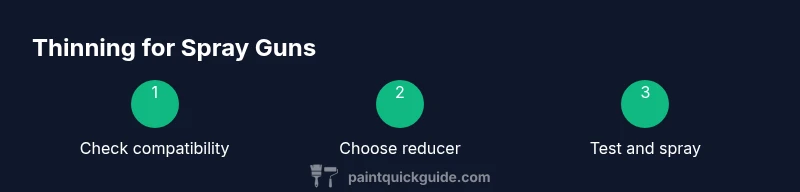
- Check compatibility: Confirm the paint and sprayer both support thinning with the recommended reducer. 2) Gather the right thinner: Pull the exact reducer or thinner specified by the paint maker and the sprayer manufacturer. 3) Prepare and measure: In a clean container, mix paint and thinner in the recommended ratio, starting with a conservative increment. 4) Strain and blend: Strain the mixture to remove clumps and agglomerates; re-mix to ensure even distribution of solids. 5) Test spray: Use a scrap surface to evaluate atomization and coverage; adjust viscosity gradually if needed. 6) Spray with care: Maintain steady motion, consistent distance, and correct nozzle settings; avoid over-thinning. 7) Clean immediately after spraying: Rinse the sprayer with the appropriate solvent and follow with a water rinse if required by the product. 8) Document the setup: Record the thinning ratio, nozzle size, and air pressure for repeatability on future projects.
Cleaning and maintenance after thinning
Post-project cleaning is essential to preserve sprayer performance and protect next coatings. Rinse the gun and hose with the recommended solvent right after use, making sure to clear the nozzle and passages of any remaining thinner or paint residue. If you used a water-based paint, finish with a water rinse; otherwise, follow with the appropriate solvent rinse to remove stubborn coatings. Disassemble the spray gun only as directed by the manufacturer, and dry components thoroughly before storage. Store thinning products in clearly labeled containers and keep them sealed to minimize evaporation and odor exposure. Regular maintenance, including checking seals and gaskets, helps prevent leaks and ensures consistent spray quality across projects.
Troubleshooting: common issues and fixes
Common thinning-related problems include sputtering, excessive orange peel, and inconsistent film formation. If you notice sputtering, evaluate whether the paint is too thin, the needle or nozzle is clogged, or the airflow is misadjusted. For orange peel, inspect the spray angle, distance to the surface, and whether the thinner choice has altered drying time too much. If you see runs or sags, you may have over-thinned or applied too thick a layer in a single pass. In all cases, revert to the recommended thinning ratio, re-test on scrap, and adjust gradually.
FAQ and practical notes
This guide emphasizes using thinning practices that align with manufacturer guidance and safe handling. For most home painting projects, thinning with the intended reducer keeps spray quality high and finish consistent. When in doubt, consider using a ready-to-spray substitute or a commercially prepared spray coating that does not require thinning. Always prioritize safety, ventilation, and proper cleanup to protect yourself and the project outcome.
Tools & Materials
- Paint sprayer (HVLP or conventional)(Ensure compatibility with your coating type and any reducers)
- Paint thinner or reducer approved by the paint maker(Use only the thinner specified for your paint and sprayer)
- Original paint and thinners in labeled containers(Keep separate to avoid cross-contamination)
- Strainer/Filter(Filter paint and thinner before pouring to remove solids)
- Measuring cup or scale(Accurate thinning ratios matter for spray quality)
- Gloves, eye protection, and respirator or ventilated area(Protect from vapors and skin contact)
- Waste container and rags(Dispose of used thinner and paint per local regulations)
- Scrap test surface (cardboard/panel)(Evaluate spray on a sacrificial area before committing to the project)
- Water source or compatible final rinse(Finish with appropriate rinse for water-based coatings)
Steps
Estimated time: 45-60 minutes
- 1
Check compatibility
Review the paint label and sprayer manual to confirm thinning is allowed and identify the approved reducer. If either source forbids thinning, do not proceed. This aligns your workflow with the manufacturer’s expectations and minimizes finish defects.
Tip: Document the allowed thinning ratio for future projects. - 2
Select the right thinner
Choose the reducer or thinner specified by the paint maker and ensure it is compatible with your spray gun. Substituting solvents can alter color, gloss, and adhesion.
Tip: Avoid using multiple thinners unless the documentation explicitly allows it. - 3
Prepare and measure
Pour paint and thinner into a clean container using the recommended ratio. Stir or mix thoroughly to ensure uniform distribution of solids. Do not shake aggressively to avoid introducing air bubbles.
Tip: Measure by volume for consistency across coats. - 4
Test viscosity and spray
Strain the mixture, then spray a test patch on scrap material. Check for smooth atomization, even coverage, and acceptable drying behavior. If the spray is too thin or too thick, adjust gradually and retest.
Tip: Make only small adjustments at a time and log the results. - 5
Spray with control
Maintain a steady hand, correct distance, and even passes. Apply light coats rather than a single heavy pass to reduce runs and sags. Adjust nozzle and air pressure as needed based on test results.
Tip: Keep the surface clean between coats to avoid texture issues. - 6
Clean the sprayer after thinning
Immediately rinse the gun and lines with the recommended solvent, followed by a final rinse with water if required. Disassemble only per the manufacturer and dry all parts completely before storage.
Tip: Never skip cleaning; dried residue hardens seals and reduces spray quality.
Your Questions Answered
Can I use any thinner in a spray gun?
No. Use only thinners approved by the paint maker and the sprayer manufacturer. Using an unknown solvent can cause color shifts, adhesion problems, and safety risks. If you are unsure, consult the product manuals or the manufacturer’s support resources.
Use only the thinners approved by the paint maker and sprayer manufacturer; using unknown solvents risks finish quality and safety.
Is thinning latex paint necessary for HVLP sprayers?
Many latex paints can spray well without thinning, but some blends benefit from a small amount of thinning per the label. Always test on a scrap surface first and adjust within the recommended range.
Test on scrap first, and only thin within the manufacturer’s recommended range.
What should I do if thinning causes runs or sags?
Stop spraying, allow the surface to dry, and reassess the thinning ratio. Re-test with a lighter application on scrap before continuing. Over-thinning is a common cause of runs.
If you see runs, stop, dry, and re-test with a lighter spray on scrap first.
How should I clean the sprayer after thinning?
Rinse with the recommended solvent, then follow with a rinse of the appropriate final solvent or water if required by the paint. Disassemble as directed and dry components thoroughly before storage.
Rinse with the right solvent, then dry thoroughly after disassembly.
Why does thinning affect drying time?
Thinners change solvent evaporation rates, which alters drying time and film formation. Expect slightly longer or shorter dry times depending on the reducer and ambient conditions. Always test and observe drying behavior on a scrap surface.
Thinner changes evaporation rate, so drying time shifts—test on scrap first.
Watch Video
Quick Summary
- Only thin with manufacturer-approved reducers.
- Test on scrap before spraying to confirm viscosity and spray quality.
- Thinning changes drying time and finish; adjust gradually.
- Clean thoroughly after thinning to protect sprayer performance.