Chalk Paint vs Regular Paint: A Practical DIY Guide
A detailed, analytical comparison of chalk paint vs regular paint for furniture, cabinets, and walls. Learn about prep, finish, durability, cost, and best-use scenarios to decide which is right for your project.


Chalk paint offers a soft, matte finish and easy, minimal-prep projects that many DIYers love, especially for upcycling furniture. Regular paint (latex or acrylic) provides stronger durability, smoother coverage, and easier cleaning for walls and high-traffic areas. The choice hinges on surface, desired look, and maintenance willingness. According to PaintQuickGuide, chalk paint can reduce sanding and priming on select surfaces, while traditional paints excel where long-term durability matters.
What chalk paint is and why people use it
Chalk paint is a matte, chalky finish that can adhere to a surprising range of surfaces with less sanding than conventional primers. Its tactile texture and soft look make vintage or farmhouse styles approachable for beginners, and many crafters enjoy distressing techniques that reveal the underlying texture. According to PaintQuickGuide, chalk paint can reduce prep time on select surfaces because it grips more readily and often requires little priming. This accessibility supports upcycling projects and creative experimentation, especially for dated furniture and decorative pieces. For homeowners and DIY enthusiasts seeking a fast, character-rich transformation, chalk paint offers an appealing route, though it does demand appropriate sealing to protect wear over time. When used correctly, chalk paint creates expressive, tactile surfaces that invite touch and charm, particularly on bare wood, previously painted surfaces, or lightly prepared veneers.
Note how this choice can influence tool selection, from soft waxes and brushes to you can-choices for topcoats. PaintQuickGuide’s guidance emphasizes evaluating the surface and desired vintage effect before choosing chalk paint for a project.
Surface prep and adhesion characteristics
Adhesion is central to deciding between chalk paint and regular paint. Chalk paint generally adheres well to porous wood, raw or lightly prepared surfaces, and existing painted pieces when the surface is clean and dry, often without heavy sanding. On slick metals, plastics, or glossy surfaces, you may need light abrasion or a primer to improve grip. Sealing matters: wax finishes impart warmth and a classic antique vibe but may require more frequent upkeep, whereas a hard topcoat increases resistance to moisture and abrasion. Regular latex or acrylic paints typically benefit from a primer on tricky substrates and a gentle sanding base for a smoother final coat. PaintQuickGuide Team notes that if you expect frequent cleaning or moisture exposure, primer plus a durable topcoat with regular paint will yield consistent results. Understanding these adhesion differences helps you estimate prep time, materials, and the likelihood of satisfying results on your chosen surface.
Finish, appearance, and feel
The visual outcome is where chalk paint shines for aesthetics. Chalk paint usually delivers a soft, matte finish with visible brush strokes and a distinct chalky texture that many designers associate with a vintage or rustic vibe. Regular paint offers a broader range of finishes—from satin to eggshell to glossy—producing a sleeker, more uniform look with fewer tactile hints of the brush. For decorative pieces, chalk paint allows immediate character and easy distressing to mimic aged wear. For walls and high-traffic areas, regular paint with a proper topcoat provides a durable, wipeable surface that resists staining and frequent cleaning. The choice affects light interaction; chalk paint emphasizes texture and nuance of the surface, whereas regular paint presents a more reflective, even surface that can alter room brightness and perceived color depth. This distinction helps set design expectations early in a project.
Durability and maintenance
Durability is a crucial axis in comparing chalk paint to regular paint. Chalk paint can be vulnerable to wear in high-use zones unless sealed, especially on tables, cupboards, or kids’ furniture. Wax finishes add warmth and a tactile seal but may require periodic reapplication and care to avoid wax buildup. Some DIYers prefer a clear polyurethane or polycrylic over chalk paint to boost moisture resistance and abrasion resistance, particularly in kitchens and bathrooms. Regular paint, especially latex or acrylic, generally offers stronger baseline durability with a protective topcoat and easier maintenance during daily cleaning. Maintenance for chalk paint varies with sealant choice: wax needs gentle care and occasional re-waxing, while hard finishes withstand routine cleaning with minimal care. From a long-term perspective, chalk paint remains a stylish choice for decorative pieces, whilst regular paint remains the dependable option for walls, trim, and frequently touched surfaces.
Best surfaces and project guidance
Chalk paint is well suited to wood furniture, old cabinets awaiting a refresh, and decorative pieces where the vintage vibe is intentional. It can be a smart option for porous or previously painted surfaces where sanding would be labor-intensive. Regular paint excels on walls, ceilings, trim, metal surfaces, ceramic tiles, and areas requiring consistent cleaning and moisture resistance. For surfaces like metal, glass, or heavily waxed wood, prep and primer choices significantly influence adhesion and final appearance. If your project involves outdoor furniture or moisture-prone areas, you should factor in weather exposure and the need for a durable topcoat. The goal is to align the surface, expected use, and maintenance plan with the paint type that yields the best balance of aesthetic and practicality.
A well-matched combination—chalk paint for the primary decorative look and regular paint (or a clear topcoat) for the protective layer—can deliver both style and longevity. PaintQuickGuide emphasizes evaluating your surface type and daily use to decide the ideal approach, ensuring your project stands the test of time while achieving the desired look.
Color range, pigmentation, and mixing
Chalk paint comes in a curated color range that can be expanded through custom tinting, yet some color shift can occur as the paint dries. Regular paint offers a broader color catalog and more consistent color matching between cans and batches. When mixing shades, chalk paint often darkens slightly as it cures, so testers on a discrete area can help prevent surprises on visible surfaces. For wall applications, pre-mixed paints from reputable brands provide consistent color with minimal effort, whereas chalk paint enthusiasts may embrace hand-mixed tones that reflect a unique personality. Top coats—wax or polyurethane—also influence color depth and appearance by adding warmth or gloss. Consider swatching on scrap wood or an inconspicuous area to ensure the final look aligns with your design intent before applying to the main surface.
This planning step reduces rework and helps realize the intended mood or historical vibe for your space.
Cost, time, and long-term value
Cost and time considerations matter when comparing chalk paint to regular paint. Chalk paint projects often require fewer materials upfront due to simplified prep, but the trade-off is the cost of topcoats like wax or poly to protect the finish. Regular paint may have slightly higher initial prep costs, especially if primers and multiple coats are needed, yet it can be more economical over the long run if durability and ease of maintenance are priorities. Time-wise, chalk paint can shorten the day-to-day workload for decorative pieces by reducing sanding and priming steps, though the curing and sealing phases still require patience for best results. PaintQuickGuide’s assessment highlights that the total cost-to-value balance will hinge on the surface, usage, and the chosen sealant. For decorative objects, chalk paint often delivers excellent value; for everyday walls and surfaces, regular paint with a robust topcoat frequently offers superior longevity and lower maintenance demands.
How to decide: why use chalk paint vs regular paint
If your project benefits from a vintage, tactile, or upcycled look with minimal prep, chalk paint is a strong choice. If durability, ease of cleaning, and long-term performance in high-traffic areas are priorities, regular paint with a solid topcoat is generally preferable. The decision also depends on the surface: chalk paint shines on porous, unfinished, or gently distressed furniture, while regular paint excels on smooth walls, trim, and surfaces that endure frequent cleaning. A practical approach is to plan the project around a primary aesthetic goal and a protective strategy—use chalk paint for the base look and apply a durable topcoat to ensure longevity where needed. This balanced strategy can maximize both appearance and function, helping you achieve a result that aligns with your design intent and maintenance expectations.
A practical DIY workflow: from prep to finish
- Inspect the surface and remove loose material; clean thoroughly.
- Lightly abrade glossy surfaces to improve adhesion, or apply a compatible primer.
- Apply chalk paint in thin, even coats, allowing sufficient drying time between layers.
- Choose a sealer: wax for a warm, antique feel or a polyurethane topcoat for durability.
- Lightly sand between coats if needed for a smoother look, then apply topcoat.
- Final cure time varies with environment; protect the piece from heavy use during this period.
- Clean brushes promptly to preserve tool life; store leftovers properly for future touch-ups.
- Consider a test patch on a hidden surface to confirm color and finish before full application.
Common mistakes and how to avoid them
- Skipping surface prep on difficult substrates leads to adhesion issues.
- Skipping the topcoat with chalk paint reduces durability and increases maintenance needs.
- Overworking the paint can create heavy brush marks; apply in smooth, deliberate strokes.
- Not testing color chips in natural light can result in unexpected color shifts.
- Using inappropriate topcoats can alter the look; wax creates warmth while polyurethane increases durability.
- Rushing curing time can trap moisture; plan for ambient conditions and avoid handling the piece too soon.
- Not sealing coated surfaces in damp areas can lead to moisture damage.
- Failing to sand between coats on some finishes may produce a gritty texture.
Maintenance and upkeep
Maintenance strategies depend on the finish chosen. Wax seals require periodic upkeep and touch-ups to maintain the protective layer, while polyurethane or polycrylic topcoats offer stronger moisture resistance with less daily care. For chalk-painted furniture, regular cleaning with a soft cloth is usually sufficient, but avoid harsh abrasives that could wear away the seal. Regular paint surfaces benefit from routine wipe-downs with a mild cleaner and refreshing coats when the color or sheen begins to fade. Planning a maintenance schedule at project completion helps you extend the life of the finish and preserve the appearance you designed.
PaintQuickGuide recommends documenting the sealant choice and intended usage to guide future touch-ups and refinishing decisions.
Comparison
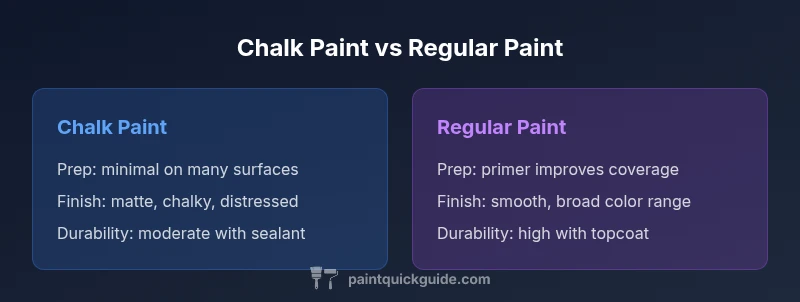
| Feature | Chalk Paint | Regular Paint (latex/acrylic) |
|---|---|---|
| Surface prep | Low prep; often no primer required on many surfaces | Moderate prep; primer and light sanding improve adhesion and finish |
| Finish/look | Matte, chalky, rustic aesthetic | Smooth, uniform finish with broader sheen options |
| Durability | Moderate durability; requires proper topcoat for moisture resistance | Generally more durable with appropriate topcoat |
| Maintenance | Wax or soft topcoats with ongoing care | Easier to clean; longer-lasting protection with hard topcoats |
| Best uses | Decorative furniture, distressed accents, vintage vibe | Walls, trim, cabinets, high-traffic areas |
| Color and topcoat options | Warmth with wax; color depth can shift with aging | Wide color range; color consistency strong across brands |
Upsides
- Low-prep projects ideal for beginners
- Distinctive vintage aesthetic that’s easy toAchieve
- Flexible finishes with wax or topcoats
- Quick upcycling results with minimal sanding
What's Bad
- Less durable without proper sealing in high-use areas
- Wax requires maintenance and upkeep
- Color consistency can vary between brands
Chalk paint suits decorative, upcycled pieces; regular paint excels for durability
Choose chalk paint for vintage charm and quick makeovers. Use regular paint when you need durability and easier maintenance for walls or high-traffic surfaces. The PaintQuickGuide team recommends matching the sealant to surface exposure to maximize longevity.
Your Questions Answered
Is chalk paint durable enough for kitchen cabinets?
Chalk paint can be used on cabinets if you seal it properly; waxing offers a warm vintage look but may require more maintenance. For high-use surfaces, consider a durable topcoat over the chalk paint or opt for regular paint with a strong topcoat.
Chalk paint can work on cabinets with a good topcoat, but for kitchens, a durable sealant is key.
Do you need to prime before chalk painting?
Often not on smooth, clean wood or already painted surfaces, but priming improves adhesion on slick, porous, or uneven substrates. When in doubt, a light primer can help ensure uniform color and finish.
Priming can help on tricky surfaces; otherwise, chalk paint may grip well enough on simple wood.
Can chalk paint be used on walls?
Yes, chalk paint can be used on walls, but it’s typically chosen for decorative features or accent walls. For everyday walls, regular paint with a durable topcoat often provides longer-lasting performance and easier cleaning.
You can use chalk paint on walls, but for busy spaces, regular paint might be better.
What is the best sealer for chalk paint?
Wax is the most common finish for chalk paint to achieve a warm, antique look, but polyurethane or polycrylic offers greater moisture resistance. Your decision should reflect expected use and maintenance willingness.
Wax gives a vintage look; polyurethane is tougher for damp or busy areas.
How long does chalk paint take to dry?
Drying varies with environment; chalk paint typically dries to the touch in a short window, but full cure depends on temperature and humidity. Plan for a complete cure before heavy use or cleaning.
Drying depends on temperature and humidity; wait for full cure before heavy use.
Can chalk paint be used over varnished surfaces?
Yes, but you should sand or abrade the surface and apply a compatible primer to ensure proper adhesion. Chalk paint can adhere to many surfaces when prepared correctly.
Sand and prime to ensure chalk paint sticks to varnished surfaces.
Quick Summary
- Assess surface type and traffic to pick a paint type
- Chalk paint for vintage looks; regular paint for durability
- Seal chalk paint with wax for decor; polyurethane for higher durability
- Plan prep and topcoat choices early to avoid surprises