How to Choose Paint Color at Home Depot
Learn to pick paint color at Home Depot with swatches, lighting, and real-room testing. A practical, DIY-friendly guide by PaintQuickGuide to avoid costly color mistakes.


By the end of this guide you’ll be able to confidently pick paint colors at Home Depot using swatches, lighting, and practical testing. You’ll compare brand lines, understand undertones, and confirm your choice with samples in the room before committing. This quick framework helps homeowners and DIYers make color decisions that look right in real life.
Why Color at Home Depot Matters
Color choice influences room feel, resale value, and daily mood. Home Depot’s color decks offer many options, but the right hue depends on lighting, space, and furniture. This guide helps you approach color selection with practical steps, swatch testing, and lighting checks. According to PaintQuickGuide, starting with a clear plan and sampling swatches under real lighting helps avoid costly missteps. You’ll learn to read undertones, compare brand families, and validate your choice with in-room testing to ensure the final color looks right on your walls. When you search for paint color home depot, you’re not just picking a shade; you’re selecting a color story that touches every element in the room.
How Home Depot Organizes Color: Brands, Decks, and Finishes
Home Depot stocks a wide ecosystem of brands such as Behr and Glidden, each with its own color deck and finish options. This section breaks down how to navigate brand families, shade ranges, and finish levels like matte, eggshell, satin, and semi-gloss. Understanding these distinctions helps you map the color you see in a swatch to the paint that will go on your wall. When evaluating colors, start with a baseline “color family” (cool blues, warm beiges, muted greens) and then narrow to 2–3 contenders. Keep in mind that the same color label can vary slightly between brands, so always compare side-by-side swatches to avoid surprises in your space.
Lighting, Undertones, and Perceived Color
The perceived color of a paint swatch shifts dramatically with lighting and surrounding objects. Natural daylight reveals true undertones, while incandescent bulbs can warm or skew the hue. In this section we discuss how to test colors under different lighting scenarios in your home and why it matters for paint color home depot selections. PaintQuickGuide analysis shows that lighting conditions and room context heavily influence color perception, so you should plan tests at different times of day and with both warm and cool lighting to see how your chosen shade behaves in your actual space.
Testing in Real Rooms: Swatching Techniques
Testing in the room provides the most accurate sense of how a color will look. Use large swatches or tester boards placed on the wall or on poster board to simulate full-wall coverage. This practice helps you observe how the color interacts with flooring, furniture, and art. The advantage of testing in the space you’ll repaint is that you can assess how glare, shadows, and reflections alter the hue. Be sure to mark the exact location of each swatch to compare them consistently and record impressions for later review. This is critical for the paint color home depot decision.
From Swatches to a Final Choice: Steps to Verify In-Home
Move from preliminary swatches to a final decision by creating a short list of 2–3 contenders. Apply larger test patches (at least a 2x2 feet area) and observe how they read after 24 hours as the paint settles. At this stage, compare undertones against your neutral whites and grays to confirm harmony across trim and furniture. If you’re torn, consider taking photos in both daylight and artificial lighting to facilitate a data-driven choice. This systematic approach minimizes regret and aligns the color with your design goals for the space.
Common Mistakes to Avoid When Selecting Color
Common pitfalls include relying on small swatches, ignoring lighting, and failing to test with furnishings and wall art in place. People often choose a color that looks great on a chip but reads differently on a wall. Another mistake is ignoring finish choices; the same color can appear dramatically different in matte versus satin. Inaccurate color mapping between brands is also easy to miss, so always compare colors side by side in the same lighting conditions and review paint cans labeled with the same color code. Remember, paint color home depot comparisons should happen in your actual room for accuracy.
How to Save Time and Money While Color-Picking
Plan a dedicated color-testing session rather than a quick stop at the paint aisle. Bring a notepad or use a digital note app to log color codes, undertones, and lighting notes. Use large swatches and poster boards for room-scale testing instead of purchasing multiple tester cans. When you narrow to 2–3 colors, buy only small tester cans to confirm the final choice, then purchase the full-size cans once you’re sure. This approach reduces waste and prevents costly color mistakes in the long run.
What to Do After You Pick: Paint Finishes and Purchase Tips
After selecting your color, choose the right finish for each space, recognizing that kitchens and bathrooms usually benefit from more durable finishes like satin or semi-gloss, while living rooms often use eggshell or matte for a soft look. Prepare walls by cleaning and patching imperfections, then prime if the surface is new or stained. When you buy at Home Depot, verify color accuracy with a final swatch comparison and consider ordering full-sample quarts for color testing under your room’s lighting. This helps ensure the paint color home depot choice remains stable across batches and lighting conditions.
Tools & Materials
- Paint swatch fan deck (Behr, Glidden, etc.)(Bring the latest swatches for side-by-side comparison across brands.)
- Color chips or shade cards(Arrange near a window to compare under natural light.)
- Notepad or digital notes app(Record color codes, undertone notes, room context, and lighting observations.)
- Testers or small cans (2–4 oz) or large samples(Apply to poster boards or wall patches for real-room testing.)
- Painter’s tape and drop cloths(Protect surrounding areas and create clean tester patches.)
Steps
Estimated time: 2-4 hours
- 1
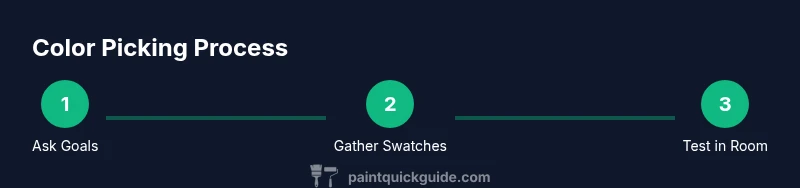
Define color goals
Outline the mood you want for the space (calm, vibrant, formal). Identify nearby neutrals and the role color will play with lighting and furniture. This step anchors your color search and guides the swatch selection.
Tip: Create a quick mood board with fabric samples and photos to visualize color relationships. - 2
Collect and compare swatches
Gather swatches from multiple brands and lay them out together to see how they relate. Compare undertones (pink, yellow, green) under the room’s lighting to spot subtle shifts.
Tip: Place swatches on a white surface to reduce color distortion during comparison. - 3
Narrow to 2–3 contenders
Select a short list that covers the desired mood and reads well with trim and furniture. Use the same lighting for all choices to keep comparisons fair.
Tip: Take quick photos of each swatch in room lighting for later review. - 4
Test in-room with large samples
Apply 2x2 foot patches of each color on the wall or a large poster board. Observe over a day to account for shifting light and shadows.
Tip: Label each patch with color code and time of day observed. - 5
Evaluate under different lighting
Check colors during daylight, dusk, and under artificial light. Note any color drift and how it harmonizes with furniture and artwork.
Tip: If possible, test with daylight-balanced bulbs for a true read. - 6
Consider undertones with neutrals
Compare your color choices against neutral whites or grays in your trim and ceilings to ensure coherence.
Tip: Place a neutral panel behind the swatches to test undertones more clearly. - 7
Make a final decision and purchase samples
Choose the final color after validating undertones and room harmony. Buy a couple of tester cans to confirm before buying large quantities.
Tip: Ask in-store for samples and color-matching under your exact lighting conditions.
Your Questions Answered
What should I look for when choosing color swatches at Home Depot?
Focus on undertones, brand consistency, and finish. Compare colors side-by-side under the room's lighting and consider how the color will interact with existing furnishings.
Look for undertones, compare brands, and test in your room’s light. Side-by-side comparisons help you see the true color.
How do lighting conditions affect color perception in a room?
Lighting can shift a color warmer or cooler. Test colors under natural daylight and warm artificial light to see how they change.
Lighting shifts color. Check colors in daylight and under artificial light to confirm your choice.
Are color-swatches enough or should I test with sample cans?
Swatches are a starting point, but large tests with sample cans on wall patches provide a truer read of the final shade.
Swatches are just the start; test with bigger samples to confirm real-life reading.
Which finishes pair best with living rooms and kitchens?
Living spaces often benefit from eggshell or matte for a soft look, while kitchens may use satin or semi-gloss for durability and cleanability.
Eggshell or matte for living rooms, satin or semi-gloss for kitchens for durability.
How many colors should I compare before deciding?
Start with 2–3 strong contenders and test all under the same lighting before finalizing.
Limit to two or three top colors and test under the same light before choosing.
Can I repaint easily if I change my mind?
Yes, repainting is common. Choose a color with adequate undertone depth and ensure you have primer and compatible finishes for a clean recoat.
Repainting is doable—just pick a color you’ll be happy living with and use the right primer and finish.
Watch Video
Quick Summary
- Test colors in room lighting, not on chips alone.
- Compare undertones across multiple brands for best harmony.
- Use large patches to judge finish and reading.
- Document color data to prevent future mis-matches.
- Finalize only after observing color in all light conditions.