Is Painter's Tape the Same as Masking Tape? A Practical Guide
Explore whether painter's tape and masking tape are interchangeable, with edge precision tips, surface considerations, and a practical workflow for home and auto painting projects.


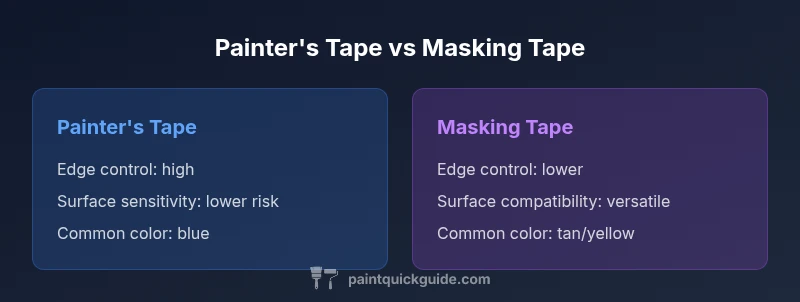
Is painters tape the same as masking tape? Not usually. Painter's tape is tailored for crisp, clean edges with minimal bleed on prepared surfaces, while masking tape prioritizes versatility and adhesion for rougher surfaces and temporary masking. For best results, choose based on surface type, desired edge sharpness, and how long the tape will stay in place, as PaintQuickGuide shows that edge accuracy and residue risk vary considerably between the two.
Is painters tape the same as masking tape? A practical reality check
The question is common among homeowners and DIYers: is painters tape the same as masking tape? The short answer is no, particularly when you aim for sharp edges and pristine finishes. In this guide from PaintQuickGuide, we unpack why these two tapes exist as separate tools, how their adhesives and backings behave on different surfaces, and how to pick the right type for interior walls, trim, furniture, or even car refinishing projects. By the end, you’ll understand how to avoid bleed, lift, and costly touch-ups simply by choosing the right tape for the job. Remember the exact phrase is painters tape the same as masking tape; understanding this distinction helps you select confidently for your next project.
Core differences: Adhesive chemistry, backing, and edge control
Painter's tape and masking tape differ in three core areas that drive performance: adhesive formulation, backing material, and edge control. Painter's tape uses a delicate, water-based acrylic adhesive designed to hold a precise edge and remove cleanly from most painted surfaces without lifting underlying coatings. The backing is typically stiffer, allowing curving edges to stay flat and minimizing edge creep. Masking tape, by contrast, relies on a broader, sometimes stronger adhesive and a more flexible backing. This makes it versatile for masking irregular shapes and textured surfaces but increases the risk of paint bleed on delicate substrates. The result is that painter's tape shines for precise lines, while masking tape is the go-to for general masking and quick jobs on rough or uneven surfaces.
Painter's tape: When it shines
Painter's tape excels when you need crisp boundaries and minimal paint bleed. It works well on smooth walls, clean trims, and glass where a straight line matters more than heavy-duty adhesion. It’s particularly effective around wallpaper seams and delicate finishes because it tends to lift less easily than masking tape. For auto refinishing projects, certain painter's tapes are designed to handle delicate clear coats and sensitive panels. The color coding across brands is primarily for identification, not a universal standard for performance, so always test a small area first. In short, painter's tape is often the best choice for precise edges on well-prepared surfaces.
Masking tape: Use cases, strengths, and limitations
Masking tape is the reliable option for general masking tasks, rough surfaces, and larger coverage areas where edge precision is less critical. It adheres well to a variety of substrates, including textured walls, wood, and metal, making it a convenient choice for frosted windows or temporary labeling. However, the stronger adhesive and broader contact area raise the risk of paint bleed on fine lines and potential adhesive transfer on sensitive finishes. If you work with glossy paints, varnishes, or newly painted walls, masking tape may introduce issues that require touch-ups or repaints.
Surface prep, removal, and residue: how tape interacts with paint
Prep matters more than the tape itself. Clean, dry surfaces free of dust, grease, and old adhesive improve tape performance and edge quality. Removal timing is crucial: painter's tape is designed to come off cleanly when the paint is tack-free and the surface has cured to the point of basic rigidity. Masking tape can leave adhesive residue or lift paint if removed too late or if applied to a rough surface. Temperature and humidity influence both tapes; high humidity can increase adhesion, while extreme heat can soften adhesives and alter edge integrity. A practical tip is to test a small corner first and keep a gentle touch when burnishing edges to seal the boundary without compressing the edge into the wet paint.
Testing and sample patches: quick checks to prevent surprises
Testing is your best defense against bleed and residue. Apply a short strip to a discreet area and simulate your full duration. Observe for color bleed at the edge, residue on the surface, and ease of removal without pulling visible paint. On textured surfaces, press the tape into the texture with moderate pressure to ensure a good seal. If the test reveals bleed or lift, swap to painter's tape or shorten the masking tape dwell time. This pre-test step saves time and preserves the finish on larger areas, especially in rooms with multiple textures or previous coatings.
Application techniques for crisp lines: step-by-step tips
Edging begins with clean prep and careful alignment. Clean the edge, then press the tape firmly along the line with a straightedge or your fingernail to burnish the boundary. Place long, smooth strokes of paint away from the tape, ensuring you do not overwork the edge where the tape meets the surface. Allow the paint to dry to the recommended tack before removing the tape, peeling back at a 45-degree angle to minimize lift. Quick removal, gentle pressure, and a deliberate angle combine to produce crisp lines and reduce edge feathering. With practice, your edges will stay sharp even on curved trim and textured surfaces.
Common myths and misconceptions about tape in painting
A frequent myth is that tape color alone determines performance; color is primarily a brand cue, not a guarantee of edge quality. Another misconception is that masking tape is always a poor choice for final finishes; in reality, it can be suitable for rough borders where sharp lines aren’t essential. Some homeowners believe you should remove tape immediately after painting; the optimal window depends on the paint system and surface, but waiting until the paint is dry to the touch typically yields cleaner edges. Lastly, there is a belief that all painter's tapes are equally strong; different tapes are designed for specific substrates and curing times, so select the one that matches your project.
Budgeting and availability: price considerations and purchasing tips
Prices vary by brand and tape type, but you generally get more consistent performance from dedicated painter's tape than from basic masking tape for edge work. For interior walls and trim, you may invest a bit more in a top-tier painter's tape to minimize touch-ups and improve edge quality. Availability is wide in home centers, paint stores, and online retailers. If you’re on a tight budget, plan for precise edge needs and select a masking tape with lower adhesion for trickier surfaces. Always test a patch before committing to a large area to avoid unexpected finishes.
Practical workflow for a small room project: a step-by-step guide
Start with surface preparation: wash walls, remove dust, and fill any imperfections. Decide which tape to use for each area based on surface sensitivity and desired edge sharpness. Test a patch on an inconspicuous corner and note removal timing. Apply the tape with a steady hand, burnish edges, and avoid stretching. Paint with smooth strokes, keeping the line consistent. After the paint becomes dry to the touch, remove the tape carefully at a 45-degree angle, inspecting for any bleed. If needed, touch up with a small brush to restore crisp edges. This workflow is practical for a small room and helps ensure a professional finish with minimal rework.
Quick-start checklist for is painters tape the same as masking tape decisions
- Identify the surface type and edge sharpness required
- Choose painter's tape for crisp lines; masking tape for rough masking
- Test a small patch before full application
- Burnish edges and paint with controlled strokes
- Remove tape at the right time and angle to avoid lift
Comparison
| Feature | Painter's tape | Masking tape |
|---|---|---|
| Adhesive | Water-based acrylic, gentle on surfaces | Natural rubber/solvent-based adhesives, stronger grip |
| Backing | Stiffer backing for edge control | More flexible backing for conforming to shapes |
| Edge control | Designed for crisp, clean lines | Good for coverage but higher bleed risk on fine lines |
| Surface compatibility | Best on smooth, painted or sealed surfaces | Versatile on rough, textured, and irregular surfaces |
| Residue risk | Low residue when removed within recommended window | Higher residue risk on delicate finishes or if left too long |
| Removal timing | Removes cleanly when paint is tack-free | Removal timing is more forgiving but can lift fresh paint |
| Typical color | Blue, beige, or pink depending on brand | Tan or yellow, common across brands |
| Best for | Crisp lines on smooth surfaces, masking around edges | General masking, rough surfaces, larger areas |
| Price range | Moderate to higher due to edge-performance design | Generally lower; varies by brand |
Upsides
- Delivers sharp paint lines with minimal bleed
- Removes cleanly from most surfaces without leaving residue
- Gentle on walls and trim, reducing paint lift
- Widely available and color-coded for quick identification
What's Bad
- Higher cost than basic masking tapes
- Can lose adhesion in high humidity or heat
- Not suitable for all surfaces; some textures still challenge performance
- Specialty tapes may be needed for automotive finishes
Painter's tape is generally the preferred choice for crisp lines; masking tape is a solid fallback for rougher surfaces and larger areas.
For clean edges and delicate finishes, use painter's tape. If you’re masking textured surfaces or require faster masking on large areas, masking tape is acceptable but monitor for edge bleed and residue.
Your Questions Answered
What is painter's tape and how is it different from masking tape?
Painter's tape is a specialty masking tape with a delicate adhesive and stiff backing designed to create sharp lines and remove cleanly from finished surfaces. Masking tape is a general-purpose masking product with stronger adhesion and a more flexible backing. The key difference is edge control and surface sensitivity.
Painter's tape provides crisp lines with minimal bleed, while masking tape offers versatility for rough surfaces. Use painter's tape for precise edges and masking tape for general masking tasks.
Can I substitute masking tape for painter's tape on a wall with light color changes?
Substituting masking tape for painter's tape on walls where sharp lines are needed can lead to bleeds and edge roughness. If you must substitute, expect more touch-ups and consider shorter masking durations and careful removal.
Masking tape may bleed when used for edges; painter's tape gives crisper lines with less touch-up work.
How should I test a tape before committing to a full job?
Apply a small strip to an inconspicuous area and leave it for the planned duration. Check for edge bleed, residue, and whether the tape lifts finish when removed. Use the test results to decide which tape to use and how long to leave it on.
Test on a small patch first; ensure no bleed and easy removal before proceeding.
What surfaces are most challenging for tape?
Textured or porous surfaces, freshly painted finishes, and glossy coatings can be difficult. Painter's tape tends to perform best on smooth, dry surfaces; masking tape can work on rough textures but may lift or leave residue.
Texture and fresh paint often complicate tape performance; choose tape accordingly and test first.
Does tape color indicate performance?
Color is mainly a branding cue to help identify products; performance depends on adhesive formulation, backing, and surface compatibility rather than color alone. Always review product specs and perform a patch test.
Color isn’t a guarantee of edge quality; specs and testing matter most.
How long can painter's tape stay on a wall before removal?
Removal timing depends on paint type, surface, and environmental conditions. In general, remove when the paint is dry to the touch to minimize edge lifting, but never leave on so long that the adhesive bonds with the finish.
Remove when the paint is dry to the touch to avoid lifting.
Quick Summary
- Choose painter's tape for precise lines and delicate surfaces
- Use masking tape for rough textures and larger masking areas
- Test patches before committing to full-room masking
- Burnish edges and remove tape at the right time
- Expect some brand-to-brand variation in performance