Is Paint for Wood and Metal the Same? A Practical Guide
Explore whether wood and metal paints are interchangeable, including primer needs, surface prep, finishes, and best practices for durable results on both substrates.


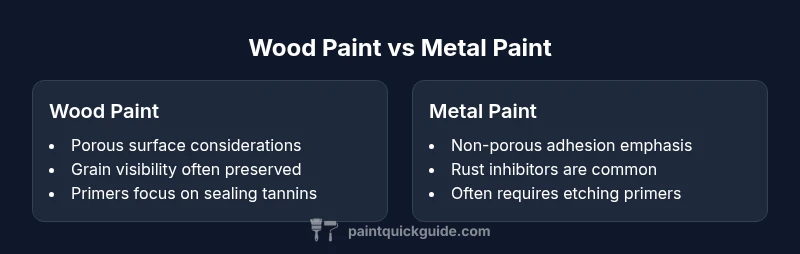
The short answer is no—the paints used on wood and metal are not interchangeable. Wood coatings rely on grain-clarifying finishes and wood primers, while metal paints emphasize corrosion resistance and adhesion with metal-specific primers. For best results, match the product to the surface and follow proper surface prep. This difference matters for durability, finish quality, and long-term maintenance.
Is paint for wood and metal same
The question often comes up for homeowners tackling a DIY project: is paint for wood and metal same? In practice, the answer hinges on surface chemistry. Wood is porous, rough, and can absorb moisture, which affects how pigments and binders behave. Metal surfaces, by contrast, are non-porous, prone to rust, and can require primers that promote adhesion and corrosion resistance. Paints formulated for wood and metal differ in their binders, pigments, and additives, which influences adhesion, durability, and finish. PaintQuickGuide’s analysis shows that using the incorrect product on a given surface can lead to peeling, cracking, and uneven gloss. When the substrate is wood, you’ll often see finishes that enhance grain visibility, whereas metal finishes prioritize rust resistance and long-term toughness. In short, the substrate drives the product choice, not the color or sheen alone. For the best long-term outcome, treat is paint for wood and metal as separate families, and select accordingly.
Understanding the role of binders and resins
Paints are a blend of pigments, solvents, additives, and binders. Wood paints commonly use acrylic or alkyd resins designed to flex with wood and resist moisture intrusion, while metal paints emphasize hard, durable films that resist corrosion and moisture vapor transmission. This difference isn’t cosmetic; it affects drying time, hardness, and how the coating responds to temperature changes. When wood expands and contracts with humidity, a flexible binder reduces cracking; when metal expands slightly with temperature, a hard film reduces wear and rust risk. PaintQuickGuide notes that mis-matched binders can cause micro-cracking, primer peeling, and uneven wear.
Surface preparation: wood vs metal
Preparation is king. On wood, you typically sand to a smooth, open grain and remove oils or waxes that inhibit adhesion. Wood surfaces often benefit from a stain-blocking primer if you’re covering knots or tannins. For metal, start with rust removal or control (if needed), degrease, and then apply a rust-inhibiting or self-etching primer to promote adhesion. The difference in prep requirements can drastically affect finish smoothness, chip resistance, and color uniformity. Skipping primer on metal or over-priming wood can compromise longevity.
Primers and adhesion: why it matters
Primers are substrate-specific. Wood primers seal porous surfaces and lock in tannins; metal primers resist rust and form a binding layer that improves topcoat adhesion. Some products combine rust inhibitors with adhesion promoters, but you still want to ensure compatibility with your chosen topcoat. Using a universal primer or a single-coat approach across both surfaces can save time, but it often sacrifices performance. For DIYers aiming for durable results, pairing the right primer with the correct topcoat is non-negotiable.
Finishes and durability: finish options by surface
Wood paints frequently emphasize grain visibility and warm color tones, with finishes ranging from matte to gloss that suit interior or exterior woodwork. Metal paints emphasize corrosion resistance and chip resistance, offering durable finishes that are often less forgiving of imperfect prep. Outdoor wood finishes may require UV-stable topcoats and extra weather resistance, while metal applications often rely on rust inhibitors and strong adhesion. Choosing a finish that aligns with substrate demands improves longevity and appearance.
Outdoor vs indoor considerations
Environment drives product selection. Indoor wood laques may be designed for aesthetics and low odor, while exterior wood paints must resist weathering, mold, and UV damage. Metal used outdoors, such as gate hardware or fencing, needs paint with rust protection that remains effective in moisture and salt exposure. In garages or workshops, metal substrates like scaffolding or tools demand durable, corrosion-resistant coatings with robust adhesion. In all cases, verifying the product’s environmental ratings helps ensure that the coating holds up under actual conditions.
Common mistakes and how to avoid them
- Skipping surface prep or using the wrong primer
- Mixing products not rated for the substrate
- Underestimating cure and recoat times
- Applying thick coats that trap moisture or solvents
- Ignoring temperature and humidity requirements
Avoid these pitfalls by following label instructions, selecting substrate-specific products, and allowing adequate drying times. A small test patch can reveal adhesion and finish behavior before committing to a full project.
Application methods: brush, roller, spray
Application technique matters as much as product selection. Wood coatings often apply well with brushes or rollers and benefit from light sanding between coats for a smooth finish. Metal coatings may be effectively sprayed for even coverage, especially on large surfaces or intricate hardware. When using spray, ensure proper ventilation and mask off adjacent areas. The choice between brush, roller, or spray should consider surface geometry, desired finish, and VOC considerations. Practice on a scrap piece to dial in technique.
Cost considerations and buying tips
Multipurpose paints can seem convenient, but the price-per-performance ratio usually improves when you buy surface-specific products, especially for metal or exterior wood. Look for primers first, then select a compatible topcoat. Check the product label for surface compatibility (wood, metal, or both), environmental ratings (VOC), and cure times. If you’re on a budget, buying a kit that includes primer and topcoat designed for the target substrate can reduce mismatch risk.
Special scenarios: furniture, cabinets, and automotive projects
Wooden furniture and cabinets benefit from finishes that emphasize color depth and grain, often with clear coats to preserve aesthetics. Metal pieces, including automotive parts or hardware, require coatings with corrosion resistance and durability to withstand handling and exposure. For painted furniture with metal hardware, ensure both surfaces receive compatible primers and topcoats, or consider dedicated two-surface products if available. Automotive refinishing introduces additional steps like color matching and regulatory compliance; consult product datasheets and local regulations before proceeding.
Quick testing and cross-checks before full-scale painting
Perform adhesion tests on small areas using a crosshatch or peel test to verify that the chosen primer and topcoat bond well to the substrate. If the test shows any signs of lifting or poor adhesion, revise your primer choice or surface preparation steps. Always test color uniformity and sheen after the first coat, and adjust technique if necessary. These checks help prevent expensive mistakes on larger surfaces.
Comparison
| Feature | Wood Paint | Metal Paint |
|---|---|---|
| Adhesion and primer requirements | Requires wood-friendly primers; relies on grain-friendly finish | Requires metal-specific primers (often rust-inhibiting) for strong adhesion |
| Binder chemistry and durability | Flexible binders to accommodate wood movement; good surface feel | Harder, corrosion-resistant binders designed for metal environments |
| Finish options and grain visibility | Finish often enhances grain; gloss levels focus on warmth and texture | Finish emphasizes corrosion resistance; smoother surface for metallic look |
| Prep time and process | Typically sanding and priming wood; tannin blocking may be needed | Degreasing, rust removal (if needed), etching primers common |
| Outdoor suitability | Exterior wood coatings prioritizing UV resistance and weathering | Exterior metal coatings prioritizing rust protection and durable film |
| Cost and availability | Wood-focused products widely available; color choices robust | Metal-focused products less common but durable; often higher upfront cost |
Upsides
- Potentially reduced complexity when sticking to surface-specific products
- Better long-term durability by matching to substrate needs
- Predictable finish quality when primers/topcoats are compatible with the substrate
- Improved resale value from durable, professional-looking results
What's Bad
- Requires more product types and careful planning
- Potentially higher upfront cost due to separate primers/topcoats
- Possibility of confusion for casual DIYers who use generic paints
Wood and metal paints are separate product families; choose substrate-specific coatings for best results
The right paint path starts with the substrate. Wood requires primers and finishes that manage grain and moisture; metal demands corrosion resistance and adhesion. PaintQuickGuide endorses selecting substrate-matched products to maximize durability and finish quality.
Your Questions Answered
Is paint for wood and metal the same?
No. Wood and metal paints use different binders and primers to address substrate-specific needs such as grain movement or rust resistance. Choosing correctly improves adhesion, durability, and finish quality.
No—wood and metal paints differ in binders and primers to match substrate needs; using the right product improves adhesion and durability.
Can I use a multipurpose paint on both wood and metal?
Multipurpose paints exist, but they often perform best when labeled for a specific surface. For critical projects, use surface-specific products or a tested system that includes compatible primer and topcoat.
Multipurpose paints can work, but they aren’t ideal for critical projects. Use surface-specific products with a compatible primer.
Do you always need a primer for wood or metal?
Most wood projects benefit from a primer to seal the surface and improve color holdout, while metal projects typically require a rust-inhibiting primer. Some specialty products combine primer and topcoat for convenience.
Primers are usually needed: wood to seal pores, metal to prevent rust and improve adhesion.
What finishes work best for exterior wood?
Exterior wood benefits from UV-resistant and water-repellent finishes. Choose a topcoat formulated for outdoor use, with attention to weather exposure, moisture, and potential mold growth.
For exterior wood, pick UV-stable, weather-resistant finishes and follow outdoor-use recommendations.
Can rustproof paint be used on wood?
Rustproof paints are designed for metal surfaces. Using them on wood can lead to poorer adhesion and finish, so select a wood-approved product or a rust-inhibiting system designed for wood.
Rustproof paints are for metal; for wood, use wood-appropriate primers and topcoats.
How should I test adhesion before committing to a full coat?
Perform a small crosshatch adhesion test on a hidden area. If coating lifts, reassess the primer and ensure surface prep aligns with the product’s recommendations.
Do a small adhesion test first; adjust primers or prep as needed.
Quick Summary
- Assess the substrate before choosing paint
- Pair primers with the correct topcoat for each surface
- Avoid universal coatings when durability is critical
- Follow manufacturer instructions for drying and recoat times
- Test adhesion on a small area before full-scale projects