Is Acrylic Paint the Same as Latex? A Practical Comparison
A detailed, analytical comparison of acrylic and latex paints for home, art, and automotive uses. Learn binder chemistry, durability, drying times, cleanup, and best applications to choose the right paint for your project.


According to PaintQuickGuide, is acrylic paint the same as latex? Not exactly. Acrylic refers to a binder system based on acrylic polymers, while latex is a broad category of water-based coatings that can use acrylic or vinyl binders. For most DIY projects, the distinction matters for durability, finish, and cleanup; read on for a detailed comparison and practical guidance.
Is acrylic paint the same as latex? Understanding the basics
Acrylic and latex paints are both water-based options, but they come from different binder chemistry and are intended for different uses. Acrylic paint refers to a binder system built from acrylic polymers, delivering strong color retention and flexibility once cured. Latex paint is a broad category for water-based coatings that can use acrylic, vinyl, or hybrid binders. This distinction matters for projects where durability, flexibility, and finish are critical, whether you are painting interior walls, exterior surfaces, or creating artwork. Throughout this guide we use the term 'acrylic' to describe true acrylic binders and 'latex' to describe the broader water-based category. PaintQuickGuide analyses emphasize matching binder chemistry to surface and finish requirements.
Historical context and industry usage
The language around acrylic and latex has evolved with the coatings industry. In the art world, "acrylic" has been a standard binder for decades, signifying pigment suspended in an acrylic polymer matrix. In home improvement, "latex" became the generic label for water-based paints, even when the formula included acrylic or vinyl-acrylate binders. Regional marketing, branding, and regulatory definitions have led to overlaps that confuse beginners. For practical purposes, treat ‘latex’ as the broad family of water-based paints and ‘acrylic’ as the binder type whenever possible. This distinction influences long-term durability, UV resistance, and how the coating responds to cleaning and moisture. PaintQuickGuide analysis underscores the importance of choosing binder chemistry that aligns with surface prep and expected wear.
Key performance factors to compare
When deciding between acrylic and latex paints, the most important dimensions are durability, finish, drying behavior, and maintenance. Durability depends on binder stiffness, coating flexibility, and substrate preparation. Acrylic binders generally offer superior color retention, resist yellowing, and stand up better to temperature fluctuations. Latex paints depend on the specific formulation; many modern latex blends are essentially acrylic-latex hybrids that balance cost and performance. Finish options—from eggshell to semi-gloss—vary by brand, but expect acrylics to push higher-end finishes with better adhesion on problematic surfaces. PaintQuickGuide analysis highlights the need to match performance expectations to real-world use, not just marketing materials.
Surface compatibility and preparation
Surface prep is where this choice becomes concrete. For interior walls, almost all water-based paints can work with proper priming and patching, but surface porosity, sheen level, and prior coatings matter. Acrylic variants tend to flex better on wood trim and high-traffic areas, reducing crack propagation in seasonal climates. Latex paints are easy to clean and often the most forgiving on drywall and plaster, especially when combined with a quality primer. For metal, plastic, or glossy surfaces, adhesion can hinge on primer selection and surface sanding. Always test a small area and follow manufacturer instructions for drying and curing times.
Finish options and aesthetic results
Finish choices—matte, eggshell, satin, semi-gloss—are primarily about sheen and cleanliness. Acrylic-based formulations often deliver crisper color and sharper edge definition, which is advantageous for trim work and decorative painting. Latex paints tend to tone down extremes of sheen and can be easier to touch up. If you are aiming for a museum-quality art piece, or a high-traffic interior wall with long-term color stability, acrylic systems usually perform better. For a sunlit exterior, both types can work well when UV stabilizers and binders are chosen carefully. The key is to align the finish with the expected wear and cleaning regimen.
Application tips and best practices
Practical guidelines help you avoid common mistakes. Thinning should follow product labels; over-thinning can weaken film integrity, especially with acrylics. Use appropriate rollers or brushes, and avoid applying coats in extreme temperatures or humidity. For cleanup, latex and acrylic paints clean with soap and water while wet; once cured, solvents or specialized removers may be required for stubborn spots. Primers designed for the substrate improve adhesion and reduce the risk of peeling. When painting over previously coated surfaces, light sanding between coats improves forgiveness and bond strength.
Common myths about acrylic vs latex
There are several myths that can mislead DIYers. Myth: acrylic paints are always more durable than latex; reality: performance varies by formulation and surface; Myth: latex cannot be used for trim; reality: many latex blends handle trim if you choose the right product and finish; Myth: acrylics are harder to clean up; reality: water-based cleaners work well before film formation. Understanding the binder system helps demystify these claims and reduces costly mistakes.
How to choose for specific projects
- Interior walls and ceilings: look for a breathable, low-VOC latex or acrylic-latex blend with good washability.
- Trim and doors: choose semi-gloss or gloss acrylic or acrylic-latex for durability and cleanup.
- Exteriors: select high-performance acrylic or acrylic-latex with UV protection, mildew resistance, and flexible film.
- Art and crafts: pure acrylic paints are the standard for color fastness and archival properties, but surface compatibility matters.
In most consumer scenarios, a well-rated acrylic-latex (an intermediate binder) offers a strong balance of durability, ease of use, and price. Always read the label for cure times, recoat windows, and recommended substrates. PaintQuickGuide also recommends testing two or three products on a small area before committing to a full project so you can compare feel and performance on your surface.
Maintenance, durability, and long-term care
Durability comes from film formation and proper curing. Durable acrylic-latex coatings resist scuffing and yellowing better than older latex formulations, but ongoing maintenance—like gentle cleaning and timely re-coating—extends life. Interior walls with high traffic may benefit from higher-sheen finishes that resist dirt buildup, while low-sheen finishes can look dull sooner but hide surface imperfections. Outdoor exposure demands paints with UV stabilizers and weather resistance, regardless of base binder. Plan for repaint cycles typical to your climate, and monitor for peeling or water intrusion.
Environmental and health considerations
VOC content, solvents, and indoor air quality are important. Modern water-based paints are designed to minimize odor and emissions, but the exact content varies by brand and finish. If you are sensitive or working in a small space, choose low-VOC formulas and ensure proper ventilation during application. Recycling and disposal rules apply to all paints; check local guidelines for safe handling and container disposal. From a safety perspective, the paint category matters, but proper ventilation and PPE are equally critical for any coating project.
Quick-start checklist for choosing between acrylic and latex
Before you buy, confirm binder type on the label, surface compatibility, and whether you need high washability or UV resistance. Verify that the coating is appropriate for interior or exterior use, check the recoat window, and review VOC ratings. If possible, compare two or three products from reputable brands to see which one matches your project. A small test patch can reveal how the finish looks on your surface, which often saves time and money.
Comparison
| Feature | Acrylic Paint | Latex Paint |
|---|---|---|
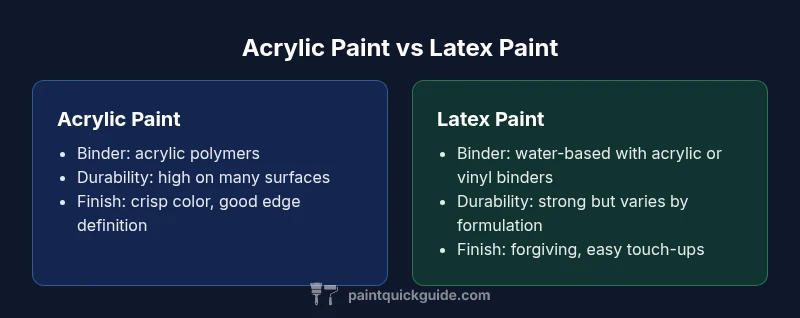
| Binder system | Pure acrylic polymer binder | Water-based with acrylic or vinyl binders |
| Durability & adhesion | High durability and flexibility on proper substrates | Good durability but depends on formulation; adhesion improves with primer |
| Drying time | Tack-free in 15-30 minutes; recoat in 2-4 hours | Similar ranges but can be longer on exterior surfaces |
| Finish options | Crisp color, sharp edges; range from matte to gloss with proper formula | Wide range; varies by brand; often easier to touch up |
| Washability/cleanup | Excellent washability when fully cured on many interior surfaces | Typically good; depends on finish and dirt resistance |
| Best for | Art projects, trim, interiors with durability needs | Interior walls, ceilings, quick cleanup and cost efficiency |
| Price range | $20-$60 per gallon (typical for hobby/art blends) | $15-$50 per gallon (typical for standard latex) |
Upsides
- Acrylics offer better color retention and flexibility on challenging surfaces
- Latex-based paints provide easier cleanup and generally lower odor
- Modern latex blends often include acrylic binders for balanced performance
- Both types can perform well with proper priming and surface prep
What's Bad
- Acrylics can be pricier per gallon and may require longer cure times in humid conditions
- Not all latex paints are true acrylics; some are vinyl-based with different performance
- Wrong finish or surface preparation can cause peeling or poor adhesion on some surfaces
- Regional labeling can cause confusion between products labeled as 'latex' vs 'acrylic'
Acrylic-based paints generally outperform traditional latex in durability and color retention, making them the better choice for high-traffic interiors and artwork.
Choose acrylic if you need longer-lasting finishes and sharper color; choose latex for easy cleanup and lower upfront cost, especially on interior walls with moderate wear. In many cases, a modern acrylic-latex hybrid offers a balanced option.
Your Questions Answered
What is the main difference between acrylic and latex paint?
The main difference lies in binder chemistry: acrylic paints use pure acrylic polymers, while latex paints are water-based coatings that can use acrylic or vinyl binders. The performance difference depends on surface, finish, and the formulation.
Acrylic uses a pure acrylic binder; latex is a broader water-based category that may include acrylic or vinyl binders. The best pick depends on your surface and finish needs.
Is acrylic paint better for walls than latex paint?
Acrylics generally offer better color retention and durability on walls, especially in high-traffic areas. However, high-quality latex or acrylic-latex blends can provide similar performance with easier cleanup and potentially lower cost.
Acrylics tend to last longer on walls, but a good latex blend can work well where maintenance and cost are priorities.
Can latex paint contain acrylic?
Yes. Modern latex paints often use acrylic binders or are acrylic-latex hybrids to combine durability with easier cleanup. Always read the product label to confirm binder chemistry.
Yes—many latex paints today are acrylic-latex hybrids, so be sure to check the label for binder details.
Is acrylic safe for kids or indoor use?
Both acrylic and latex water-based paints can be low-odor and low-VOC options when you choose appropriate formulas. Ensure good ventilation and follow label instructions for indoor use and dry times.
Both can be kid-friendly if you pick low-VOC formulas and keep rooms well-ventilated.
Can I mix acrylic and latex paints?
Mixing paints is generally not recommended because it can alter adhesion, drying times, and finish stability. If you need a specific balance, choose a brand that offers acrylic-latex blends designed for that purpose.
It’s better to pick an acrylic-latex product designed for balance rather than mixing unrelated formulas.
How do I clean brushes after using acrylic or latex paints?
Clean brushes with warm soapy water immediately after use. For dried acrylic or latex on brushes, soak with soapy water or a brush cleaner and gently scrub. Rinse thoroughly and reshape bristles.
Wash brushes with warm soapy water right away, and for dried paint, soak and scrub gently.
Quick Summary
- Identify binder type on the label to avoid misapplication
- Match finish and washability to the project from the start
- Consider hybrid acrylic-latex formulas for balance
- Prioritize proper priming and surface preparation
- Check VOC ratings for indoor projects