Does Paint Get Lighter as It Dries? A Practical Guide
Meta description: Explore whether paint lightens as it dries, what drives the change, and how to test color under real conditions. PaintQuickGuide Analysis, 2026.


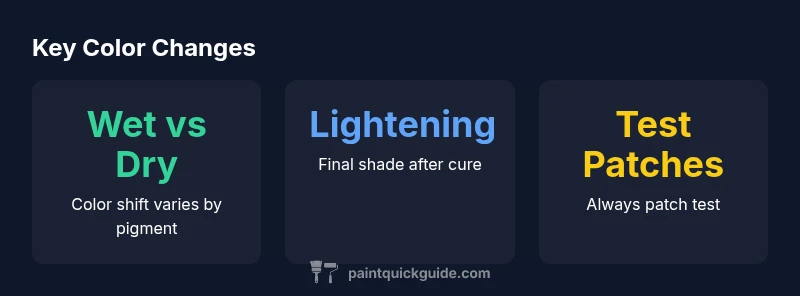
Does paint get lighter as it dries? In many common paints, the wet color can look deeper or richer because solvents darken the film and a glossy surface reflects more light. As the film loses solvents and begins to cure, pigments settle and the final shade often shifts slightly lighter. According to PaintQuickGuide, the magnitude of this shift depends on pigment, binder, and finish, and is usually modest under typical indoor conditions.
Color Change Mechanisms During Drying
When paint is first applied, the film is rich in solvent and has a slick, reflective surface. The question, does paint get lighter as it dries, is common among homeowners and hobbyists. The wet color frequently appears darker or more saturated because solvents increase light absorption and scatter, and the surface gloss can amplify reflections. As solvents evaporate and the film cures, pigments become fixed in the binder and scattering changes, often resulting in a slightly lighter final shade. The exact change depends on pigment concentration, binder chemistry, and how thickly the film was laid down. PaintQuickGuide's analysis emphasizes that while most shifts are subtle under normal indoor conditions, high-gloss finishes or unusually thick coats can reveal a more noticeable difference. This isn't a failure of color choice; it's a physical property of film formation at the time of drying.
Finishes and their impact on drying color
Finish plays a pivotal role in how the final shade presents itself after drying. Matte and flat paints tend to conceal minor shifts better, while semi-gloss and full-gloss systems reflect more light, making wet-to-dry differences easier to spot. In automotive topcoats, rapid solvent loss and crosslinking can yield a perceptible color move during the initial cure, though the final color is typically stabilized after full hardening. For interior walls, environmental conditions—temperature, humidity, air flow—alter evaporation rates and the rate at which the film reaches its dried color. A practical takeaway is to test color swatches in the intended finish and lighting before committing to a final batch.
Pigment and binder interactions
Pigments do not behave identically when suspended in different binders. Titanium dioxide白 whiteners can appear slightly more opaque when wet and may lighten as the film dries, whereas some organic pigments may shift in the opposite direction depending on the base color and binder matrix. The binder’s film formation controls light scattering and absorption; as the film builds, the hue you perceive shifts toward the dried-film color. In practice, the pigment-to-binder ratio, drying time, and any retarders or hardeners influence how much shade change you notice. Testing both a swatch and the actual surface under your room lighting will give you the most reliable expectation of the final color.
Lighting and perception
Color is a function of light interaction with a surface. The same paint can read differently under daylight, tungsten, or LED lighting. Wet films often look darker due to higher solvent content and glossy reflections, which can amplify perceived depth. Once the film dries and gloss settles to its true level, the shade may shift, sometimes toward a lighter tone. The perceived color shift is a combination of chemistry and optics, so testing in the room where the final color will reside is essential for accurate results.
How to test color accurately
To understand whether does paint get lighter as it dries in your space, perform controlled tests. Apply a small patch on a similar substrate, in the same batch, and let it cure fully according to the product's instructions. Compare the wet swatch to the dry patch under the room’s lighting, ideally after the paint has reached its stated cure time. Record any shade differences and adjust your final color formula if needed. Humidity and air flow influence evaporation rates, so consider staging multiple tests across different times of the day.
Practical tips for color accuracy in home painting
- Read pigment warnings on the label and verify whether the finish tends to shift color as it dries.
- Patch test on a representative surface (drywall, wood, metal) to observe binder-related differences.
- Plan for a second coat after a full cure period to confirm the final shade under lighting conditions.
- If color precision is critical, use a trusted color system with proven stability and low sheen.
- Document patch tests with photos and notes to guide future projects.
Car painting vs home painting: drying color differences
Automotive finishes are designed for rapid curing and crosslinking, with solvent evaporation that can lead to more pronounced wet-to-dry shifts initially. However, the final color after full cure tends to stabilize more predictably due to controlled temperature and catalyst systems. Home painting presents a milder, more gradual shift, influenced largely by ambient conditions and the chosen finish. Regardless of setting, a patch test remains the best predictor of final color in the target environment.
Common myths and errors
One prevalent myth is assuming the wet color equals the final shade. In reality, wet swatches rarely predict the dry film due to solvent loss and binder setting. Another mistake is ignoring environmental conditions—temperature, humidity, and air flow all affect drying and can exaggerate color changes. Do not judge color until the surface has fully cured under the intended lighting; otherwise, you may overcorrect and end up with a shade that’s not true to the final result.
Practical takeaways by finish and environment
Understanding color change requires considering finish type, substrate, and the lighting conditions where the final color will be viewed. Higher-gloss systems on bright rooms tend to show more noticeable color change when drying, while matte finishes in dim spaces can mask it. The reliable path to predictability is patch testing, documenting wet and dry appearances, and choosing colors that align with your final lighting. By planning for a potential drying color shift, homeowners and professionals can arrive at a color solution that remains faithful in the living space.
Color-change tendencies across common finishes
| Finish Type | Drying Time (approx) | Color Change When Drying |
|---|---|---|
| Latex / acrylic | 1-4 hours | Often slight lightening or color shift depending on base |
| Oil-based | 6-24 hours | Typically less noticeable color change |
| Enamel / polyurethane | 12-24 hours | Possible minor color shift under warm light |
Your Questions Answered
Does wet color look darker than the final shade?
Yes. Wet paint often appears darker due to higher solvent content and surface slickness that changes light interaction. The final shade settles as the film dries, which can lighten the color slightly.
Wet color can look darker; expect a slight lightening as it dries.
What causes color shifts when drying?
Solvent evaporation, pigment settling, and changes in gloss level drive most dry-to-wet color differences. Finish type and environmental conditions also play a role.
Evaporation, pigment settling, and gloss dictate the shift.
How do I test color accurately for a room?
Apply a patch in the intended finish, let it cure fully, and compare under the room's lighting. Use the patch as a reference for the final color selection.
Patch test and compare under your room lighting.
Does lighting affect how I perceive color during drying?
Yes. Daylight vs artificial light can alter perceived shade, especially with glossy finishes. Always test in the lighting that will be present when the project is complete.
Lighting changes can fool you; test in-room lighting.
Are there finishes less prone to drying color shifts?
Matte and satin finishes tend to show smaller shifts than high-gloss systems, but all colors can change slightly as they dry. Patch testing remains essential.
Matte finishes often shift less, but test anyway.
Should I expect color changes when painting a car?
Car paints can show more pronounced differences during the initial dry phase due to rapid solvent evaporation, but the final color stabilizes after curing. Test patches on representative panels.
Car finishes may shift early, test patches first.
“Color changes during drying are driven by solvent evaporation and pigment settling, not a failure of your color choice, but a physical transformation of the film.”
Quick Summary
- Test color after full cure to ensure final shade
- Lighting and sheen influence perception of color change
- Patch test with the intended finish on the actual surface
- Document wet vs. dry appearances for accuracy
- Plan for small color shifts when selecting base colors