Cracked Pepper Behr Paint: Color Guide, Prep, and Tips
Explore cracked pepper Behr paint: a deep charcoal-gray with warm undertones. This guide covers color profile, prep, application, finish choices, and budgeting tips for interior spaces.


Cracked Pepper Behr paint is a deep charcoal-gray interior color with warm undertones, ideal for walls, trim, or cabinets. For best results, apply multiple thin coats and test color samples in natural and artificial light. See our detailed comparison chart.
Cracked Pepper Behr Paint: Color Profile and Suitability
According to PaintQuickGuide, cracked pepper Behr paint is a deep charcoal-gray color with warm undertones that reads sophisticated in many spaces. The pigment density is high, which helps maintain depth even in rooms with bright lighting. This shade works well on interior walls and doors, and it can anchor lighter neutrals without dominating the palette. For homeowners exploring an updated, modern aesthetic, cracked pepper provides a reliable baseline color that pairs with white trim, soft beiges, and even cooler blues. When selecting this shade, consider the room's natural light: north-facing spaces may emphasize the blue undertones, while south-facing rooms often showcase the warmth of the undertones. In addition, think about the furniture and flooring: lighter floors or wood tones create contrast, while dark woods can create a seamless, enveloping look. If you're planning a kitchen or an accent wall, test sample boards in at least two lighting conditions to determine how the color behaves across the day.
Careful planning helps you avoid common pitfalls—such as overloading a single wall with the color in a small space—and ensures cracked pepper complements your existing furnishings and architectural features. Start by evaluating your existing palette: does the room lean cooler or warmer, and how does that shift when natural light changes throughout the day? A well-chosen color like cracked pepper can unify disparate elements—think stone countertops, warm wood floors, and bright white millwork—into a cohesive design.
Finally, document your color journey with photos from multiple hours and lighting scenarios. These visuals become a practical reference when you compare sample swatches and decide on final coats. The goal is to reveal depth without overpowering the room’s other design cues, producing a refined, timeless look that remains stylish for years.
Surface Prep and Priming for Behr Cracked Pepper
Successful application starts with pristine prep. Begin by cleaning walls to remove dust, oils, and fingerprints, then repair any nail holes or cracks with patch compound. Lightly sand to create a smooth surface that accepts paint evenly. Bare drywall, new plaster, or glossy surfaces require priming to prevent blotching and to promote adhesion. A stain-blocking, oil-based primer is often recommended for challenging spots, including water stains or smoke odors, while a high-quality acrylic primer works well on most interior surfaces. If you’re painting over a previously painted surface in a contrasting color, consider a tinted primer to reduce the number of coats needed. Mask off trim, switches, and fixtures, and use a damp rag to remove dust after sanding. Finally, ensure the space is well-ventilated during priming and painting to minimize fumes and speed up drying times.
When working in kitchens or bathrooms, use moisture-resistant primer to enhance durability. For metal surfaces or slick laminates, lightly sand and apply a bonding primer to improve adhesion. Taking these steps helps ensure the rich depth of cracked pepper remains even across walls and cabinets over time, reducing the risk of blotchy patches and residue lift.
The prep phase sets the stage for a flawless finish. Skipping primer or rushing through repairs often manifests as uneven color, streaks, or residual grain showing through the final coat. By investing time here, you’ll save touch-ups and rework later, keeping the color consistent and satisfying the deep, moody aesthetic that cracked pepper promises.
Application Techniques for a Smooth Finish
Achieving a uniform, professional look with cracked pepper requires deliberate technique. Start with cut-in work along edges using a high-quality angled brush to create crisp lines, then use a roller (preferably a 3/8-inch nap for smooth drywall) to lay down even coats. Apply a first coat with light, even pressure and maintain a wet edge to prevent lap marks. Allow the coat to dry fully before applying a second pass; many professionals recommend a second, thinner coat rather than a single heavy layer to prevent sags and uneven saturation. If you’re painting cabinets, consider using a cabinet-grade technique: spray or roll on very thin coats and sand lightly between coats for a glass-smooth finish. Keep a damp cloth nearby to wipe drips promptly. If you’re painting a large wall, work in sections of 3-4 feet to maintain a consistent color depth and uniform drying patterns.
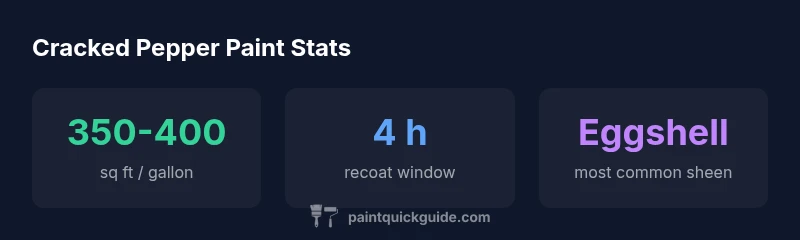
Temperature and humidity affect drying times, so adjust your plan accordingly. In cooler environments, extend dry times between coats. In warmer rooms, monitor airflow to prevent rapid drying, which can cause brush marks. Once you seal with a final satin or eggshell topcoat, the depth and warmth of cracked pepper will emerge, giving the room a refined, modern edge that’s easy to maintain with periodic touch-ups.
Professional-tip: elapsed recoat time can vary; always verify that the previous coat is dry to the touch before continuing. This reduces the risk of peeling or uneven surface textures. Reading the can’s guidance and following vendor-recommended wait times helps ensure a durable, even finish that remains true to cracked pepper’s character.
Finishes, Sheen, and Longevity
Finish choice has a meaningful impact on both look and durability. For living spaces, many homeowners favor eggshell or satin sheens for walls, offering a balanced combination of sheen and washability. For trim and doors, a semi-gloss can provide a subtle contrast while maintaining the depth of cracked pepper. The color’s depth tends to retain its character across multiple finishes, though the perceived warmth can shift slightly with the sheen. A satin finish on walls can reveal more warmth during daylight and appear cooler in artificial lighting, while eggshell tends to soften the color’s edge and emphasize the undertones. Be mindful of natural light direction: north-facing rooms can make the color appear cooler, while south-facing rooms often intensify warmth. Consistent maintenance—gentle cleaning with a soft cloth and mild detergent—helps preserve the finish and keeps the color looking fresh for years.
To preserve longevity, avoid frequent heavy scrubbing on painted surfaces; use gentle cleaners and spot-test any cleaning solution to ensure it doesn’t dull the finish or strip color. Regular inspection along corners and edges helps catch small wear before it grows into noticeable issues. In spaces with high moisture or sunlight exposure, consider periodic top-coating or spot-repairs to maintain uniform depth and vibrancy. With proper care, cracked pepper remains a timeless backdrop that supports a broad spectrum of décor styles.
Color Pairings and Design Ideas with Cracked Pepper
Cracked pepper serves as a versatile anchor, pairing well with a wide range of color stories. For a crisp, contemporary look, combine it with bright whites, creamy beiges, and natural wood tones. A cool palette can be created by pairing cracked pepper with pale blue-gray accents and steel hardware, producing a sophisticated, urban vibe. If your space leans warm, experiment with soft taupes, warm ivory, and honeyed wood accents to maintain balance without washing out the color’s depth. In kitchens, consider painting upper cabinets in cracked pepper and reserving lighter lower cabinetry for visual contrast, or vice versa, to create a dynamic focal point. When applying color on an accent wall, ensure surrounding walls stay lighter to prevent the room from feeling overwhelmed. Finally, incorporate textiles—throw pillows, rugs, and curtains—in lighter or coordinating shades to soften the intensity while preserving the color’s moodiness.
This shade excels in living rooms and bedrooms but can also ground high-contrast designs in home offices and entryways. It’s particularly effective when paired with metallic accents like brushed nickel or matte black, which help pull out the color’s depth and sophistication. The key is balance: crack the color with lighter hues and textures, so the space feels inviting rather than oppressive.
Testing and Lighting: How Cracked Pepper Changes in Different Rooms
Lighting dramatically affects how cracked pepper reads in your space. In rooms with abundant natural light, the warm undertones become more noticeable, producing a rich, inviting feel. In spaces with dim lighting or cool LED bulbs, the color may skew toward a cooler, more industrial gray. To accurately assess the color, evaluate swatches—ideally 6x6 inch samples—on multiple walls under windows and under artificial lighting. Observe both daytime and nighttime lighting, as common bulbs like soft white, daylight, and cool white can shift the perceived warmth. A practical test method is to paint a full-size sample panel and place it near furniture and flooring to visualize how the color interacts with other materials. If you’re uncertain, choose a lighter tone or plan for a second test patch, as this shade can appear too intense in smaller rooms. A well-lit evaluation minimizes surprises and ensures your cracked pepper choice aligns with your design intent.
Common Mistakes and How to Avoid Them
Common mistakes include neglecting surface prep, skipping primer, and choosing the wrong sheen for a room. Avoid blotchy finishes by using consistent, even strokes and maintaining a wet edge. Always sift through color swatches under the room’s lighting before purchasing a gallon or two. If you suspect blotching or uneven coverage, test with a primer designed to maximize stain blocking and choose a finish that balances washability with appearance. Overbrushing can create streaks, so avoid excessive brushing in one area and keep your technique smooth and deliberate. Another pitfall is not planning for enough paint; measure walls carefully and account for windows, doors, and architectural features that reduce total coverage. Finally, be mindful of ventilation and drying times to prevent dirt and dust from settling on a wet surface. Proactively addressing these common mistakes helps you achieve a polished, lasting cracked pepper look.
Cost, Availability, and Where to Buy Behr Cracked Pepper
Behr interior paints generally fall in the mid-price range, often $25-$60 per gallon depending on finish and store promotions. Availability varies by retailer and season, but cracked pepper is a widely stocked color in many home improvement stores and online outlets. When budgeting, factor in primer, multiple coats, and finishing topcoats, which can collectively affect the overall cost more than the base color itself. Always check for current promotions, loyalty discounts, and bulk-purchase options if you’re covering large walls or multiple rooms. If you’re mixing colors on a project, request color-matched samples to confirm the exact hue across different batches. Planning ahead helps you secure the right quantity and prevent color mismatches or supply shortages that interrupt the project flow.
Maintenance and Long-Term Care to Preserve the Look
Cracked Pepper color guidance data table
| Aspect | Recommendation | Notes |
|---|---|---|
| Color family | Dark gray neutrals | Pairs with white trim and light neutrals |
| Best surfaces | Walls, doors, cabinets | Prime on bare wood or metal for even color |
Your Questions Answered
What sheen should I choose for cracked pepper?
For living spaces, eggshell or satin finishes offer a balanced look with good washability. Doors and trim can use semi-gloss for durability while still allowing the color to read deeply. Test swatches in your room’s lighting to confirm the final appearance.
Choose eggshell or satin for walls and consider semi-gloss for trim.
Does cracked pepper look different in morning vs evening light?
Yes. Natural daylight tends to reveal the warm undertones, while artificial lighting—especially cool bulbs—can push the color toward a cooler gray. Always test swatches at different times of day to understand how the shade shifts.
It shifts with daylight, so test in different times of day.
Is cracked pepper suitable for cabinets?
Yes, cracked pepper can create a bold, modern statement on cabinets. Use a cabinet-grade finish or apply a spray or rolling method with several thin coats, followed by a protective topcoat for durability.
Great for cabinets with proper prep and finish.
How many coats does it typically take?
For most walls, two thin coats are recommended to achieve depth and even coverage. Allow adequate dry time between coats, especially in humid spaces.
Usually two coats work well after proper prep.
Can I use cracked pepper outside or on exterior surfaces?
Cracked pepper is designed for interior applications. For exterior surfaces, select Behr colors labeled for exterior use and ensure you follow weatherproofing steps, including suitable primers and sealants.
This shade is best kept inside unless labeled for exterior use.
What primer should I use before applying cracked pepper?
Use a stain-blocking primer for problem spots and bare wood or metal; a high-adhesion acrylic primer works well on most interior surfaces. Primer enhances color consistency and reduces the number of coats required.
Start with a good primer to get even color.
“Cracked Pepper delivers a timeless charcoal backdrop that remains versatile across rooms and lighting. Proper prep and testing yield a flawless result that stays stylish for years.”
Quick Summary
- Test color under multiple lights to confirm warmth
- Prime and prep thoroughly for a smooth finish
- Choose an appropriate sheen (eggshell or satin) for durability
- Pair cracked pepper with white or light neutrals for contrast
- Budget for primer and multiple coats to maintain depth