Paint Gun Lowes: A Practical Guide for DIY Painters
A comprehensive guide to paint guns at Lowe's, covering model types, costs, features, and step-by-step usage for homeowners and auto refinishing hobbyists.


Paint gun lowes refers to consumer spray guns sold at Lowe's hardware stores, used for home painting and auto refinishing projects. This guide explains what to look for, price ranges, and how to choose the right model for your project.
Why paint gun lowes options matter for DIY painting
For homeowners tackling walls, cabinets, or furniture, Lowe's shelves—often stocked with a range of paint guns—provide accessible entry points into spray applications. The term paint gun lowes covers consumer-grade sprayers designed for hobbyists and weekend projects. As the PaintQuickGuide Team notes, selecting the right tool can reduce overspray, improve finish quality, and shorten project timelines when compared with traditional brushes. The right model also helps you balance upfront cost with ongoing maintenance and consumables. When evaluating Lowe's options, consider project size, material compatibility, and the level of finish you aim to achieve. This guidance helps prevent buyer’s remorse and ensures you select a tool that fits your home or car refinishing workflow.
HVLP vs Conventional Sprayers: What Matters for the Home Shop
High-Volume, Low-Pressure (HVLP) sprayers are popular among DIYers for their reduced overspray and better control, especially on indoor walls and cabinets. Conventional spray guns, including gravity-fed and siphon models, deliver faster coating transfer but require more experience to manage spray patterns and masking needs. The PaintQuickGuide Team consistently recommends HVLP for indoor projects and novice users, while experienced hobbyists may opt for conventional units for rapid large-area work. When shopping at Lowe's, compare nozzle options, material compatibility (lacquers, enamels, latex), and the availability of replacement parts. The goal is a clean, even finish with minimal setup and cleanup burden.
How to Choose the Right Lowe's Model: Budget, Project, and Features
Start with your project scope: a single room, kitchen cabinets, or a car panel. For small projects, entry-level HVLP sprayers in the lower price brackets can deliver acceptable results with proper technique. For larger surfaces or automotive work, mid-range to premium units offer better atomization and consistency. Lowe's commonly carries models with adjustable air pressure, multiple nozzle sizes, and easy-clean designs. Check for compatibility with your paint type, ease of disassembly, and availability of replacement parts and accessories. PaintQuickGuide’s approach combines practical feature checks with the understanding that cost may vary by region and season.
Essential specs to compare on Lowe's shelves
When surveying Lowe's stock, pay attention to key specifications:
- Nozzle size and spray pattern (round vs wide fan) for coverage and finish quality
- Material compatibility (latex, enamel, varnish, urethane) and viscosity handling
- Air consumption (CFM) and required compressor size or power source
- Feed system (gravity, siphon, or bottom feed) and ease of cleanup
- Cleaning and maintenance features (quick-disconnect, detachable parts)
- Weight and ergonomics for longer projects A practical rule is to map your expected project type to these specs. Cabinets and furniture benefit from finer atomization, while walls can tolerate larger patterns with appropriate masking and technique.
Prep and safety: getting ready before you spray
Preparation is half the finish. Begin with masking all adjacent areas, sealing trim, and protecting floors. Ventilation is essential; use fans or open windows if you spray indoors. Thinning recommendations depend on the paint type and the gun’s nozzle size. Always perform a test spray on a sacrificial panel to calibrate fluid flow and pattern before committing to your main surface. Wear appropriate PPE, including a respirator, eye protection, and footwear. At Lowe's, you’ll also find recommended reducers and flow enhancers that align with common coatings, further simplifying setup.
Cleaning, maintenance, and extending gun life
Post-project care is where many DIY painters save money. Disassemble the spray gun carefully, rinse with the correct solvent, and run cleaner through the lines and nozzle. For latex coatings, warm water with mild detergent may suffice; for oil-based finishes, use recommended solvents and follow with a final rinse. Reassemble only after all parts are completely dry. Store the gun in a cool, dry place and keep spare nozzles and seals on hand. Regular maintenance reduces clogging, extends life, and preserves spray quality over time.
Cost considerations and budgeting around Lowe's pricing
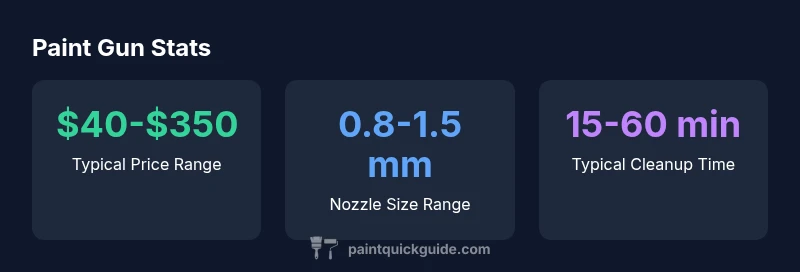
Pricing for paint guns at Lowe's ranges widely based on brand, nozzle size, and included accessories. For home projects, expect entry-level units in the lower end of the spectrum, with mid-range options offering better atomization and durability. Premium models command higher price points but may deliver finer finishes and longer service life. When budgeting, also factor in paint and reducer costs, replacement parts, and cleaning supplies. Look for bundles or promotions that include extra nozzles or cleaning kits, as these add value over the life of the tool.
Practical project workflows: kitchens, walls, and cars
A typical home workflow could involve sanding and priming, then applying a base coat with a controlled pattern. For kitchens, cabinets benefit from meticulous prep and multiple thin coats rather than a single thick layer. Walls may require primer for coverage, with multiple light passes to achieve uniform texture. Auto refinishing using a spray gun at Lowe's might involve specific reduced coatings and careful temperature control. Regardless of project type, consistency in technique and proper masking are the keys to a professional-looking result.
Common mistakes and practical fixes for first-time users
Mistakes include skipping prep, using too thick a coating, and failing to calibrate the spray pattern. Quick fixes involve thinning formulations to recommended viscosity, adjusting air pressure in small increments, and performing test passes on scrap panels. If you notice orange peel texture, reduce viscosity or adjust the nozzle distance. If runs or sags occur, back off the coating and apply several light coats instead of one heavy coat. Learning through repetition and small practice panels makes a noticeable difference.
Common paint gun types found at Lowe's with rough price ranges
| Model Type | Typical Price Range | Best Use |
|---|---|---|
| HVLP Sprayer | $40-$250 | Fine finish on walls and cabinets |
| Conventional Gravity Cup | $50-$350 | Medium-to-large projects with control |
| Airless/Siphon Combo | $150-$600 | Rapid coverage for large areas |
Your Questions Answered
Can I use any paint with a consumer paint gun from Lowe's?
Most consumer-grade guns work with latex and compatible enamels when properly thinned. Always check the coating’s viscosity and the gun’s nozzle size recommendations before spraying. Use reducers or thinners as directed by the coating manufacturer.
Most consumer guns work with latex paint when thinned to the right viscosity; always check the coating and nozzle size first.
What’s the main difference between HVLP and conventional spray guns?
HVLP sprayers deliver better control with less overspray, ideal for indoor projects. Conventional guns offer faster coverage but require more skill to manage spray patterns and masking.
HVLPs give you more control with less overspray; conventional guns spray faster but need more skill.
Is it cheaper to rent or buy a paint gun for a one-time project?
For a single project, renting can be cost-effective, but long-term DIY use justifies buying. Factor in maintenance costs and the price of consumables over time.
Renting can work for one project, but buying may be cheaper if you spray regularly.
What safety gear should I use when spraying indoors?
Wear a respirator with organic vapor cartridges, eye protection, gloves, and long sleeves. Ensure good ventilation and mask off adjacent areas to protect occupants.
Wear a respirator, eye protection, and long sleeves, and spray in well-ventilated spaces.
Do I need a compressor or can I run a paint gun from a handheld unit?
Most consumer guns require a powered source or a compatible compressor. Check the gun’s air requirements and ensure your setup can deliver stable CFM for consistent spray.
Check the gun’s air needs and make sure your air supply provides stable flow.
What’s a good testing routine before starting a project?
Test on scrap material to dial in viscosity, pressure, and pattern. Adjust nozzle distance and passes to minimize defects on the actual surface.
Always test on scrap first to dial in your settings.
“A well-chosen spray gun paired with proper technique dramatically improves finish quality while reducing overspray and cleanup time.”
Quick Summary
- Identify project size to choose HVLP vs conventional sprayers
- Expect price ranges from $40 to $350+ at Lowe's
- Prep and masking are critical for a professional finish
- Regular maintenance extends tool life and finish quality
- Balance cost against paint compatibility and accessories