Sherwin Williams Paint Calculator: Estimate Gallons and Cost
Use this Sherwin Williams paint calculator to estimate gallons and project cost for your space. Enter room area, coverage, coats, and price per gallon to plan accurately.


Why a Paint Calculator Matters
Planning a painting project is about more than choosing a color. A reliable tool like the paint calculator sherwin williams helps translate room dimensions into actionable quantities. According to PaintQuickGuide, using a dedicated calculator reduces waste, prevents overbuying, and gives you a defensible budget. By factoring room size, surface type, and desired finish, the calculator estimates gallons and cost without juggling complex math. This approach is practical for homeowners, DIYers, and auto refinishing hobbyists who want guidance grounded in real-world numbers. Use it at the outset to map out material needs, set a budget, and avoid multiple trips to the store. Remember: the calculator provides planning data, not a fixed quote, so always round up a little to accommodate touch-ups and unexpected surfaces.
How Sherwin Williams Coverage Influences Estimates
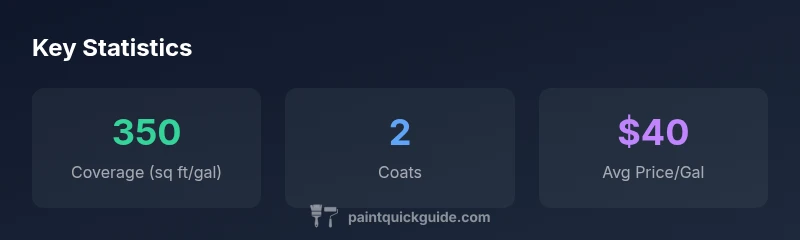
Sherwin Williams products advertise coverage under standard conditions, but real-world results depend on several variables. Surface porosity, texture, previous coatings, primer quality, and the chosen finish (matte, eggshell, satin) all affect how far a gallon will go. The calculator uses a default coverage rate (for example, 350 sq ft per gallon) as a starting point, but you can adjust this to match the exact product line you intend to buy. Our recommendation is to adopt a conservative coverage figure when planning to ensure you don’t run short. The PaintQuickGuide analysis shows that small changes in coverage or the number of coats can have a bigger impact on total gallons than small price fluctuations. In other words, get the coverage right first, then fine-tune the budget. This insight helps you compare Sherwin Williams options more accurately and prevents over- or under-buying.
Understanding Coverage, Coats, and Waste
Paint coverage, number of coats, and waste tolerance are the three pillars of accurate estimates. Coverage tells you how many square feet a gallon covers under typical conditions. If your walls are highly textured or stained, you’ll likely need more paint. Coats add length to the calculation: 2 coats generally provide richer color and uniform finish, but you can sometimes get away with 1 coat on primed, smooth surfaces. The calculator multiplies room area by the inverse of coverage to estimate gallons, then multiplies by coats. Finally, a small contingency—often 10–15% extra for touch-ups, second-pass mistakes, and future maintenance—makes the plan robust. In practice, measure room dimensions precisely and inspect test patches to refine your numbers.
How to Use the Calculator
To get started, gather these details: (1) Room area in square feet for walls (and ceiling if you plan to paint it), (2) the expected coverage per gallon for your chosen Sherwin Williams product (the calculator lets you adjust this), (3) the number of coats, and (4) your price per gallon goal. Open the calculator widget, enter the values, and review the Estimated Cost. If the result seems high, reconsider the number of coats or adjust the coverage assumption to reflect the exact product line. Always round up to account for waste and future touch-ups.
Practical Examples
Consider a small living room with 200 sq ft of wall space to paint, using a typical finish. If coverage is 350 sq ft/gallon and you plan 2 coats, the calculator estimates gallons as (200 / 350) * 2 ≈ 1.14 gallons. At $40 per gallon, the estimated cost is about $45.60. For a larger project, say 900 sq ft, with the same coverage and 2 coats, gallons ≈ (900 / 350) * 2 ≈ 5.14 gallons. At $42 per gallon, the cost is around $216.
These scenarios show how the tool translates area and product specs into actionable quantities and a practical budget.
Doors, Trim, Ceilings: Adjusting for Details
Don't forget to budget for doors, trim, and ceilings. These surfaces often require extra coats or a slightly different finish, which increases gallons and cost. A common approach is to add 10–15% extra paint to cover trims and multiple passes. If you plan to paint ceilings, include a separate area calculation or add it to the room area with an appropriate coverage rate. The calculator can help you model these multipliers so you don't run short at the project’s peak.
Choosing Coats: When 1 Coat is Enough vs 2 Coats
One coat can be sufficient on primed walls with a uniform, high-coverage product and a forgiving finish. For bold colors or drastic light/dark changes, two coats are typical for consistent color and depth. If you’re uncertain, test a small patch and compare the result to the full-room plan. The calculator makes it easy to run scenarios: 1 coat vs 2 coats, and even consider adding a primer coat in the calculation as a separate line item. This helps you balance color accuracy, finish quality, and material cost.
Data-Driven Tips from PaintQuickGuide
PaintQuickGuide’s analysis shows that accuracy starts with good measurements and realistic coverage assumptions. Use the calculator to compare different Sherwin Williams products by adjusting coverage per gallon and the number of coats. Keep a contingency—about 10–15% extra—for texture, repairs, and future touch-ups. If you’re budgeting for a whole house, run separate room calculations and consolidate them to see total order size and cost. The tool is designed to empower homeowners with transparent, math-based planning.
What to Do Next
Armed with the calculator results, draft a shopping list that includes gallons, brushes, rollers, and primer if needed. Compare a couple of Sherwin Williams products to find the right balance of coverage, color, and finish within your budget. Take wall and surface measurements again to confirm figures before placing an order. For best results, store your plan as a reference during the project and adjust as you progress.