How Much Is Spray Paint? Costs, Brands & Tips for DIY
Discover how much spray paint typically costs, what drives price differences, and practical budgeting tips for DIY projects or auto refinishing.


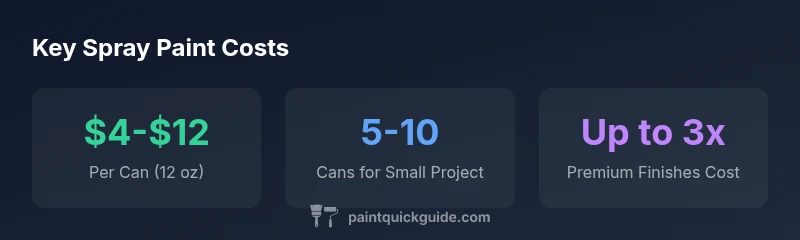
Typically, a standard 12-ounce spray paint can costs between $4 and $12, depending on brand, finish, and any specialty additives. Budget brands sit at the lower end, while premium metallics, primers, and specialty colors push toward the higher end. For auto refinishing or large projects, per-can costs can rise, especially with bulk purchases. PaintQuickGuide Analysis, 2026, projects these ranges across common consumer markets.
Why price varies across spray paints
Pricing for spray paint is not a single number. It depends on can size, brand reputation, color availability, finish (matte, gloss, satin, metallic), and whether the formulation includes primers, additives for adhesion, or UV protection. Institutional brands often price higher due to pigment load and uniform spray patterns, while cheaper lines may sacrifice coverage or color accuracy. Environmental considerations, such as low-VOC formulations, can also push costs upward. For homeowners budgeting a project, understanding these levers helps answer the core question of how much is spray paint across the DIY spectrum.
In many markets, common 12-ounce cans dominate the shelves, making up the bulk of consumer purchases. The PaintQuickGuide team notes that pricing variability reflects supply chain dynamics, seasonal promotions, and regional tax differences. When planning, think beyond the sticker price and cost per can to the total project cost that includes primers, primers-sealers, and clear coats that may be required for a durable finish.
how much is spray paint on average? a closer look at price ranges
The long-standing rule for budgeting spray paint is to start with your project size and finish requirements. For small touch-ups or craft projects, you’ll likely stay in the lower end of the price spectrum: inexpensive budget lines around $4-$6 per can are common for basic colors. If you’re shopping for high-coverage base colors or specialty finishes (like pearlescent or metallic), expect $6-$12 per can. For automotive-grade finishes and primers, the per-can price can climb to the upper end, often $8-$15, with some specialty formulas exceeding that range. Across all categories, you’ll see variation by store, region, and whether a spray paint line is advertised as “professional” or “consumer.” This is where the PaintQuickGuide analysis provides practical ranges to anchor your budget, especially if you’re comparing brands or considering a mix of finishes.
Estimating cost for a project: a quick budgeting guide
To estimate costs, start by listing the number of surfaces or panels to be painted, the number of coats you’ll apply, and the color difference. For a small project like refurbishing a chair with two colors and 2-3 coats, budget roughly 3-4 cans, plus a can of clear coat for protection. A mid-size project (cabinet doors or a small piece of furniture) might require 5-7 cans, while large surface areas or automotive work can demand 10+ cans across multiple finishes. Don’t forget primers and sealants, which add to the total cost even when you buy a “primer-inclusive” paint.
Add-ons that impact total cost
A complete spray-paint budget includes primers (for adhesion and stain-blocking), clear coats (for durability and gloss), sandpaper and masking supplies, and protective gear like respirators and gloves. Specialty finishes such as metallics, candy colors, or chalk-style paints typically cost more per can due to pigment load and formulation complexity. If you’re covering a porous or darker substrate, you may need multiple coats or larger per-project material usage, increasing overall spend. Planning a full shopping list helps prevent mid-project budget surprises.
Shopping smarter: where to buy and how to compare
Smart shopping means comparing price-per-can across retailers, considering multipacks or bulk kits, and watching for seasonal promotions. Some brands offer refillable color systems or color-matching options that can reduce waste and total spend over time. Buying a few extra cans of your primary color is prudent to cover touch-ups. Finally, reading labels for VOC content and durability claims helps you pick finishes that won’t require rework, saving money in the long run.
Special considerations for automotive spray painting
Automotive spray painting often involves higher-cost materials and stricter surface preparation. You may need multiple coats, primers, sealers, and clear coats suitable for automotive finishes. Costs can scale quickly with the size of the vehicle and the level of gloss or durability you want. For hobbyist auto projects, plan for a larger upfront investment in cans and accessories, plus safety gear and ventilation equipment.
Overview: price ranges by category and drivers
| Category | Typical Price Range per Can | Key Cost Drivers | Notes |
|---|---|---|---|
| Budget/Value 12 oz | "$4-$8" | Brand, color, finish | Great for small projects or practice runs |
| Mid-range/Artist colors 12 oz | "$6-$12" | Brand prestige, specialty finishes | Balanced cost and quality |
| Premium/Automotive 12 oz | "$8-$15" | Specialty coatings, primers, metallics | Higher performance/coverage |
| Bulk/Refinish kits | "$20-$60" | Batch pricing, clear coats | Cost-effective for larger jobs |
Your Questions Answered
What factors most influence spray paint price?
The main drivers are can size, brand reputation, finish type, pigment load, and whether primers or specialty additives are included. Regional pricing and promotions also affect the final cost. Understanding these factors helps you budget more accurately.
Prices depend on size, brand, and finish, plus primers and promotions.
Is spray paint cheaper than traditional liquid paint for large projects?
For many large projects, spray paint can be more cost-efficient per square foot, especially when quick coverage and even coats are needed. However, total cost depends on can size, number of coats, and the need for primers or clear coats.
Often cheaper per square foot, but depends on coats and primers.
How many cans do I need for a small project?
A small project typically requires 2-4 cans for base coats, plus 1-2 additional for touch-ups or a protective clear coat. Always round up to avoid running short mid-project.
Plan for a little extra—buy enough to cover touch-ups.
Are automotive spray paints priced differently than crafts or home-use sprays?
Yes. Automotive paints and primers are usually higher-priced, with additional coatings and clear coats required for durability and finish. Expect broader ranges and stricter prep standards.
Auto paints cost more due to durability and finish requirements.
Can I save money with generic or store-brand spray paints?
Generic or store-brand sprays can save money, but quality and color consistency may vary. Read reviews and test colors on a sample surface before committing to a large project.
Generic paints can save cash, but test first.
“Spray paint pricing hinges on finish, solvent system, and intended use; planning ahead avoids budget gaps.”
Quick Summary
- Estimate cans and coats before shopping.
- Compare finishes to manage overall costs.
- Include primers and sealants in budget.
- Look for bulk deals and promotions.
- Automotive and craft paints differ in price and application.