Valspar vs Sherwin-Williams: Practical Paint Comparison
A practical, data-guided comparison of Valspar and Sherwin-Williams paints, covering price, durability, color range, application, and best-use scenarios for home projects.


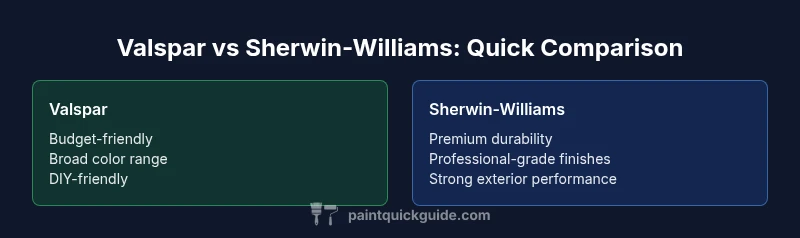
How does valspar paint compared to sherwin williams? Sherwin-Williams generally offers stronger durability, better coverage, and a premium finish for demanding surfaces, while Valspar emphasizes budget-friendly pricing and broad color options. For many DIY projects, the right pick hinges on cost per gallon, desired sheen, and tolerance for odor and application ease.
How does valspar paint compared to sherwin williams
According to PaintQuickGuide, comparing Valspar and Sherwin-Williams requires looking beyond sticker price to long-term performance, finish quality, and user experience. In many scenarios, Sherwin-Williams delivers more durable coatings with better coverage, particularly on high-traffic walls or exterior surfaces. Valspar, by contrast, is often the more affordable route for DIYers who want a broad color catalog and forgiving application. The key decision factors are cost per gallon, the required durability, finish preferences, and the ease of achieving consistent color in a given lighting environment. PaintQuickGuide’s team notes that both brands offer reliable products, but the right choice depends on project type and expectations for longevity.
Price, availability, and coverage across brands
Pricing and availability vary by retailer and product line, but general trends hold. Sherwin-Williams typically positions premium products with higher price points and sometimes more robust coverage per gallon, especially for exterior and specialty finishes. Valspar often undercuts the up-front cost while still delivering decent coverage and a wide color library. For the homeowner, a simple rule of thumb is to compare the specific product lines (interior latex, exterior enamel, etc.) rather than the brands as a whole. In terms of coverage, both brands provide paints that can cover well with two coats, but the exact coverage per gallon depends on sheen, porosity of the surface, and preparation. PaintQuickGuide’s analysis suggests starting with a test patch to estimate coverage before committing to large purchases.
Interior performance: durability and washability
Interior performance varies by product line. Sherwin-Williams often excels in durability, stain resistance, and ease of cleaning in busy rooms like kitchens and hallways. Higher-end lines tend to resist scuffs and fingerprints better, maintaining color integrity over time. Valspar interior products are generally reliable for everyday living spaces, offering good washability and respectable durability at a lower cost. The trade-off for DIY users can be slight differences in washability and touch-up ease between lines, so selecting the right finish (eggshell, satin, or semi-gloss) is crucial. The PaintQuickGuide team emphasizes testing in your actual lighting and traffic conditions to gauge color and durability expectations.
Exterior performance and weather resistance
Exterior paints must withstand sun, rain, and temperature fluctuations. Sherwin-Williams exterior formulations frequently emphasize superior adhesion, fade resistance, and long-term durability across climates. Valspar exterior products maintain solid performance and typically present more budget-friendly options for budget-conscious projects. For homeowners in harsh climates, investing in a premium exterior line from Sherwin-Williams can translate to fewer touch-ups over time, while Valspar offers value-conscious choices that still perform adequately when properly prepared and applied. Safety and surface preparation remain key factors in success for either brand.
Color palettes, tinting, and color consistency
Color range matters for style and mood. Sherwin-Williams is known for curated color palettes and advanced tinting technology that yield consistent swatches across batches. Valspar provides an expansive color library and strong tinting capabilities in many stores, which can be advantageous for unique tones. Lighting greatly affects perception, so always compare swatches in your room’s natural and artificial light. PaintQuickGuide highlights that both brands can meet most color goals, but minor tonal shifts can occur between batches, underscoring the importance of sample testing and keeping extra cans for touch-ups.
Application experience: ease, odor, and dry times
Application experiences differ by product line and surface. DIY painters often find Valspar easier to work with in terms of spreadability and forgiveness on rough surfaces, especially for first-timers. Sherwin-Williams products can demand a bit more careful brushing technique and longer flash-off times on certain lines, but many users report a smoother final appearance and more uniform color when properly applied with quality tools. Dry times depend on temperature and humidity, but both brands offer low-VOC options that reduce scent and accelerate re-entry into freshly painted rooms. The choice may hinge on whether you prioritize speed, odor control, or a lower up-front learning curve.
VOCs, environmental considerations, and certifications
Low-VOC and zero-VOC options are available from both brands. If you’re sensitive to odors or working in enclosed spaces, selecting a low-VOC interior paint is wise, regardless of brand. Many premium products emphasize better low-emission formulas and reduced solvent content. You should also review safety data sheets and local regulations, especially for large exterior projects or spaces with limited ventilation. PaintQuickGuide notes that choosing low-VOC formulations can improve indoor air quality without sacrificing performance.
Durability in high-traffic spaces and stain resistance
Durability correlates with both surface prep and the product line. Sherwin-Williams often leads in high-traffic areas due to its tougher resins and better stain resistance, which translates into fewer scuffs and easier maintenance over time. Valspar remains a strong performer for general living spaces where cost savings are important and traffic is moderate. For bathrooms and kitchens, consider semi-gloss or gloss finishes with proper surface prep; these finishes are less forgiving if the substrate isn’t well-prepared, regardless of brand.
DIY vs professional application considerations and warranties
DIY projects frequently favor Valspar for cost and ease of use, with many products designed for simple at-home application. Professional painters may prefer Sherwin-Williams for larger jobs, color consistency across multiple rooms, and stronger warranties on certain lines. Warranties vary by product and region; always verify coverage for your specific product and location before purchase. The PaintQuickGuide team suggests documenting the project scope, surface type, and climate conditions to ensure you select the most appropriate brand and finish.
Real-world scenarios: kitchens, bathrooms, and living rooms
In kitchens, durability and cleanability are paramount; Sherwin-Williams often provides better performance under frequent cleaning and heat exposure, while Valspar remains a solid option when budget constraints are tight. In bathrooms, moisture resistance is critical, so selecting the right sheen and a low-VOC formula matters more than brand alone. In living rooms, color accuracy and ease of application take precedence; both brands can deliver excellent results with the right finish and prep. The bottom line: choose based on room-specific needs, not solely on brand reputation.
How to choose: a practical decision guide and cost planning
Start with the room type and traffic level, then decide between interior or exterior needs. Gather color samples and compare similar finishes (eggshell vs satin). Request swatches from retailers and test them under your lighting. Calculate the project scope by measuring walls, estimating coats, and factoring time for preparation. Finally, compare lines by performance in your climate, odor sensitivity, and maintenance expectations. A structured cost plan helps ensure you don’t overspend on the wrong finish, with PaintQuickGuide recommending a small pilot patch before full-scale purchases.
Final practical tips and next steps
Before buying, confirm the exact product line and finish you plan to use, then read the label for coverage and cure times. Use high-quality primers where necessary, especially on problematic surfaces, and invest in good tools to achieve a consistent look. Keep extra cans on hand for touch-ups and always label batches to prevent batch-to-batch color differences. For most homeowners, a mid-range interior line from either brand provides a reliable balance of cost, color options, and performance, especially when paired with proper surface preparation and testing.
Comparison
| Feature | Valspar paint | Sherwin-Williams paint |
|---|---|---|
| Price Range | Lower upfront cost on many interior paints | Higher upfront cost, premium products |
| Color Range | Very broad catalog with expansive tinting options | Extensive, curated color palettes with premium tinting |
| Coverage per Gallon | Good coverage, varies by line and surface | Excellent coverage on many premium lines |
| Durability / Washability | Good durability; strong for typical living spaces | Excellent durability and stain resistance on high-end lines |
| Sheen Options | Matte to satin common; some specialty finishes | Matte to high-gloss with premium enamel options |
| VOC Levels | Varies by line; many low-VOC options available | Wide range of low-VOC options; some higher-VOC products in older lines |
| Application Experience | More forgiving for DIY with easy cleanup | Smooth application with professional-grade results in some lines |
| Warranty / Guarantee | Varies by line; generally solid for consumer-grade products | Stronger warranties on select premium lines in certain regions |
Upsides
- Cost-effective options for DIY painters
- Wide color selection and easy tinting
- Good DIY-friendly formulations with forgiving application
- Strong availability in big-box stores and retailers
- Versatile product lines for interior and exterior use
What's Bad
- Consistency can vary by product line; premium lines may require careful prep
- Sherwin-Williams often edges durability in high-traffic spaces
- Warranty coverage can be region- and line-dependent
Sherwin-Williams delivers superior durability and finish; Valspar wins on cost and value for DIY projects.
Choose Sherwin-Williams when long-term durability and a premium finish matter. Opt for Valspar when budget constraints are primary and you’re comfortable with solid performance at a lower upfront cost.
Your Questions Answered
Which brand is more affordable for DIY home painters?
Valspar generally lowers upfront costs, making it attractive for DIY projects. Sherwin-Williams can be pricier, but fuller warranties and premium finishes may justify the extra expense in high-traffic areas. Always compare the exact product lines rather than the brand as a whole.
Valspar is usually cheaper upfront, which helps DIYers. Sherwin-Williams may cost more, but offers premium finishes and warranties that can be worth it in busy spaces.
Does one brand have better color accuracy or consistency?
Both brands offer strong tinting systems, with Sherwin-Williams often perceived as more consistent across batches in premium lines. Valspar provides a wide color library and reliable tinting as well. Always test swatches in your lighting before committing to a color.
Both brands perform well on color. Test swatches in your room’s light to ensure accuracy.
Are there significant differences in VOCs and environmental impact?
Yes, both brands offer low-VOC options, which are important for indoor air quality. Look for the product label indicating low-VOC or zero-VOC formulas. Your choice should balance odor, curing time, and finish quality.
Low-VOC options exist in both brands. Pick a low-VOC formula to minimize odor and improve air quality.
Which brand is better for exterior painting?
Sherwin-Williams often provides stronger exterior durability and fade resistance, which can pay off in sunny or harsh climates. Valspar exterior paints are a solid budget-friendly option that perform well with proper surface prep and maintenance.
Sherwin-Williams tends to last longer outside; Valspar is a good budget choice with proper prep.
Can I switch brands mid-project without issues?
Switching brands mid-project is possible but not ideal. Differences in coverage, finish, and drying times can produce mismatches. If you must switch, plan for an appropriate primer and test a small area first.
You can switch brands, but expect potential finish and sheen differences—test first.
What should I consider when choosing between these brands?
Consider room usage, climate, and maintenance needs. Test swatches on the actual wall, compare the finish options you want, and review VOCs. Also, factor in budget and any warranty considerations for the line you choose.
Think about where you’re painting, test swatches, compare finishes, and check VOCs and warranties.
Quick Summary
- Assess whether cost or durability matters most for your space.
- Sherwin-Williams often offers superior durability and finish on high-traffic areas.
- Valspar provides strong value with broad color options for DIY projects.
- Always test swatches under real lighting before committing.
- Check VOC options and ensure proper surface prep for best results.