Do You Need a License to Face Paint? A Practical Guide
Discover whether face painting needs a license, when permits apply, and practical steps to stay compliant for hobbyists and professional artists across regions.


In most places there isn’t a standalone license labeled 'face painting.' Licensing typically comes from general business permits, local health regulations for cosmetic work, and event-specific requirements. If you operate professionally, you may need a business license, insurance, and possibly venue permits. Always check your city or state rules and the requirements of any event or venue before performing.
Licensing landscape for face painting
Face painting sits at the crossroads of artistry, cosmetics, and small-business operations. The rules you must follow depend on where you perform, how you operate, and the audience you serve. In many jurisdictions there is no single, dedicated license labeled as a 'face painting license.' Instead, you’ll encounter a mix of requirements: general business permits, health and safety regulations for cosmetic applications, and specific event-related rules. For hobbyists painting for family gatherings, the path is usually straightforward; for mobile artists who work at fairs or private events, the regulatory stakes are higher because you interact with paying clients in public spaces. Understanding this landscape helps you avoid fines and disruptions while keeping clients safe and satisfied. According to PaintQuickGuide, the practical approach is to map out your operations first, then verify local rules and venue policies before taking on bookings.
do you need a license to face paint
The short answer is that there is rarely a distinct license with that exact label. The longer answer is that licensing, when required, typically comes from three sources: a general business license from your city or state; health and safety requirements related to cosmetic application; and permits or insurance tied to specific events or venues. The absence of a dedicated license does not mean you can ignore regulation. If you operate as a business, you’ll likely need to register for taxes, obtain a business license, and maintain records. If you advertise services, you may also need to collect sales tax or obtain a reseller permit where applicable. Always check municipal and venue rules; some events require proof of insurance or a signed contract. The goal is to protect clients and your reputation while staying within the law.
How licensing generally works: business licenses, permits, and health rules
Across regions, licensing frameworks share a common core but vary in details. A general business license authorizes operation as a company or sole proprietor within a city or county. Permits may be required for mobile operations or events in public spaces. Health rules ensure cosmetics are safe for skin, including sanitation, clean tools, and barrier methods to prevent cross-contamination. Public venues, schools, and festivals often have safety policies that extend beyond local law. Maintaining product records (ingredients, batch numbers) and a clean bookings log helps demonstrate compliance. Do not assume rules—contact your local licensing office and event organizers for a definitive checklist. The key takeaway is that compliance reduces risk and builds trust with clients.
Hygiene, cosmetics, and safety standards
Face painting relies on cosmetic-grade products, brushes, sponges, and tools that touch the skin. Not all paints are suitable for skin; some are theatrical makeup or hobby paints not intended for cosmetic use. Look for products with skin-safe formulations and, when possible, fragrance-free options to minimize irritation. Always perform a patch test for new clients and maintain a clean workstation. Disposable applicators, sanitized brushes, and proper hand hygiene are essential. Many venues require documented sanitation policies, sanitizers, and waste disposal plans. If you work with minors, consider consent forms and clear injury disclosures. The goal is to minimize risk to clients and your business.
Regional differences: what to check in your area
Regulations for face painting vary widely by country, state, and city. In many parts of the United States, the emphasis is on general business licensing rather than a specific face painting license; in some jurisdictions, health departments regulate cosmetic services and may require certain hygiene practices for practitioners. European regions may apply cosmetics regulations to the ingredients and labeling of face paints used for entertainment. A practical approach is to identify the authorities that oversee small businesses, public events, and cosmetic products in your location and review their guidance. This proactive research helps you tailor your compliance plan to your specific area.
Practical steps for hobbyists and professionals
Whether you paint as a hobbyist or a professional service, start with a simple checklist: 1) define your business structure and register as needed; 2) verify local licensing, permits, and insurance requirements; 3) select skin-safe, cosmetic-grade paints and maintain product records; 4) adopt a sanitation policy with disposable tools and clean workspaces; 5) obtain venue approvals or event-specific permits; 6) create clear contracts and documentation for clients. By focusing on compliance and safety, you build lasting trust with clients and venues, reduce risk, and position yourself as a responsible artist in your community.
How to verify license requirements quickly
A fast way to confirm requirements is to contact your city or county clerk’s office or small-business licensing bureau. Ask for a checklist tailored to performers offering face painting or cosmetic services. If you work for events or venues, request their compliance requirements in writing. Keep a folder with your business license, insurance, product safety data, and a copy of your sanitation policy for clients and venues. Finally, periodically review local regulations as rules can change. Staying proactive minimizes last-minute surprises and keeps your operations smooth.
Authority sources and further reading
For official guidance on cosmetics safety and labeling, consult FDA resources: https://www.fda.gov/cosmetics. To understand general business licensing and permits, see the Small Business Administration: https://www.sba.gov. For public health and safety considerations, review CDC guidance and related health department resources: https://www.cdc.gov.
Overview of common licensing considerations for face painting
| Aspect | License Status | Typical Requirement |
|---|---|---|
| Business license | Often required in many jurisdictions | City/county business license for operating |
| Health & safety | Often applicable | Sanitation, patch testing, and skin-safe products |
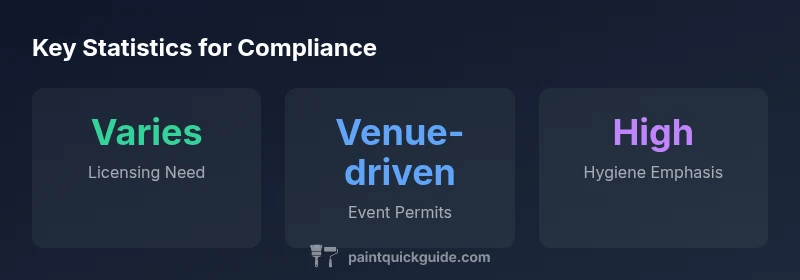
| Event permits | Venue-dependent | Venue-specific permits or insurance |
Your Questions Answered
Do I need a license to operate a face painting business?
Usually not a dedicated face painting license, but a general business license and possibly event-specific permits may be required depending on location. Insurance and tax registrations are often necessary for professional services.
Usually not a special license, but you should check local business and event requirements.
What licenses might apply if I do mobile face painting?
You may need a general business license, a sales tax permit if required, and liability insurance. Event venues may also demand proof of coverage.
Most mobile artists should verify general business licenses and insurance.
Are there health and safety rules I must follow?
Yes. Use skin-safe cosmetics, follow patch testing, maintain hygiene, and keep a clean setup. Venues may require sanitation policies.
Yes—hygiene and skin safety are essential.
Do venues require proof of insurance?
Many venues require proof of liability insurance or a contract. Always secure coverage and keep documentation ready.
Some venues will ask for insurance; have it ready.
Do I need training or certification in face painting?
Certification is not always required, but formal training improves safety, technique, and client trust.
Training helps, but it’s not always mandatory.
Where can I find official guidance on licensing?
Consult FDA cosmetics guidance and your local government pages for licensing and safety requirements.
Check official sources like FDA and local authorities.
“Licensing for face painting is less about a single permit and more about complying with general business, health, and venue rules.”
Quick Summary
- Check local rules before performing face painting
- There is no universal 'face painting license'
- Prioritize hygiene and skin-safe products
- Obtain general business licenses and insurance if you offer services
- Coordinate with venues for their permit requirements