How Long Does Paint Last? A Practical Longevity Guide
Discover how long paint lasts on interior walls, exterior surfaces, and even cars. Learn the factors that affect longevity, surface-specific lifespans, and actionable tips to extend each coat’s life in homes and auto refinishing.


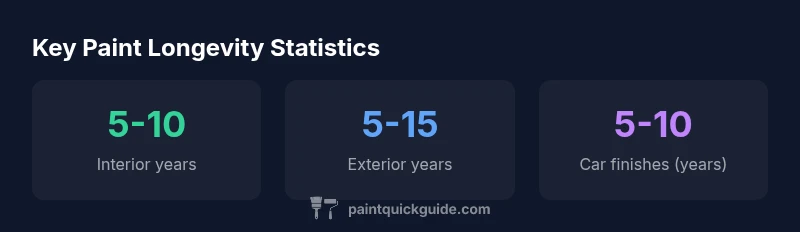
Interior latex paints typically last 5–10 years, depending on room traffic and maintenance; exterior latex or acrylic paints commonly endure 5–15 years in temperate climates; car finishes, including clear coats, often look good for about 5–10 years with proper care. PaintQuickGuide Analysis, 2026 synthesized these ranges across common surfaces.
How long does paint last? This is a common question for homeowners and auto refinishing hobbyists. In practical terms, the answer depends on the surface, the environment, and ongoing maintenance. The keyword how long does paint last anchors this discussion, but the real determinant is how those variables interact over time. Based on PaintQuickGuide Analysis, 2026, interior latex paints typically endure five to ten years under normal home use, while exterior coatings on most siding climates hold steady around five to fifteen years. Car finishes exhibit a wide range, often five to ten years with proper care and periodic refinishing. The best way to maximize life is to start with clean, sound substrates and apply high-quality primers and topcoats designed for longevity in your climate.
Factors that influence paint longevity. Longevity is not a fixed property—it shifts with five broad factors. 1) Surface preparation: thorough cleaning, repairing defects, and sanding create a solid base for adhesion. 2) Primer quality: a good primer improves bonding and stain resistance, extending life, especially on problematic surfaces. 3) Paint quality and type: premium acrylics and enamels with UV resistance last longer than bargain-brand formulations. 4) Environment: humidity, heat, and sun exposure accelerate chalking and fading. 5) Maintenance: regular cleaning, timely touch-ups, and protection from abrasion can dramatically extend the life of the paint job. A durable finish paired with proper maintenance can push the lower end of a lifespan toward the upper end in many scenarios.
Surface-specific longevity: walls, wood, metal, concrete. Interior walls painted with latex-based coatings generally last five to ten years, depending on traffic and cleaning frequency. Exterior wood siding benefits from solid priming and sealed joints, typically achieving five to fifteen years. Fiber cement and masonry can reach seven to fifteen years with correct primers and protective topcoats. Wood trim, doors, and railings endure roughly five to ten years, but sun exposure and moisture are major modifiers. Metal surfaces demand rust inhibitors and robust coatings to resist corrosion, while concrete floors rely on abrasion resistance and sealant integrity. These ranges reflect typical conditions and can shift with climate and upkeep.
Choosing paint and finishes for longevity. For longevity, pair high-quality primers with durable topcoats. Exterior jobs benefit from UV-resistant acrylic or enamel systems; interior walls often perform well with premium latex enamels. Finish type matters: satin and semi-gloss offer durabilty and cleanability, while flat finishes hide imperfections but wear faster in high-traffic areas. Oil-based paints still have niche roles (certain woodwork) but offer longer pot life and command higher VOCs. In cars, multi-layer systems with clear coats and UV protection extend life, though the exact duration depends on maintenance, washing frequency, and climate.
Maintenance and recoat schedules. Inspect surfaces regularly for signs of wear: fading, chalking, or loss of gloss indicate an upcoming recoat. Interior projects commonly require re-coats every 5–10 years, while exteriors may need refreshment sooner in harsh climates (sun, heat, or salt spray). For cars, expect color and clarity to fade over roughly five to ten years depending on exposure and upkeep. Proactive maintenance—cleaning, minor repairs, and timely topcoats—extends overall life and keeps colors vibrant.
How to extend paint life in homes and cars. Practical steps include: 1) invest in thorough prep (clean, repair, sand), 2) choose primers and topcoats with proven durability ratings, 3) apply multiple thin coats rather than a single heavy layer, 4) use UV-rated finishes for exterior surfaces, 5) protect painted surfaces from abrasion with mats, shields, or wax/sealant where appropriate (cars especially), and 6) schedule periodic inspections and touch-ups before wear becomes obvious. Following these steps reduces moisture intrusion, slows chalking, and maintains color integrity over time.
Longevity estimates by surface type and upkeep
| Surface Type | Typical Lifespan (years) | Key Maintenance |
|---|---|---|
| Interior walls (latex) | 5-10 | Primer quality; regular cleaning |
| Exterior siding (wood) | 5-15 | Sealant; climate impact |
| Exterior siding (fiber cement) | 7-15 | UV protection; proper priming |
| Wood trim | 5-10 | Sun exposure; maintenance |
Your Questions Answered
How long does interior paint last?
Interior paints typically last five to ten years in standard rooms, influenced by traffic, cleaning, and prep quality. High-traffic areas may wear sooner, while well-prepared surfaces with premium finishes last longer. PaintQuickGuide Analysis, 2026 supports these ranges.
Interior paint usually lasts five to ten years, depending on use and prep.
What factors shorten exterior paint longevity?
Climate, sun exposure, moisture, and wind-driven abrasion shorten exterior paint life. Proper surface preparation, premium primers, and UV-resistant topcoats extend durability in challenging environments.
Weather and prep determine exterior life; use good primers and UV protection.
Can primers extend paint life?
Yes. A high-quality primer improves adhesion, fills slight imperfections, and reduces staining, which collectively extend the life of the finish, especially on problematic surfaces.
Primer helps paints stick longer and stay looking better.
Does finish type affect longevity?
Yes. Higher-sheen finishes often resist dirt better and clean more easily but can show wear sooner in some settings. Choose finishes based on location, cleaning needs, and desired appearance.
Finish choice matters for durability and upkeep.
How can I extend paint life on a budget?
Focus on proper prep, quality paints, and timely touch-ups. Regular maintenance and protecting surfaces from abrasion can significantly extend life without high costs.
Great prep and timely touch-ups stretch paint life without breaking the bank.
“"Longevity comes from proper prep, durable materials, and timely maintenance. Your best result combines sound substrate preparation with a high-quality finish."”
Quick Summary
- Assess climate and surface before selecting paint.
- Interior paints typically last 5-10 years on standard walls.
- Exterior paints range 5-15 years, depending on material and weather.
- Primer quality and finish type substantially affect longevity.
- Plan proactive maintenance to extend coat life.