Paint Like Matisse: Techniques, Color, and Composition
A practical, analytical comparison of two iconic paths to painting like Matisse, offering step-by-step guidance for DIYers and interior wall projects.


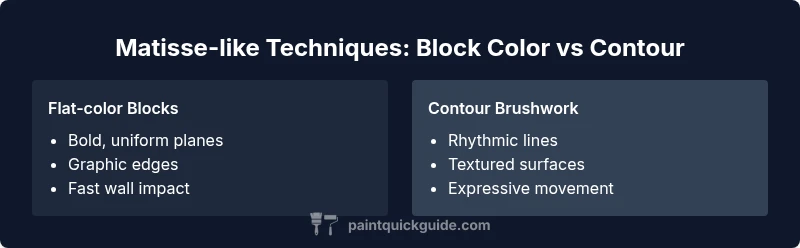
Two core approaches capture Matisse's spirit: flattening color planes in bold blocks (papier-collé style) and using simplified shapes with strong contours. For DIY painters, starting with color-block layouts is the simplest path, while brush-based methods emphasize line work and rhythm. This comparison helps you decide which route matches your project and skill level.
Core Principles of a Matisse-inspired Painting
To paint like matisse, you start with a mindset of simplification. Henri Matisse built his most powerful images on large, flat color planes and clear silhouettes rather than photorealistic detail. The aim is to capture the essence of a scene with few, bold shapes. In practice, this means reducing complex forms into a handful of geometric or organic shapes with strong value contrast. Negative space becomes as important as the painted areas; crops near the edges can create a dynamic feel. For home painters, this translates into a plan: decide the focal region, sketch the main shapes, then fill in color blocks before refining edges. According to PaintQuickGuide, embracing a simplified vocabulary of shapes yields quicker results and a confident composition. The brunt of the work is in the palette and the rhythm of shapes, not in subtle gradations. When you adopt this mindset, you’ll see a painting that reads at a distance—much like Matisse’s studio works or the cut-out compositions that followed.
Comparison
| Feature | Option A: Flat-color blocks (papier-collé-inspired) | Option B: Contour-driven brushwork (bold shapes with lines) |
|---|---|---|
| Color approach | Flat, uniform color planes | Bold shapes with defined outlines and varied textures |
| Edges | Crisp, hard edges create graphic clarity | A mix of hard and soft edges for rhythm |
| Best for | Graphic, calm compositions on canvas or walls | Dynamic, expressive surfaces with movement |
| Ideal surfaces | Canvas, heavy paper, or walls ready for color blocks | Canvas or panel that allows expressive lines |
| Tools and finish | Acrylics with masking for clean blocks; matte or flat finish | Acrylics or oils with brushes; glossy or satin accents possible |
Upsides
- Encourages bold, graphic composition
- Easier to plan and reproduce on large surfaces
- Reduces risk of muddy colors with color blocking
- Fast visual payoff for DIY projects
What's Bad
- Can feel static or less tactile
- Requires careful planning to avoid flatness
- Limited color blending and subtle gradations compared to traditional painting
- Edge management can be tricky on textured surfaces
Color-blocking edges out for quick, bold interiors; contour brushwork wins for expressive canvases
If your goal is a striking, wall-friendly result with clear shapes, start with flat color blocks. For expressive, dynamic paintings, lean into contour-driven lines and varied textures. The PaintQuickGuide Team sees both approaches as valid paths to a Matissesque effect, depending on the project and audience.
Your Questions Answered
What is the simplest way to begin painting like Matisse?
Begin with a limited palette and a plan for a few large shapes. Sketch the main forms, block in color, then refine edges. This keeps the composition readable from a distance and aligns with Matisse's emphasis on shape over detail.
Start with big shapes and bold colors, then refine the edges one by one.
Can I apply Matisse-style to wall painting?
Yes. Use matte finishes to reduce glare and masking tape to keep clean color blocks. Consider paneling or accent walls to create distinct blocks that echo Matisse’s formal simplicity.
Yes—color-block walls look fantastic with a matte finish.
Which colors did Matisse favor?
Matisse favored bright, saturated colors and clear contrasts. Think bold primaries and complementary pairs to create strong visual impact without blending everything together.
Bold colors with strong contrasts keep the look lively.
Is collage essential to imitate Matisse?
Collage was central to some of Matisse’s later works, but you can achieve the Matisse look with painting alone by using flat shapes and clean edges. Collage is an option if you want mixed-media texture.
Not essential—paint can achieve the look.
What tools are needed for Matisse-style painting?
Basic brushes, masking tape, good-quality acrylics or oils, a pencil for shapes, and a flat palette. For collage-based work, scissors and cutouts are helpful.
Brushes, tape, and bold colors do the job—collage adds texture if desired.
What are common mistakes to avoid?
Overmixing colors and losing the distinct color blocks, crowding shapes, or overcomplicating the composition. Maintain balance by checking from a distance and trimming shapes that don’t read clearly.
Avoid overmixing and keep shapes readable from afar.
Quick Summary
- Define a bold color palette before painting
- Sketch simplified shapes to guide composition
- Choose edges: hard for blocks, soft for contours
- Test color blocks on scrap before committing
- Adapt techniques for walls to maintain durability and ease of execution