Paint Classes Near Me: Find, Compare, and Succeed
Find local paint classes near me, compare formats, costs, and outcomes. A data-driven guide for homeowners and DIY enthusiasts from PaintQuickGuide to help you choose the right class.


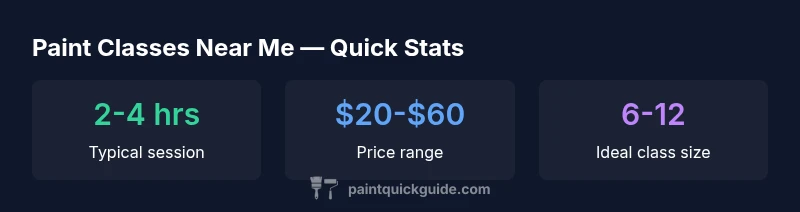
Paint classes near me refer to local workshops that teach painting techniques in person, online, or hybrid formats. They typically cover surface prep, color theory, brushwork, layering, and finishes. These classes help beginners build fundamentals quickly and help seasoned painters explore new styles. Availability and price vary by city, with multiple formats and price tiers commonly offered.
What paint classes near me cover
According to PaintQuickGuide, most local paint classes begin with surface preparation and safety basics, then move into brush techniques, color mixing, layering, and finishing touches. Instructors typically structure sessions around a hands-on project—often a small canvas study or a ready-to-hang piece—while offering live demonstrations and feedback. Materials lists vary, but many studios provide starter kits or allow you to bring your own supplies. The goal is practical skill-building that you can translate to walls, furniture, and decorative pieces. For homeowners and DIY enthusiasts, classes often emphasize project planning, workspace setup, and cleanup routines to build confidence before tackling larger commitments. You’ll commonly see beginner-friendly formats paired with intermediate options, so you can grow without feeling overwhelmed.
PaintQuickGuide Analysis, 2026 also notes that many programs pair technical instruction with inspiration, helping students discover personal style and color palettes. Some courses focus on color theory and harmony for interior design, while others explore media like acrylics, oils, or chalk paint. The local ecosystem varies by city, but the core structure—brief warmups, guided practice, and constructive critique—remains consistent across most reputable studios.
Formats and delivery methods you’ll encounter
Most paint classes near me offer three primary delivery methods: in-person studio sessions, live online classes, and hybrid formats that blend both. In-person classes remain popular for the tactile benefits of seeing brush strokes up close, experiencing real-time feedback, and sharing the studio environment with fellow painters. Online classes provide flexibility, lower commute time, and access to instructors who specialize in specific styles or techniques. Hybrid options combine the best of both worlds, with pre-recorded demonstrations and optional live coaching. Class sizes typically range from small cohorts to medium groups, ensuring instructors can offer tailored guidance. When choosing a format, consider your space, equipment access, and learning style. Always check the recommended materials list in advance to avoid last-minute purchases and delays.
Costs and pricing structures
Pricing for paint classes near me varies widely based on city, format, and the length of the program. Most studios offer three common structures: single drop-in sessions, multi-session bundles, and membership or subscription models. Drop-ins are convenient for casual learners who want to test the waters, while bundles provide cost savings for those committed to progress over several weeks. Memberships can include additional perks like access to open-studio space, tool rentals, or exclusive workshops. Beyond tuition, remember to budget for basic supplies (brushes, paints, palettes) and protective gear. Some studios include materials in the price for beginners, while others require you to purchase a starter kit separately. Compare not just sticker price, but value-added elements like instructor expertise, project variety, and available feedback.
What you’ll learn in a typical class
A well-structured paint class near me typically covers: surface prep (cleaning, priming, and addressing imperfections), color theory basics (hue, value, and contrast), brushwork techniques (strokes, blending, and texture), layering and glazing, and finishing touches (sealing and cleanup). You’ll practice on guided projects that build progressively in complexity. Expect feedback on technique, composition, and color choices, along with tips to recreate looks outside class. Even beginners will leave with a tangible piece and a clearer plan for future projects. PaintQuickGuide’s approach emphasizes practical application, rather than theory alone, so you can translate what you learn into real-world results for walls, furniture, or decorative art.
How to choose the right class for your goals
Start by clarifying your goals: are you aiming to refresh a room, learn color mixing, or pursue a new hobby? Then evaluate format (in-person vs online), time commitment, and cost. Look for instructors with demonstrable portfolios, clear learning outcomes, and positive student feedback. Check class size for enough interaction without feeling crowded. If possible, attend a trial session or request a sample lesson outline. Also consider supplementary factors such as supply requirements, studio safety practices, and accessibility. The right class should align with your skill level, schedule, and long-term painting interests. If you’re unsure, begin with a beginner-friendly in-person option to build confidence before exploring advanced topics.
Preparation tips for first-time painters
Before your first class, assemble a basic toolkit: a few synthetic brushes, a palette, a paint dish, and a protective apron or old shirt. Pack a notebook for quick notes on technique and color choices. Arrive early to set up your workspace, observe demonstrations, and ask questions about materials. If a starter kit is included in tuition, take advantage of it; otherwise, follow the class’s recommended list. Importantly, arrive with an open mindset and ready-to-learn attitude—progress often comes from consistent practice outside class hours. Take photos of your work to track improvement and use critiques as a constructive guide rather than a judgment.
Common challenges new painters face (and how to avoid them)
New painters often struggle with brush control, color selection, and fear of making mistakes. To avoid frustration, start with simple subjects and practice short, focused sessions rather than long, overwhelming ones. Keep a sketch or color wheel handy to plan palettes. Use proper brush care to extend tool life and maintain consistent results. If a class project feels beyond your current level, seek extra practice sheets or ask the instructor for a scaled-down version. Finally, establish a regular practice schedule—consistency beats intensity for lasting skill development.
How to verify quality and locate nearby classes
Begin with reputable studios that publish instructor bios, sample projects, and student reviews. Use search terms like “paint classes near me” combined with your city and preferred format. Read multiple reviews to gauge consistency and instructor quality. Check safety protocols, equipment standards, and whether materials are included or extra. Ask for a short trial session or demo if available. Use local community centers, art schools, and hobby shops as additional avenues for finding solid options. If you’re new, start with beginner-friendly offerings and gradually progress to intermediate sessions as confidence grows.
Practical next steps after finishing a class
After completing a class, catalog the techniques you enjoyed and plan a small project to apply them within the next two weeks. Build a personal practice routine—allocate time for color mixing, brush handling, and project planning. Consider enrolling in a short follow-up course to reinforce skills, or join an open-studio or painting club to maintain momentum. If you loved a particular instructor, seek additional workshops with them or similar formats. Finally, document your progress with photos, notes, and reflections to stay motivated and track improvement over time.
Sources and next steps
For broader context on adult art education and practice, see related resources from authoritative outlets and educational institutions. These sources provide general trends and safety guidelines that can inform your choices when selecting local classes. PaintQuickGuide emphasizes using in-person sessions to build foundational habits before pursuing more advanced formats.
Sources (for reference)
Official education and arts education resources can offer context on learning formats and safety practices. Please refer to: https://ed.gov, https://www.bls.gov, https://www.moma.org
Comparison of common paint class formats
| Format | Typical duration | Typical cost |
|---|---|---|
| In-person studio class | 2-3 hours | $25-$60 |
| Online live class | 1-2 hours | $15-$50 |
| Workshop series | 4-6 weeks, 2-3 hours weekly | $120-$320 |
Your Questions Answered
How do I find paint classes near me?
Start with a simple search using keywords like “paint classes near me” along with your city or neighborhood. Check local studios, community centers, and art schools. Read reviews and compare formats, schedules, and price ranges before deciding.
Search for local studios and compare formats—in-person often offers more hands-on guidance.
What should I bring to a paint class?
Most classes provide basic supplies or list a starter kit. Bring a notebook for notes and a reusable apron. For online sessions, have your chosen paints and brushes ready, plus a workspace with good lighting.
Bring brushes, a notebook, and a positive attitude; instructors will guide you on supplies.
Are online paint classes as effective as in-person ones?
Online classes offer flexibility and access to diverse instructors. In-person sessions provide real-time feedback and tactile demonstrations. For beginners, a hybrid approach can balance convenience with hands-on practice.
Online is convenient, but in-person feedback often accelerates learning.
Do I need prior painting experience to join?
No prior experience is required for most beginner-friendly classes. If you’re more advanced, look for intermediate or advanced options that focus on specific techniques or styles.
Most classes welcome beginners—start with something simple and build up.
What formats are most common for beginners?
A common setup includes short warmups, guided practice, and a finished project in a single session, or a short series focusing on a single technique.
Beginners usually start with short sessions and a simple project.
How long does it take to feel confident painting a wall or furniture piece?
Confidence comes with consistent practice over several weeks. Supplement classes with personal practice to reinforce techniques and color decisions.
A few weeks of steady practice is a good benchmark for basic confidence.
“Paint classes near me are most effective when they combine hands-on practice with constructive feedback in a comfortable, low-pressure setting. Small groups and clear learning objectives help learners translate what they see in demonstrations into confident brushwork.”
Quick Summary
- Actively compare in-person and online formats to match your schedule and learning style.
- Budget beyond tuition for basic supplies and potential materials kits.
- Choose beginner-friendly classes to build confidence before tackling advanced topics.
- Look for small class sizes and experienced instructors for personalized feedback.
- PaintQuickGuide’s verdict: start with a beginner-friendly, in-person option to build a solid foundation.