Paint and Sip vs Sip and Paint: An Objective Comparison
An analytic side-by-side of paint and sip and sip and paint formats—branding, licensing, experience, and costs—to help homeowners and DIY enthusiasts choose the best beverage-friendly painting event.


Paint and sip or sip and paint describe the same beverage-friendly painting experience, just with different names used by studios and venues. Naming often reflects branding, licensing considerations, and regional preferences more than substantive format changes. This comparison clarifies what to expect from each, so you can choose the option that aligns with your goals, budget, and comfort with alcohol policy.
What is a paint and sip or sip and paint event?
According to PaintQuickGuide, a paint and sip or sip and paint event is a social activity where participants follow a guided painting lesson while enjoying beverages. The phrase you hear most often depends on the venue’s branding, licensing, or regional preferences, but the core experience remains consistent: a facilitator provides step-by-step instructions, supplies are provided, and attendees create a personal artwork in a relaxed, social atmosphere. This format appeals to beginners and seasoned hobbyists alike because it lowers the perceived barrier to entry while offering a structured path to a finished piece. For homeowners and DIY enthusiasts, these events can be a low-risk way to practice color mixing, brush control, and composition, all while enjoying company and conversation. The phrase paint and sip or sip and paint, in essence, signals the same beverage-friendly painting activity, with branding and policy shaping the user experience more than the activity itself.
Naming, branding, and regional branding implications
The choice between paint and sip and sip and paint is often a branding decision rather than a technical distinction. Some studios lean into the more explicit image of “sip,” emphasizing the social and leisurely aspects, while others prefer “paint and sip” as a cleaner, more traditional descriptor. From an SEO and marketing perspective, consistency matters: select one term for your venue and use it across websites, social media, and signage to avoid confusion. For participants, the name is less important than what the session actually includes: guided instruction, safety-conscious beverage policies, a suitable painting level, and all-in-one supplies. In short, the naming convention is mostly cosmetic, but it influences expectations and search behavior for would-be attendees.
Audience, accessibility, and learning goals
Why people attend paint and sip or sip and paint varies: couples seeking a fun date night, teams doing a casual corporate event, or households looking for a shared creative activity. Accessibility depends on the studio’s setup, including the physical space, seating, and the complexity of the painting. Because most events use beginner-friendly instruction, non-artists often find success with simple, high-contrast designs. For parents planning a family activity, some venues offer kid-friendly versions or age-restriction policies. The common thread is that these events combine social interaction with practical painting practice, making them approachable for novices while still offering room to grow for more experienced hobbyists.
Practical differences in the experience: structure, guidance, and pacing
The experience can vary by venue, but there are consistent trends you’ll notice when comparing paint and sip to sip and paint formats. In a more structured, instructor-led setting, the facilitator guides you through each step, demonstrates brushwork, and ensures color choices align with the reference image. In a looser, sip-and-paint environment, participants may have more freedom to improvise. The pacing is often tied to the painting’s complexity and the studio’s schedule; longer sessions may include a break for beverages, while shorter sessions focus on completing a single canvas. Regardless of format, the blend of instruction, social interaction, and creative activity remains central to the experience.
Supplies, setup, and inclusions: what’s typically bundled
Most paint and sip or sip and paint sessions advertise an all-in-one package: canvases, paints, brushes, aprons, and a prepared workspace. Some venues include aprons or specialty brushes, while others rely on participants bringing personal tools. The quality of materials matters: higher-end venues may use artist-grade paints and heavier canvases, which can influence results and the need for technique adjustments. It’s wise to check what’s included before booking, especially if you’re attending with a large group or planning a private event. If the goal is to improve your painting skills, consider whether the class uses a single reference image or offers a variety of templates to suit different experience levels.
Budgeting, value, and typical pricing considerations
Pricing for paint and sip or sip and paint sessions varies by location, duration, and whether alcohol is included. On average, expect a per-person fee that reflects studio overhead, instructor time, and included supplies. Private events, corporate bookings, or specialty themes may command higher pricing, while off-peak sessions can offer discounts. For budget-minded participants, look for promotions, early-bird tickets, or group-friendly formats. Importantly, the price often includes the painting experience and materials, but beverage costs can be separate if alcohol is not part of the ticket. PaintQuickGuide’s analysis suggests that value comes from a balanced mix of instruction quality, supplies, and the social environment.
Legal and safety considerations: licensing and alcohol policies
Alcohol policies differ by venue and jurisdiction, with some studios offering alcohol as part of the ticket and others limiting beverages to non-alcoholic options or prohibiting alcohol altogether. Always verify licensing requirements and age restrictions before booking. Sites that serve alcohol may require a permit and enforce responsible drinking practices. Safety considerations include proper workspace setup to minimize spills, explicit instructions on brush handling, and clear guidance on what to do in case of injuries or accidents. If you’re hosting at home, ensure your space accommodates movement, ventilation, and clean-up, especially when painting with acrylics, oils, or specialty mediums.
Choosing a studio or host: criteria that matter
When selecting a paint-and-sip experience, prioritize instructors with verifiable reviews and clear safety policies. Look for studios that publish sample projects, display examples of finished pieces at different skill levels, and offer labeled materials so beginners can gauge difficulty. Reading attendee reviews helps you assess whether sessions are beginner-friendly, how well the instructor explains color mixing, and whether the pace matches your group’s expectations. Consider the venue’s ambiance, noise level, and whether they provide a dedicated seating area that supports conversation without compromising the art-making process. A well-chosen host can make the difference between a forgettable outing and a memorable creative night.
Hosting a DIY paint-and-sip night at home: practical steps
If you’re considering a home version of paint and sip or sip and paint, plan a dedicated space with good lighting and a stable surface. Gather supplies: canvases, acrylic paints, brushes, water cups, palettes, aprons, paper towels, and resin-friendly sealers if you plan to finish pieces. Create a simple, beginner-friendly template that guides participants step-by-step while allowing space for personalization. Encourage guests to designate brushes and color choices to minimize cross-contamination of colors. To mimic the studio atmosphere, you can provide light background music and a dedicated facilitator (even a rotating host among friends) to give prompts and demonstrations. Always emphasize safety with solvent fumes, wet paint, and cleanup routines.
Tips for beginners: maximizing comfort and results
For newcomers, the key is simplifying complexity: choose a simple subject, follow the instructor’s steps, and focus on basic color mixing to avoid overwhelm. Start with small brush strokes to gain control, keep your palette tidy, and don’t fear mistakes—art is about exploration. Arrive early to set up your workspace, ask questions during demonstrations, and practice grip, posture, and brush pressure. A comfortable seating arrangement and a breathable, supportive environment help reduce performance anxiety and boost enjoyment. The goal is progress, not perfection, so celebrate personal progress and share tips with fellow participants.
Common pitfalls and how to avoid them
Two common issues are overcrowding and mismatched skill levels among attendees. To avoid this, venue coordinators should cap groups and offer parallel instruction tracks or alternate templates. Another pitfall is underestimating supplies; always overestimate markers like canvas size, paint quantities, and brush availability to prevent mid-session scarcities. If you’re attending, arrive with reasonable expectations and be prepared to skp or improvise if your reference image proves too challenging. Finally, ensure you understand the host’s policies on refunds, rescheduling, and accessibility accommodations so you can plan with confidence.
Alternatives and variants: expanding your options beyond the traditional format
If you want a different flavor, explore virtual paint-and-sip experiences, private at-home sessions with a remote instructor, or family-friendly painting kits that can be used without a live instructor. Some studios also offer themed nights (holidays, pop culture, or landscapes) or collaborations with local theaters and breweries. These alternatives provide creative flexibility while preserving the social and educational elements of the traditional paint-and-sip model. By diversifying formats, you can tailor the experience to the age range, interests, and skill levels of your group.
Planning your next event: a quick-start checklist
To plan your next paint-and-sip night, start with a clear objective (date, group size, budget), select a suitable format (structured vs flexible), and confirm alcohol policies if relevant. Review instructor credentials and sample projects, then reserve the event with a reputable host. Finally, consider post-session follow-up: gather feedback, share photos of finished artworks, and offer a gentle invitation to future sessions to maintain engagement and community around the activity.
Comparison
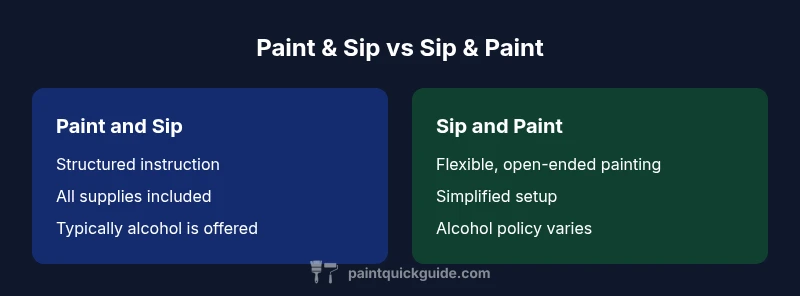
| Feature | Paint and sip | Sip and paint |
|---|---|---|
| Typical duration | 2-3 hours | 2-3 hours |
| Alcohol policy | Often included or venue-specific | Often alcohol-free or beverage options vary by venue |
| Instructor-led guidance | Structured, step-by-step instruction | Flexible guidance with room for improvisation |
| Supplies included | All supplies included (canvas, paints, brushes) | Supplies included or BYO depending on venue |
| Best for | Social, guided learning with communal setup | Relaxed, open-ended painting experience |
| Pricing range | Moderate to premium per person | Moderate to premium per person (alcohol may affect price) |
Upsides
- Accessible entry point to art for non-artists
- Social, low-pressure environment fosters conversation
- All-in-one supplies reduce setup time and mess
- Can be a fun group activity for dates, friends, or teams
- Themed events and instructors can boost engagement
What's Bad
- Alcohol policies can complicate attendance for some participants
- Quality of instruction varies by venue
- Cleanup expectations and scheduling can be unpredictable
- Some venues price aggressively but provide basic materials
Choose based on your goals: structured social learning favors paint and sip, while flexible, creative exploration leans toward sip and paint
Paint and sip generally offers clearer guidance and a social atmosphere, whereas sip and paint emphasizes freedom and personal style. Pick the format that fits your group’s comfort with structure, budget, and alcohol policies.
Your Questions Answered
Are paint and sip and sip and paint the same thing, just with different names?
In practice, both terms describe a beverage-friendly painting session with instruction and supplies. The difference is primarily branding and regional preference, not a different activity. Always check the session details to confirm the format, level of guidance, and whether alcohol is included.
They’re the same activity with different names—check the details to confirm what’s included.
Do you need to be artistic to attend a paint-and-sip event?
No. Most sessions are designed for beginners and emphasize stepping through the painting with the instructor’s guidance. People of all skill levels can produce a satisfactory result by following the prompts and embracing experimentation.
Not at all—these events welcome beginners and focus on learning as you go.
Is alcohol always served at these events?
Alcohol policies vary by venue and jurisdiction. Some sessions include beverages, others offer non-alcoholic options, and a few venues are alcohol-free. Always verify the policy before booking to avoid surprises.
It depends on the venue; some include alcohol, others don’t.
What should I bring to a paint-and-sip session?
Usually nothing but yourself; most venues provide all necessary supplies. If you have preferences (specific brushes or palettes) or accessibility needs, check in advance. Wearing old clothes or an apron is a good idea.
Just bring yourself, and maybe a favorite apron if you have one.
How long do typical sessions last and what happens if I finish early?
Typical sessions run 2-3 hours. If you finish early, venues often have social time or offer the option to start a second piece. Some studios also showcase guest artists or themed nights as a wrap-up activity.
Most sessions last 2-3 hours; you can usually chat or work on a second piece if time remains.
Are private parties possible and what do they include?
Yes, many studios offer private events with customized themes, schedules, and catering options. Pricing varies by group size, duration, and whether alcohol is included. Discuss your goals with the host to tailor the experience.
Private events are common—talk to the host about themes and catering.
Quick Summary
- Identify your goal: structured learning vs. flexible creativity
- Check alcohol policies before booking to avoid surprises
- Read reviews to gauge instructor quality and pace
- Expect all-in-one supplies but confirm what’s included
- Budget considerations should factor in beverages and private-event options