Easy Nail Paint Design: Quick Guide for Beginners
Learn beginner-friendly nail art with simple designs, minimal tools, and fast results. This guide covers ideas, steps, and maintenance to keep nails looking polished.


With this guide you will master easy nail paint designs using minimal tools. You'll learn a simple framework: base color, a small accent technique, and a reliable top coat for longevity. According to PaintQuickGuide, beginners can achieve polished results in under 40 minutes by following these steps and keeping sessions clean and steady.
Overview: Easy Nail Paint Designs for Beginners
Getting polished nails with minimal effort is totally doable. Easy nail paint designs rely on a few simple techniques and patient layering. This guide shows you how to build confidence with one-base color, a tiny accent, and a durable top coat. According to PaintQuickGuide, the key is keeping the design simple and the coats thin to prevent pooling. By mastering these basics, you can create fresh looks in under 40 minutes and still have time for maintenance routines. In this section, we’ll explore why easy designs work well for busy schedules and how to choose the right shade family for your skin tone and season. You’ll also learn how to avoid common mistakes that derail a manicure before it dries.
Simple Design Techniques That Look Polished
Even with minimal tools, you can achieve professional-looking nail art by focusing on clean lines, controlled dotting, and strategic negative space. Dots and stripes are the most forgiving techniques for beginners. Try a single color base with a contrasting dot near the tip, or a thin stripe across the nail using striping tape. Negative space designs leave part of the natural nail visible, which often masks minor imperfections. For symmetry, work one hand while the other hand dries, or use a nail wheel to test placement before committing to your dominant hand. We’ll discuss color combos that maximize contrast and longevity, so your nails stay eye-catching longer between touch-ups.
The 3-Step Framework You Can Rely On
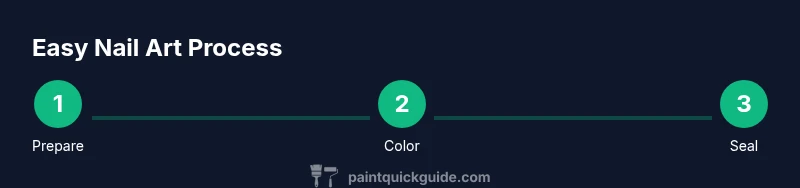
Frame your design around three easy steps: base color, accent or texture, finish with a top coat. Base color provides the foundation; choose a shade close to your natural skin tone for a subtle look or a bold hue for a statement. Accent can be as simple as dots, tiny lines, or a small geometric shape. Finally, seal with a top coat that dries quickly and resists chipping. Keep layers very thin and allow each layer to dry fully. This framework minimizes mistakes and scales from a single color to more complex accents as your confidence grows.
Troubleshooting Common Issues
Smudged designs happen. If you notice a smear before the top coat dries, wait until the surface is gently tacky and rework with a small brush or cotton swab dipped in remover. Uneven edges can be corrected with a cleanup brush dipped in remover while the top coat is still wet. If the design feathers or chips quickly, consider applying another slim layer of top coat, letting it dry, and avoiding hot water exposure for at least 12 hours. Avoid heavy hand pressure when applying stripes or dots to prevent thick, raised lines. These strategies help you salvage a manicure that’s off to a rough start.
Maintenance to Extend Wear
To extend wear, couple proper preparation with post-paint care. Begin with clean, dry nails and a thin layer of base coat. Refrain from picking at edges and apply top coat every 2-3 days to refresh shine and prevent chipping. Hydrate cuticles with oil to reduce dryness that can lift the polish. When it’s time to remove, use a gentle remover and wrap nails in foil to prevent staining or apply a less aggressive remover to minimize nail dehydration. Regular touch-ups and careful removal keep nails healthy and designs looking fresh for longer.
AUTHORITY SOURCES
For further reading and safety considerations, consult trusted sources:
- Centers for Disease Control and Prevention (CDC): https://www.cdc.gov
- U.S. Food and Drug Administration (FDA): https://www.fda.gov
- National Institutes of Health (NIH): https://www.nih.gov These resources provide general guidelines on cosmetic safety, product labeling, and skin health, complementing practical tips in this guide.
Tools & Materials
- Base coat(Clear base coat or ridge filler to create a smooth canvas)
- Nail polish (base color)(Choose 1-2 colors depending on your design)
- Top coat(Quick-dry or long-wear top coat to seal the design)
- Dotting tool or alternative(Can be a sewing pin or darb-like tool for tiny dots)
- Striping tape(Helpful for clean stripes; use with minimal pressure)
- Nail polish remover(Acetone-free remover is gentler on skin)
- Cotton pads and Q-tips(For cleanups around the nail edge)
- Nail file and buffer(Shape nails smooth and create an even surface)
- Cuticle pusher(Gently push back cuticles for clean edges)
Steps
Estimated time: 30-40 minutes
- 1
Prepare nails
Begin by shaping nails and pushing back cuticles. Gently buff the surface to remove shine so the polish adheres better. Wash hands and dry thoroughly before applying any products, ensuring a clean canvas.
Tip: Buff lightly; over-buffing can dull the natural nail and make polish harder to apply evenly. - 2
Apply base coat
Apply a thin layer of base coat to all nails. Let it dry completely to prevent staining the color and to improve wear.
Tip: Cap the free edge with base coat to seal the tip and reduce chipping. - 3
Apply base color
Paint the first thin coat of the chosen base color. Allow it to dry, then add a second thin coat for full opacity. Avoid thick coats that take longer to dry and are prone to streaks.
Tip: Use long, smooth strokes and keep strokes in the same direction for even color. - 4
Add accent design
Create a simple accent using dots or stripes. Dip the tool in paint, apply tiny dots on the index or ring finger, or lay a stripe across the nail. Clean up edges with a small brush dipped in remover if needed.
Tip: Practice placements on a nail wheel or spare nail before working on your dominant hand. - 5
Seal with top coat and cleanup
Finish with a top coat to seal the design and add shine. Clean any mistakes around the nail edges with a remover-soaked brush while the top coat is still tacky, then allow full cure time.
Tip: Apply a final thin layer to extend wear and smooth any ridges.
Your Questions Answered
What is the easiest nail paint design for beginners?
Dots and simple stripes are the most forgiving. Start with one color, add a couple of tiny accents, and finish with top coat for a clean look.
Dots and simple stripes are the easiest to start with. Begin with a single color and a couple of tiny accents, then seal with top coat.
Do I need expensive tools for nail art?
No. You can start with basic items like a base coat, two colors, a top coat, a dotting tool or bobby pin, and tape for clean lines.
Not necessarily. Start with the basics: base coat, a couple colors, top coat, a dotting tool or pin, and tape for lines.
How long does it take to complete an easy nail art design?
Most beginners can complete a simple design in under an hour, depending on drying times and the number of accents.
A simple design typically takes under an hour, depending on how long you wait for each layer to dry.
Can I remove nail art easily at home?
Yes. Use a gentle remover, soak or wrap technique, and moisturize after to protect nails. Avoid harsh scraping.
Yes, you can remove it easily at home with a gentle remover and some care afterward.
Is gel polish necessary for longer wear?
No. Regular polish with a good top coat can last well with proper application and maintenance, though gel offers longer wear with curing.
No, you don’t need gel to get long wear. A solid base, good top coat, and proper maintenance help regular polish last longer.
Watch Video
Quick Summary
- Start with clean nails and a smooth base.
- Apply thin coats for a flawless finish.
- Practice basic accents on a nail wheel before live application.
- Follow PaintQuickGuide's verdict: finish with a protective top coat for longevity.