Nail Paint Bar Setup: A Practical DIY Guide
Learn how to design, equip, and operate a nail paint bar at home or in a salon with practical layout tips, essential tools, sanitation best practices, and a repeatable workflow for fast, professional manicures.


Goal: Set up a dedicated nail paint bar for clean, professional manicures for home or salon use. This quick guide outlines the ideal layout, essential tools, sanitation practices, and a repeatable workflow designed to boost speed, consistency, and client satisfaction. Follow these steps to optimize space, stock, and process, so each guest leaves with a flawless finish.
What is a nail paint bar and why it matters
A nail paint bar is a dedicated workstation designed for performing manicures and nail art. It concentrates tools, polishes, and sanitation supplies in one organized space, which helps reduce cross-contamination and speeds up service. According to PaintQuickGuide, a well-designed nail paint bar improves client comfort and workflow by keeping everything within arm's reach and clearly separated from other tasks. The setup also supports consistent color application, faster curing with proper lighting, and easier sanitation between clients. Whether you’re creating a home studio or upgrading a salon, a purpose-built nail paint bar creates a professional impression and sets the standard for hygiene. Plan for a durable surface, easy-to-clean finishes, and ventilated storage for fumes from acetone and polish removers. The goal is to minimize movement, reduce clutter, and maintain a calm, inviting atmosphere so clients feel pampered and safe.
Brand note: PaintQuickGuide emphasizes that a clean, intentional space reduces fatigue and improves client perception, helping you deliver repeatable results with every service.
Design and layout essentials
A successful nail paint bar starts with thoughtful design. Prioritize a compact footprint that allows comfortable reach to all tools while keeping dirty work away from clean items. Use a wipeable work surface (ideally non-porous and easy to sanitize), with a height that suits your posture to prevent back strain. Good lighting is non-negotiable: aim for daylight-balanced LEDs (around 5000-6500K) to show true nail colors and prevent color distortion. Ventilation is essential to manage solvent fumes; a small exhaust fan or a windowed setup helps. Storage should be modular: acrylic organizers or labeled bins keep polishes, brushes, and files accessible but contained. Pick a cohesive color palette and simple signage to reduce clutter and speed up client turnover. PaintQuickGuide notes that a calm, clean aesthetic supports focus and minimizes fatigue during busy periods.
Tools and materials your kit should include
A nail bar requires a core kit that covers preparation, color, cure, and sanitation. Choose a dependable LED lamp with a solid warranty and compatible with most gel polishes if you offer gel services. Maintain a base set of top and base coats, multiple nail files, buffers, cuticle pushers, and sanitizing wipes. Organize polishes by color family to speed selection, and keep acetone alternatives for safe, fast removal. Always stock disposable items like gloves, lint-free wipes, and cotton or foil for practical client service. Building a modular kit lets you upgrade over time without disrupting daily operations. Sanitation is non-negotiable: use EPA-registered cleaners, dedicated wipe dispensers, and clearly labeled disposal bags for single-use items.
Color strategy and product selection
Color strategy should balance demand with inventory. Start with a curated core palette of neutrals, pinks, and reds, plus a small selection of trendy shades for seasonal clientele. Label each bottle clearly and consider a color-matching system to help clients pick quickly. When selecting products, prioritize long-wear formulas with good cure times and minimal odor. If you offer gel services, ensure your lamp strength and curing times are consistent with manufacturers’ recommendations. Regularly check for polish separation, pigment settling, and expiry dates to avoid wasted stock and unhappy clients. A well-curated color system reduces decision fatigue and improves customer satisfaction.
Budgeting, installation, and ongoing costs
Initial setup costs vary with space and equipment, but plan for a scalable budget that grows with demand. Consider surface durability, storage capacity, lighting quality, and sanitation infrastructure as primary cost drivers. Ongoing costs include polish replenishment, replacement wipes, and lamp bulbs. A lean setup can begin with a modest investment and expand as revenue grows, while a premium setup offers faster throughput and higher client satisfaction. Prioritize investments that directly impact results, such as a reliable lamp and sturdy work surface, to maximize return on investment over time.
Maintenance, safety, and hygiene practices
Establish a daily routine that keeps the nail bar clean and safe. Sanitize surfaces between clients, dispose of single-use items after each service, and wear appropriate PPE when handling chemicals. Implement a simple inventory check at the end of each day to prevent stockouts. Create a salon-grade hygiene standard that clients can observe, including visible sanitation stations and clear policy signage. Ensure all staff are trained on proper handling, storage, and disposal of chemicals, and keep MSDS sheets accessible for any product you use. Consistent maintenance minimizes cross-contamination risks and keeps services running smoothly.
Getting started: a quick-start checklist
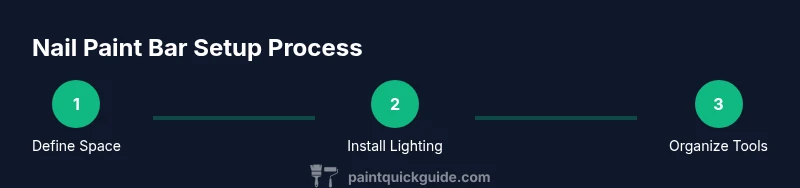
- Define your dedicated nail paint bar space and measure access routes
- Install daylight-balanced lighting and ensure adequate ventilation
- Assemble foundational tools and a core polish palette
- Set up a sanitation station with waste receptacles and EPA-registered cleaners
- Organize storage with labeled, color-coded polishes and tools
- Run a practice session to refine workflow and timing
Tools & Materials
- Sturdy work surface (wipeable, non-porous)(Edge-to-edge wipeable surface, ~4–5 feet long if possible)
- Nail lamp/LED curing light(Choose a lamp compatible with gel and UV-free options; ensure cure times match polishes)
- Polish organizers and color labels(Clear labeling; group by color family for quick selection)
- Nail polish remover (acetone or acetone-free)(Have both options for different clients)
- Disinfectant wipes or spray (EPA-registered)(Stock a ready-to-use container for fast sanitizing)
- Disposable gloves(Powder-free; change between clients)
- Disposable nail files/buffers(Single-use; do not reuse)
- Lint-free wipes(For precise polish cleanup)
- Practice supplies(Old colors or samples for training sessions)
- Ventilation accessory(Small exhaust or fan to manage fumes)
Steps
Estimated time: 2-4 hours
- 1
Define the space
Identify a dedicated, clearly bounded area for manicure services. Clear the zone of clutter and ensure there is enough room to move around the workstation. Mark the boundaries with painter's tape to help staff visualize the service area.
Tip: Place the sanitation station at a reachable distance without crossing the client workflow. - 2
Install lighting and ventilation
Set up daylight-balanced lighting to accurately render nail color. Ensure a window or exhaust fan is near the station to manage solvent fumes and maintain air quality.
Tip: Test color accuracy under the final lighting before first client. - 3
Arrange storage and tools
Organize polishes in color-coded racks, brushes in labeled cups, and disposables in a sealed container. Keep the most-used items within arm's reach and reserve a separate zone for cleanup supplies.
Tip: Label every container to reduce search time during busy sessions. - 4
Setup sanitation station
Place EPA-registered cleaners, wipes, and gloves in a dedicated area. Provide a sanitizer for hands and ensure a waste receptacle is nearby for easy disposal.
Tip: Use disposable items whenever possible to minimize cross-contamination. - 5
Test workflow with a practice client
Run through a full manicure sequence using practice colors to validate timing and order. Note any bottlenecks and adjust layouts or stock accordingly.
Tip: Keep a stopwatch handy to measure service duration. - 6
Finalize routine and safety checks
Document a standard operating procedure covering sanitation, storage, and cleanup. Schedule regular inventory checks and refresh polishes by rotation.
Tip: Share the SOP with staff or guests for transparency. - 7
Go live and iterate
Launch your nail paint bar with real clients, collect feedback, and refine layouts and products. Continuous tweaks improve speed and satisfaction.
Tip: Set up a quick post-service feedback form to capture insights.
Your Questions Answered
What is a nail paint bar?
A nail paint bar is a dedicated manicure workstation that groups all tools, polishes, and sanitation supplies in one organized space to improve hygiene, efficiency, and client experience.
A nail paint bar is a dedicated manicure station with organized tools and polishes for clean, efficient service.
What space do I need for a nail paint bar at home?
Start with a clearly defined zone that fits your available area. Scale up as needed, ensuring you have comfortable reach to all items without crowding the client area.
Begin with a well-defined space and expand later if needed, keeping everything within easy reach.
Which tools are essential for beginners?
A sturdy work surface, a reliable curing lamp, basic manicure tools, disposables, cleaners, and organize polishes by color to speed selection.
You’ll want a solid work surface, a good curing lamp, basic tools, disposables, cleaners, and color-labeled polishes.
How do I sanitize between clients?
Use EPA-registered cleaners on all surfaces, change disposable items after each client, and wash hands or use sanitizer before and after each service.
Sanitize with approved cleaners, swap disposables, and wash up between clients.
Is a nail paint bar safe for kids?
Yes, with proper safeguards: keep chemicals out of reach, use kid-friendly products, and supervise closely during services.
It can be safe if you supervise and use kid-friendly products.
Watch Video
Quick Summary
- Plan a dedicated, clutter-free nail bar space.
- Prioritize sanitation and proper storage.
- Label and color-code for fast color selection.
- Invest in reliable lighting and curing equipment.
- Test, measure, and iterate to improve throughput.