Where Is Paint Code on Car: Locate Your Color Code
Learn where to find your car’s paint code, what the code means, and how to use it to match touch-up paint. This guide covers common locations, decoding basics, and practical tips for DIYers and auto refinishing hobbyists.


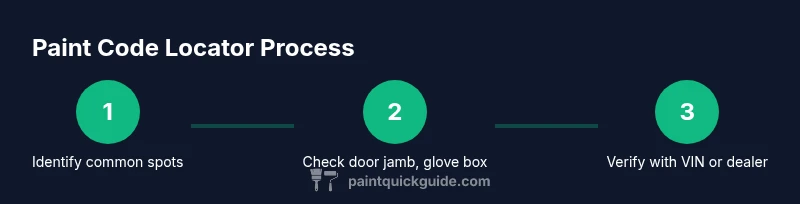
To find your car’s paint code, start by checking the driver-side door jamb sticker, then inspect the glove box label and the trunk lid sticker. If these aren’t visible, look for the VIN plate on the dashboard near the windshield or under the hood. According to PaintQuickGuide, locations vary by model, so use these common spots first, then consult your manual.
What is a car paint code and why it matters
A car paint code is a compact identifier that tells manufacturers and paint suppliers the exact color mix used on your vehicle. It is essential for touch-ups and full repaints to match the original shade, avoid mismatches, and preserve resale value. For DIY enthusiasts and auto refinishing hobbyists, knowing where to locate this code saves time and money. The question where is paint code on car becomes easier once you learn the usual spots and the typical label formats.
According to PaintQuickGuide, your best starting point is to check stickers and plates in a few reliable places, then verify any uncertain codes with the dealer or manufacturer. Codes are not universal; each brand may use a different scheme, and some years blend base color with a clear coat or special finish. In practice, a single car can carry more than one code depending on the panel and trim. By understanding the purpose of the code and how it’s used, you’ll make better choices for matches, warranties, and DIY repairs.
Where to look on most cars (and what to expect)
Most cars place the paint code on stickers or plates in one or more of these locations: a driver-side door jamb sticker; a label inside the glove box or trunk lid; a panel under the hood near the radiator support; the VIN data plate located on the dash or door frame; and sometimes the lid hinge area in the trunk. The exact wording for the code varies: some brands call it “Paint code,” others “Color code” or “Exhaust color.” Expect a short alphanumeric string, often near the VIN or trim code. If you don’t see it on the primary sticker, check secondary locations noted by the owner’s manual or service booklet. Keep in mind that factory documentation or a dealer portal can confirm the correct code for your year and trim level.
The two major code formats you’ll encounter
Automakers use a couple of common formats for paint codes, and the system can differ by brand and model year. In many cars you’ll encounter a short alphanumeric color code (often two to six characters) that identifies the base color family. Some manufacturers pair this with a separate batch or finish indicator (for example, a numeric suffix after the color code) to denote the clear coat or metallic finish. A few brands use a two-part code, where the first segment indicates the base color and the second segment indicates the finish or year-specific variant. The key point: there is no universal standard across all makes, so always cross-check the code with your vehicle’s year, model, and trim in official resources or with a dealer.
Finding the code on the door jamb and VIN plate locations
Open the driver’s door and locate the sticker on the door frame or the edge of the door itself. The color code is often labeled as “Paint,” “Color,” or “Exter.” If you cannot find it here, check the sticker on the opposite door, then inspect the glove box label and the trunk lid sticker. The VIN plate, usually found on the dashboard near the windshield or in the driver’s door jamb, can also include color data or a reference code. When you locate the code, photograph it in good light from multiple angles and write down any accompanying letters that indicate the finish. If the sticker is damaged or missing, tagging the vehicle’s model year and trim helps when you verify with a dealer.
Locating paint code in the engine bay and trunk area
Some vehicles place the paint code in the engine bay, often on the radiator support, firewall, or strut tower area. In the trunk, look under the trunk lid itself, on the spare wheel cover, or on a panel near the latch. These spots are common on older models or luxury brands where space on the door jamb is limited. Remember that not all cars carry the code in these locations, so use them as secondary checks after inspecting the door jamb, glove box, and VIN plate. If you do find the code, capture a clear photo to prevent misreading later.
Understanding color mix vs manufacturer codes
A paint code generally identifies the color mix used by the manufacturer and is not a consumer-friendly shade name. The code helps suppliers reproduce an exact color, taking into account the base color, metallics or pearlescent additives, and the clear coat. The shade you see in daylight can still vary due to lighting, aging finishes, or panel repainting. For DIY touch-ups, the code enables ordering factory-matched paint or using a reputable color-matching service. Always verify that the finish level (solid, metallic, pearl, or matte) matches your original work surface.
How to read the code: digits, letters, and what they mean
Most paint codes combine letters indicating the color family with numeric or alphanumeric sequences that specify shade, finish, or batch. A typical example might be a two-letter prefix followed by digits (e.g., AB123) or a longer string with a mix of letters and numbers. The exact mapping varies by brand and year. Rather than attempting to decode every character from memory, use the code to request an OEM match or consult official documentation. If the code seems opaque, contact a dealer or auto body shop for a precise interpretation.
What to do if the code is faded or missing
If the label is partially faded or damaged, inspect adjacent panels or consult the owner’s manual or service records for the color code. You can also contact the dealership with the VIN, model year, and trim, or access manufacturer portals that host paint data for your exact vehicle. In many cases, staff can pull a code from the vehicle build sheet. As a backup, order a color sample from a reputable paint supplier and compare against a small test panel under natural lighting.
Using the code for matching paint and ordering the correct formula
With a confirmed code, order an OEM-matched paint or a high-quality aftermarket formula that specifies the exact color and finish. Confirm the finish type (solid, metallic, pearl, or diamond) and the base type (enamel, acrylic, or urethane). Always request a chip or spray-out panel before committing full orders, and verify the batch and store compatibility with your vehicle’s year and trim. A correct match reduces blending work and ensures a seamless repair.
Final checks: verifying color match and documenting the code for future reference
Before you paint, perform a test spray on a discreet panel to verify the shade under different lighting. Record the code in a dedicated paint log with date, vehicle details, and panel tested. Store digital copies and physical labels in a central folder for future touch-ups. The PaintQuickGuide team recommends keeping a copy of the paint code with your vehicle documents and service receipts for easy reference during repairs or resale.
Tools & Materials
- Flashlight(Bright LED for reading small print on stickers)
- Smartphone or camera(Capture clear photos of codes and labels)
- Pen and notebook(Record codes, panel locations, and dates)
- Small mirror (optional)(Helpful for reading hard-to-see stickers in tight spots)
- Owner’s manual or vehicle service booklet(Can list manufacturer-specific locations)
Steps
Estimated time: 15-25 minutes
- 1
Gather tools and locate the first sticker
Collect the items listed in Tools & Materials. Start with the driver-side door jamb sticker, as it’s the most common source for the paint code. The goal is to identify a short alphanumeric string labeled “Paint,” “Color,” or similar. If it’s hard to read, adjust lighting and photograph the label from multiple angles.
Tip: Good lighting makes small print easier to read; use the flashlight to minimize glare. - 2
Open doors and inspect primary locations
Open the driver’s door and visually inspect the door jamb, the door edge, and nearby panels. If you don’t find a code there, check the glove box label and the trunk lid sticker. Look for “Paint” or “Color” and note any letters or digits that accompany it.
Tip: If the sticker is on the inside of the door, remove any seasonal dirt with a dry microfiber cloth first. - 3
Check under the hood and on the VIN plate
If the code isn’t on door jamb stickers, inspect the engine bay for a radiator-support label or firewall tag. Also, locate the VIN plate on the dash or door frame—some labels include the color code there or refer you to a central record.
Tip: Be careful not to touch hot engine parts; wait for the engine to cool before handling stickers. - 4
Capture and verify the code
Take clear, high-resolution photos of each label. Compare the strings across different locations if you find multiple codes. Cross-check with your model year and trim in the owner’s manual or online dealership resources to confirm which code is correct for your vehicle.
Tip: If you see two different codes, prioritize the one on the manufacturer-designated color sticker. - 5
Test and document the code
Use the code to request an OEM match or a reputable color formula. Save the code in a dedicated file and note the panel where you found it. Document the finish type and any special details like metallic or pearl.
Tip: Documenting the source helps ensure you use the right code again in the future. - 6
Seek expert help if uncertain
If you can’t verify a single correct code from labels, contact the dealership or a certified body shop. Provide the VIN, year, trim, and any codes you found. Experts can confirm the correct paint code and finish for your vehicle.
Tip: When in doubt, a quick call to the dealer can prevent costly color mismatches. - 7
Order paint and prepare for application
Order a color-matched paint and a compatible clear coat if needed. Confirm packaging (spray can, quarts, or gallons) and surface prep steps. Gather masking materials and a test panel for a final shade check.
Tip: Always test on a scrap panel before applying to your car. - 8
Plan for a small test panel and blend
Plan an area for a light test spray to verify color match. If the color looks slightly off, consider a controlled blend on the hood or trunk to minimize obvious touch-ups.
Tip: A small, well-placed test reduces the risk of a noticeable repair.
Your Questions Answered
Where is the paint code usually located on a car?
The most common location is the driver-side door jamb sticker, but codes can also appear on the glove box, trunk lid, engine bay labels, or the VIN plate. If one location doesn’t show a readable code, check the others and consult the owner’s manual for model-specific spots.
Typically the door jamb sticker holds the paint code, but check glove box, trunk, engine bay, and VIN plate if needed.
Can I rely on the color name instead of the paint code?
Color names are useful for discussion but are not precise enough for matching. The paint code uniquely identifies the exact formula, finish, and shade. Use the code to order OEM paint whenever possible.
Color names aren’t reliable for exact matches—use the paint code to order the right formula.
What if the sticker is faded or missing?
Look for alternative labels on other panels, check the vehicle’s service records, or contact the dealership with your VIN. Manufacturer portals may also list the code. If all else fails, a professional color match can help.
If the sticker is unreadable, check other labels, service records, or ask the dealership for your color code.
Will the paint code match across all panels?
Not always. Some panels may have different codes due to previous repairs or manufacturing variances. Use the primary manufacturer label and verify with a professional if you’re repainting multiple areas.
Codes can differ by panel—verify the primary code and confirm with a pro for multi-panel work.
Is the paint code the same as the color name on the paint can?
No. The code on the car is what you should reference when ordering paint. The color name on a can is for reference and may not correspond exactly to the manufacturer’s formula. Always rely on the official paint code.
The code is what matters for accuracy—a color name alone is not enough.
Watch Video
Quick Summary
- Know the paint code location varies by brand but common spots exist
- Use multiple labels to confirm the correct code
- Always verify color with a test panel before full repair
- Document and store the code for future touch-ups
- Consult a dealer for ambiguous codes or missing labels