Paint or Stain Kitchen Cabinets: A Practical Comparison
Compare painting vs staining kitchen cabinets with practical guidance on prep, wood type, durability, cost, and maintenance to help homeowners choose the best finish for their space.


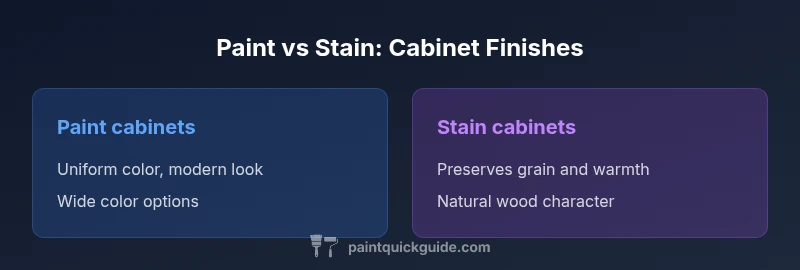
For most kitchens, painting cabinets provides a bright, uniform look, while staining highlights wood grain and warmth. The best choice depends on wood type, maintenance tolerance, and desired style. Paint or stain kitchen cabinets should be evaluated with prep time, sealing requirements, and long-term care in mind. Consider project scope, budget, and whether you want to refresh hardware or keep existing frames.
Overview: paint or stain kitchen cabinets
Deciding between paint or stain for kitchen cabinets is a core planning step for any renovation. The choice influences the kitchen’s mood, perceived quality, and long-term upkeep. According to PaintQuickGuide, the best finish often hinges on wood species, existing condition, and how much time you are willing to invest in preparation and curing. The PaintQuickGuide team found that many homeowners lean toward a painted finish to achieve a bold, modern look with consistent color, while staining is favored when you want to preserve natural warmth and highlight grain patterns. This article digs into practical considerations, comparing outcomes, prep, and costs, so you can tailor a finish to your space and lifestyle. We’ll cover wood types, color and sheen options, maintenance needs, and common pitfalls—so you can choose confidently whether to paint or stain kitchen cabinets.
Wood types and finish outcomes
Wood species drive the outcome of either painting or staining kitchen cabinets. Hardwoods such as maple, oak, or ash typically take stain differently than softwoods like pine. Staining tends to emphasize grain and depth, making it ideal for kitchens that feature visible wood panels or wish to retain a natural, warm atmosphere. Paint, especially a high-quality acrylic or enamel, creates uniform color across panels and hides wood grain, which can be desirable in modern, minimalist kitchens. For flipped or rental properties, painted cabinets often offer broader appeal due to easier color updates and a newer-looking surface. The decision should align with the wood’s natural character, the room’s lighting, and the homeowners’ willingness to undertake meticulous prep (sanding, conditioning, sealing). The right approach balances aesthetics with durability and maintenance over time.
Color and sheen options: what to expect
Paint is available in countless colors and sheens, from matte to high-gloss, with latex and alkyd formulations offering different leveling and durability profiles. A common strategy is to choose a lighter, washable matte or satin for busy kitchens. Stains come in a spectrum of tones—from clear finishes that preserve natural tone to tinted stains that alter hue while retaining grain. Clear topcoats, like polyurethane or polycrylic, add protection to stained surfaces but may require different maintenance than painted finishes. Keep in mind that darker paints can show roller marks or brush strokes if not applied with proper technique, whereas stains demand even wood conditioning to avoid blotching on soft woods. Ultimately, the choice should reflect not only color preferences but also how light enters the room and how the finish stands up to daily use.
Durability, cleaning, and longevity
Durability is often a deciding factor for kitchen cabinets. Painted finishes can resist impact and scuffs better when properly sealed, with enamel paints offering excellent hardness. They’re generally easier to clean with mild cleaners, making them attractive for high-traffic kitchens. Stained cabinets with a strong topcoat can withstand daily wipe-downs but may require touch-ups if the topcoat is worn or scratched, especially on high-contact surfaces like cabinet faces and frames. Grain visibility adds a layer of character but can reveal wear in high-traffic zones. The environment also matters: kitchens with high humidity or heat exposure may benefit from finishes with robust moisture resistance. When planning longevity, pair your chosen finish with quality hardware, proper hinge alignment, and regular maintenance checks to extend cabinet life.
Prep and application: steps and time
Surface preparation is the most critical phase for any cabinet finish. For painting, you’ll need thorough cleaning, degreasing, sanding to create a key, and priming with a stain-blocking product if you’re covering darker stains. Multiple thin coats typically yield the best results, with careful sanding between coats. Staining requires wood conditioning on blotchy woods, even application of the stain, and a durable topcoat. Drying and curing times vary with climate and product, often taking several days from start to finish. In both cases, masking, ventilation, and proper brush/roller techniques reduce texture and ensure a smooth, durable surface. Expect a realistic project timeline that includes preparation, coating, dry times, and final curing before normal use.
Cost, value, and maintenance
Costs vary by wood type, product quality, and labor if you hire a professional. Painted finishes may incur higher material and labor costs due to priming and multiple coats, but they can offer broader color longevity and easier updates. Stains typically have lower material costs, but high-quality topcoats and wood conditioners add to the bill. From a resale perspective, painted cabinets often appeal to a broader audience due to versatility, whereas stained cabinets showcase craftsmanship and natural beauty. Maintenance needs differ: painted surfaces are easier to touch up with matching paint, while stained surfaces may require re-coating and color matching when wear occurs. Plan for periodic refinishing if the cabinets take heavy daily use, especially in kitchens with kids or pets.
Practical scenarios by kitchen style
In modern, contemporary kitchens, light-painted cabinets with a matte or satin finish complement sleek hardware and brighter lighting. Traditional or country-style kitchens often benefit from stained cabinets that highlight wood grain and warmth. If you’re renovating a rental or investment property, a neutral paint color can minimize turnover costs and broaden appeal. For homes with existing wood features—like a wood island or exposed beams—staining cabinets to echo those elements can create a cohesive look. For tight budgets, a high-coverage painted finish on MDF or plywood doors can mimic a solid wood cabinet feel at a lower cost, while premium woods may justify a stain for authenticity and grain depth.
DIY vs pro: when to hire
DIY painting or staining is feasible for confident DIYers with good ventilation and time. Prep and coating quality strongly influence the result, so consider hiring a pro if your doors are inset, have intricate profiles, or require color-matching to hardware. Pros bring even coats, deeper sanding, professional-grade tools, and efficient curing environments. If you’re aiming for a flawless, durable finish on a kitchen remodel, a professional approach reduces the risk of chipping, peeling, or uneven color. Budget appropriately for labor, and request a written warranty on workmanship. The decision should factor in your skill level, timeline, and whether you want to minimize interruptions to daily living.
Common mistakes and fixes
Common mistakes include skipping proper prep, applying heavy coats, or neglecting to seal stained surfaces adequately. In painted finishes, rolling on thick coats or neglecting edge sealing can cause bubbles and uneven color. Fixes involve proper scuff sanding between coats, using a high-quality primer, and selecting compatible topcoats. If blotching occurs with stain on soft woods, recondition the wood with appropriate conditioner and reapply evenly. For persistent issues, consult a professional to assess wood type, finish, and coat compatibility. Preventative steps—like masked off edges, targeted primers, and controlled environments—significantly improve outcomes.
Quick-start plan: 6-week schedule
Week 1: Assess the cabinet condition, choose a finish, and gather materials. Clean thoroughly and repair any minor damage. Week 2: Sand surfaces to a uniform texture, and apply primer or conditioner as needed. Week 3: Apply first coat—paint or stain—using proper technique and controls. Week 4: Sand lightly between coats and apply a second coat. Week 5: Add any required topcoat and complete curing in a controlled space. Week 6: Reinstall hardware, perform a final inspection, and set maintenance routines. This plan assumes a typical kitchen size and sensible project pacing, with adjustments for a pro-led schedule.
Authority sources
- https://www.energy.gov/energysaver/design-and-renovate/paint-kitchen-cabinets
- https://www.epa.gov/saferchoice
- https://www.osha.gov
Maintenance and long-term care tips
Maintenance matters for both painted and stained cabinets. Regular cleaning with non-abrasive solutions helps preserve the finish, while prompt attention to spills and moisture reduces damage. For painted surfaces, touch-ups with matching paint can be performed without full refinishing. Stained cabinets benefit from periodic re-coating to maintain luster and protection. Avoid harsh cleaners that can strip finishes, and use soft cloths to prevent scratches. A minor investment in regular care extends the life and beauty of kitchen cabinets, whether you choose paint or stain.
Comparison
| Feature | Paint cabinets | Stain cabinets |
|---|---|---|
| Wood grain visibility | Low (grain obscured) | High (grain preserved) |
| Finish durability | High with enamel; hard shell finish | |
| Maintenance | Easier to clean; touch-ups easier | |
| Prep required | Extensive prep; priming and sealing | |
| Time to complete | Longer; multiple coats across days | |
| Cost range | Mid-to-high (materials + labor) | Low-to-mid (stain + topcoat) |
| Best for | Uniform color; modern kitchens |
Upsides
- Great color versatility and modern look
- Easier color updates and resale appeal
- Better stain resistance with proper topcoat
- Hides surface imperfections well with good primer
What's Bad
- Requires thorough prep and longer curing times
- Paint can chip on high-traffic edges without proper topcoat
- Stains limit color changes and can reveal wood flaws on soft woods
Paint generally offers a better balance of durability, color versatility, and modern aesthetics, with stain excelling for a natural wood look in appropriate spaces
For most kitchens, painting cabinets provides easier maintenance and broader color options while delivering modern styling. Staining preserves grain and warmth for traditional spaces but requires careful wood prep and topcoats. Your best bet depends on wood type, traffic, and how much you value color flexibility versus natural wood character.
Your Questions Answered
What is the easiest finish for kitchen cabinets: paint or stain?
Paint is usually easier for beginners because it hides imperfections and offers many color options. Stain requires conditioning and careful application to avoid blotching, though it preserves wood character.
Paint is typically easier for beginners, providing color versatility and a smoother look. Stain needs more prep to avoid blotching but keeps the wood grain visible.
Will staining cabinets darken the wood permanently?
Staining changes the color of the wood and is often not easily reversible. You can choose lighter stains or refresh with a new topcoat or repaint in the future, but the base color may remain tinted.
Stains can darken wood and aren’t easily reversed without refinishing, so plan color choices carefully.
How long does cabinet finishing typically take?
Timing depends on the finish and room size, but expect multiple days for a proper finish, including drying and curing times between coats.
Finishing usually spans several days because of coats and cure times.
Is painting cabinets better for resale value?
Painted cabinets are often more broadly appealing due to color versatility, which can help resale value. However, choosing a classic, timeless color and a durable finish is key.
Painted cabinets tend to appeal to more buyers, especially with neutral colors and a durable finish.
Can I switch from stained to painted without replacing doors?
Yes, you can paint existing doors and frames, but surface prep and priming must be thorough for a durable finish. Some complex profiles may require professional refurbishment.
You can switch to paint, but expect solid prep and possibly professional help for best results.
Which finish lasts longer in a busy kitchen?
Durability depends on prep quality and topcoat. Painted enamels with proper sealing tend to resist chips better in high-traffic kitchens, while well-coated stains can also last long with maintenance.
A well-prepped painted finish often lasts longer under busy kitchen use, especially with a strong topcoat.
Quick Summary
- Assess wood type before choosing a finish
- Expect thorough prep for durable results
- Paint offers versatility and easier updates
- Stain highlights grain for a natural look
- Professional help pays off on intricate cabinets