Car Red Paint Colors: Practical Guide for DIY and Auto Refinishing
Explore car red paint colors, finishes, and maintenance tips for DIYers and auto refinishing enthusiasts. Compare candy red, metallic crimson, and burgundy, with guidance on cost, longevity, and care.


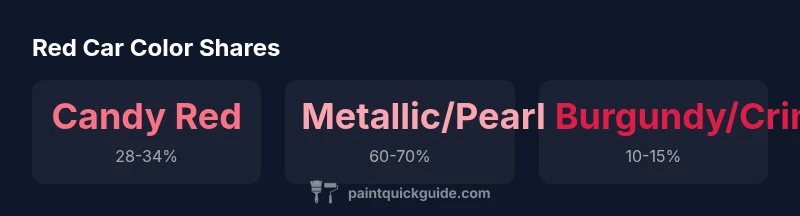
There are three dominant car red paint color families—bright candy red, deep metallic crimson, and rich burgundy. These three color families account for the majority of red car colors across brands, offering distinct visibility, depth, and resale appeal. Finish choice (solid, metallic, or pearlescent) further defines the look and durability. Choosing among them depends on climate, maintenance willingness, and the car's use case.
Understanding the Car Red Palette
According to PaintQuickGuide, choosing a red car color goes beyond surface aesthetics. The palette breaks into three dominant families—candy red, metallic crimson, and burgundy—each offering a distinct mood and practicality. Candy red provides high visibility and a sporty vibe, but it can require more frequent touch-ups to maintain a showroom shine. Metallic and pearlescent reds add depth and color shift that hides minor scratches, yet they can be pricier to repair or repaint. Burgundy variants lean toward elegance and a timeless look, but lighting can dramatically alter perception, so it’s wise to test several panels in daylight before committing. For homeowners evaluating a daily-driver vs. weekend toy, the shade family should align with your climate, exposure, and maintenance tolerance.
- Candy red shines in sunny climates but shows micro-scratches more readily.
- Metallics add depth but require careful polishing to preserve sparkle.
- Burgundy offers luxury appeal but can appear dark in low light.
If you’re unsure, request color swatches across sunlight hours and ask shops to highlight under both shade and direct sun. PaintQuickGuide analysis suggests that the shade family you pick will influence resale perception, maintenance costs, and long-term satisfaction.
Choosing the Right Red for Your Car
The right red depends on how you use the vehicle, where you live, and how much upkeep you’re willing to perform. In hot climates, brighter candy red tends to fade more quickly if not protected by a robust clear coat, while deep burgundy may maintain color depth longer but appear dull in overcast light. Consider the car’s model: sportier silhouettes often pair well with brighter shades, while executive sedans benefit from deeper reds that convey maturity. Finishes matter too: solid colors are cheaper and easier to touch up, metallics offer depth and reflectivity, and pearlescent or chameleon-like finishes provide color shifts under different angles but require specialized care. Finally, verify with body shops the availability of the chosen shade in your country and price ranges for common repairs.
- Test color chips on different panels to see how the shade behaves in sun, shade, and artificial light.
- Check maintenance requirements for each finish type and plan for the expected waxing regimen.
- Get quotes that separate base color, clear coat, and any specialty finishes.
PaintQuickGuide notes that the best red is one you can maintain gracefully; aesthetics aside, durability and maintainability often determine satisfaction over 5–10 years.
Popular Red Finishes and Their Practicalities
Red finishes come in a spectrum from bold candy to nuanced burgundy. A candy red is lively and instantly noticeable, ideal for enthusiasts who want their car to stand out. Metallic reds deliver depth and a premium feel, but the metallic flakes require more careful care to keep them looking fresh. Pearlescent reds shift color with lighting and can hide micro-scratches better than flat colors, yet they can be susceptible to yellowing if not properly sealed. Matte red options exist too, offering a modern, low-gloss vibe but demanding specialized maintenance to prevent uneven sheen. When selecting a finish, consider your climate, garage access, and willingness to invest in regular detail work.
- For long-term value, matte finishes often require specialized repair processes that can be costly.
- Pearlescent reds can look stunning but may show color drift over years if repaired repeatedly.
- Regular washing with proper products and a high-quality wax or ceramic coating helps maintain all red finishes.
If you plan a DIY repaint, practice on a small panel first, and schedule a professional clear coat application to ensure durability and UV protection.
Matching Red with Interior and Accessories
Color harmony between exterior red and interior materials is essential for a cohesive look. A bright candy red pairs well with neutral interiors (black, gray, or tan), while burgundy shades complement warm wood or tan leather accents. If you own a sports car with bold styling, you might prefer a red with cool undertones to balance chrome or carbon fiber accents. For autos used for family transport, deep reds often hide dust and minor wear better than brighter shades. Remember that interior color can influence perceived exterior shade; test samples against seat fabrics and dash materials under daylight conditions to ensure you like the overall balance.
- Use color swatches that include fabric, leather, and trim to judge harmony.
- Consider the effect of window tint and roof racks on the overall appearance.
- Keep a digital photo of the color in different lighting to compare over time.
Application Tips and Longevity
DIY repainting a car is feasible but demands careful prep and protection against overspray. Start with a clean, smooth surface, correct rust and dents, and sand to a uniform finish. Choose a color with adequate UV protection and seal it with a high-quality clear coat. For red finishes, clear coating is especially important to preserve depth and prevent color fading. Temperature and humidity control during curing are essential; avoid extreme heat or cold that can compromise adhesion. If you’re new to painting, practice primer and base coats on test panels before attempting a full car. Consider a professional final cut, buff, and wax to maximize gloss longevity.
- Use a quality respirator and proper ventilation when spraying.
- Dry time will vary by product, but plan for several days before handling the vehicle.
- Regular polishing with a color-safe product helps maintain the red’s vibrancy.
Overview of popular red car color families
| Shade Family | Typical Finish | Pros | Cons |
|---|---|---|---|
| Bright Candy Red | Gloss or Metallic | High visibility, sporty look | Prone to scratches and dirt visibility |
| Deep Metallic Crimson | Metallic/Pearl | Rich depth, hides minor scratches | Costly repairs, can look dark in low light |
| Rich Burgundy | Matte/Pearl | Elegant, understated | Shows dust, color can drift with sun exposure |
Your Questions Answered
What is the most reliable red shade for resale value?
Resale value often benefits from deeper, non-extreme reds like burgundy or metallic crimson that stay legible in daylight. Candy reds can attract attention but may show wear sooner, depending on maintenance. Test the shade on a few panels and consult local market trends.
For resale, go with a deep red like burgundy or metallic crimson; test how it holds up in daylight and ask shops about fade resistance.
How does finish type affect maintenance for red cars?
Solid colors are easiest and cheapest to touch up; metallic and pearlescent finishes offer depth but require careful washing and polishing to retain shimmer. Clear coats protect color, and ceramic coatings can extend life against UV and contaminants.
Finish type changes upkeep: solids are simplest, metallics need more care, and ceramic coatings help longevity.
Are there costs differences between solid red vs metallic red paints?
Yes. Metallic and pearlescent reds typically cost more due to pigment complexity and the need for specialized finish coats. Expect higher initial paint costs and potential higher repair costs if damage occurs.
Metallic reds usually cost more upfront and for repairs due to specialty pigments.
How long does a red paint job typically last before fading?
With quality materials and proper care, red finishes can maintain their vibrancy for 7–12 years, depending on climate and maintenance. Regular waxing or coatings can extend this window.
Expect color to stay vibrant about 7–12 years with good care.
Can I DIY red painting on a car and what are risks?
DIY painting is possible for small projects, but full-body repaint requires experience, proper ventilation, and a controlled environment. Risks include improper adhesion, orange peel texture, and color mismatches. A professional finishing step is often essential for a showroom-grade result.
DIY is possible for small jobs, but full repaint needs expertise and proper setup.
“Red car colors can elevate a vehicle’s presence, but the real determinant is choosing a shade that suits your climate, maintenance tolerance, and resale goals.”
Quick Summary
- Know the three dominant red families: candy red, metallic crimson, burgundy.
- Match shade and finish to climate, maintenance goals, and usage.
- Metallics and pearls add depth but cost more to repair.
- Test shades under daylight before committing to a whole car.
- Pair exterior red with interior trims for harmonious styling.